
A few have a serious allergic reaction, and that can turn dangerous in minutes. This guide shows how to tell the two apart, what you can safely do while you watch, and what to avoid. It is general information. A vet who knows your dog decides what is right.
Is this an emergency?
Get your dog to a vet or emergency clinic now, and phone ahead on the way, if you see any of these:
 GuideMy Dog Keeps Licking His Paws: Causes and What HelpsDog licking paws all the time: allergies, parasites, injury, yeast and boredom.
- Swelling of the face, lips, tongue or throat. Veterinary sources describe swelling around the face and neck as a sign of a severe allergic reaction (anaphylaxis).
- Trouble breathing. Gasping, wheezing, noisy breathing or a dog that seems unable to get enough air.
- Collapse, weakness, wobbling or confusion.
- Pale or white gums.
- Vomiting or diarrhoea soon after the sting. Vomiting within minutes of a sting is one of the common early signs of a severe reaction.
- Hives or itching all over the body, not only at the sting spot.
- Many stings at once, for example after a dog disturbs a nest. A large dose of venom can make a dog ill even without an allergy.
- A sting in the mouth or throat, or a bee that was swallowed. Swelling inside the mouth can block the airway even when the dog looks well at first. Drooling, coughing and fast breathing are warning signs.
- A dog that has reacted badly to a sting before.
Timing matters. Severe reactions usually start within minutes and most within about 20 minutes, according to veterinary clinic guidance. A second wave can come hours later in some dogs, so a dog that seems fine should still be watched for the rest of the day.
If you are unsure, phone the clinic. They would rather take a call than see a dog that waited too long.

Common causes and what stings look like
Dogs get stung because they sniff, snap at and step on insects.
 GuideDog Is Not Eating or Drinking: What to DoDog not eating or drinking water? Why not drinking is more urgent, causes, puppies and small dogs, home care, and when to call a vet.
- Bee stings. A honeybee leaves its barbed stinger and venom sac in the skin, so it can keep pumping venom for a short time. Bumblebees can sting more than once.
- Wasp and hornet stings. These insects do not leave the stinger behind and can sting repeatedly. Hornet stings are generally painful and can cause more swelling.
- Other stings and bites. Ants, spiders and some caterpillars can cause a sore, swollen or itchy spot too. A mild local reaction looks similar for all of them.
Typical signs of a mild reaction:
- Sudden yelping, then licking, chewing or limping on a paw if the sting was there.
- A small raised, red, swollen area, often on the paw, nose, lip or muzzle.
- Pawing at the face or rubbing the face on the floor.
Face and muzzle stings swell more because the skin there is loose. A puffy muzzle needs a close look. Mild puffiness that stays small and stable is different from swelling that spreads to the eyes or throat or keeps growing.
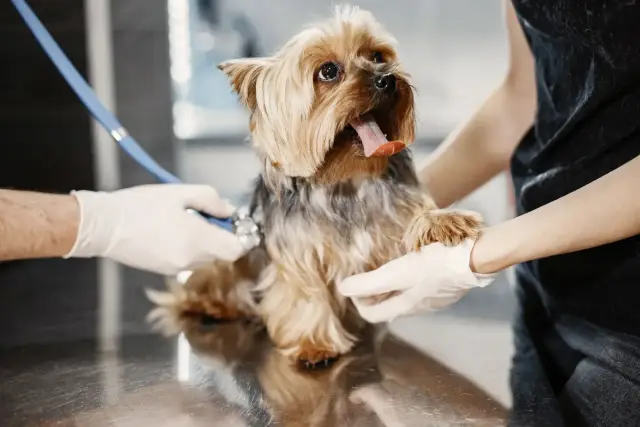 GuideMy Dog Is Coughing: Causes and When to See a VetDog coughing, honking or hacking? Emergency signs, kennel cough, collapsing trachea, heart cough, what to do at home and when to see a vet.GuideDog Is Not Eating or Drinking: What to DoDog not eating or drinking water? Why not drinking is more urgent, causes, puppies and small dogs, home care, and when to call a vet.
What you can do at home
Home care suits a bright dog with one or two stings, no sting in the mouth, no past allergic reaction and none of the signs above. Stay with your dog for the next hour or two and keep your phone in reach.
 GuideMy Dog Is Panting a Lot: Normal or Worrying?Dog panting heavily? Normal vs worrying panting, heatstroke signs and cooling steps, pain, anxiety, Cushing's disease, and when to see a vet.
- Stay calm and keep your dog calm. A panicking dog breathes faster and moves around more. Sit together somewhere quiet.
- Find the sting spot. Part the fur and look at the paw pads, between the toes, the lips and the muzzle.
- Remove a bee stinger if you can see one. Scrape it sideways with a credit card, blunt knife edge or fingernail. Speed matters more than the tool. Veterinary clinics advise against squeezing the stinger with fingers or tweezers because squeezing the venom sac can push more venom in. Wasps and hornets leave no stinger, so there is nothing to remove.
- Cool the spot. Hold a cold, damp cloth or an ice pack wrapped in a towel on the area for about 10 minutes. Never put ice straight on the skin.
- Stop licking and chewing. Chewing makes swelling worse. A soft cone or a loose, clean sock can help for a short time, with you watching.
- Offer fresh water and let your dog rest.
- Watch closely for at least 24 hours. Check the breathing, gum colour (pink is normal), the face and the energy level. Note the time of the sting. If anything changes, call a vet at once.
- Phone your own clinic to say what happened. They may suggest bringing your dog in or watching at home, and they know your dog's history.
 Save
 GuideMy Dog Has Diarrhea: What Should I Do?Dog diarrhea: emergency signs, common causes, safe home care, what not to give, and when to see a vet.GuideMy Dog Is Panting a Lot: Normal or Worrying?Dog panting heavily? Normal vs worrying panting, heatstroke signs and cooling steps, pain, anxiety, Cushing's disease, and when to see a vet.
What not to do
If you are not sure whether a product is safe, a pet poison helpline in your country can advise. Have your dog's weight and the product name ready.
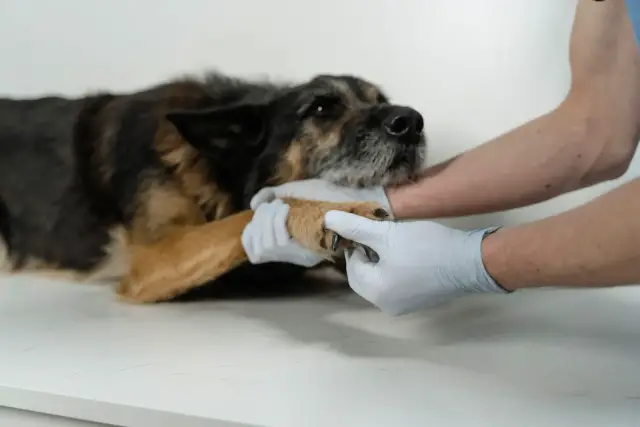 GuideMy Dog Injured His Paw: First Aid and When to See a VetDog paw injury: cut pads, torn nails, grass seeds, hot pavement burns and limping.
- No human antihistamine without vet advice. Some vets do tell owners to give a specific antihistamine and dose, but only after hearing the dog's weight, health and other medicines. Products made for people can contain other ingredients that are unsafe for dogs. Do not guess a dose. Phone your vet first.
- No human painkillers. Ibuprofen, paracetamol (acetaminophen) and aspirin can seriously harm dogs.
- No pinching or squeezing the stinger.
- No home remedies. Do not apply vinegar, baking soda paste, creams or lotions unless a vet suggests them. Your dog will lick them off and swallow them.
- No induced vomiting if a bee was swallowed.
- Do not wait and see if there is swelling of the face, tongue or throat, or any breathing change. Go straight away.
- Do not leave your dog alone in the first hours, especially a dog stung in the face.
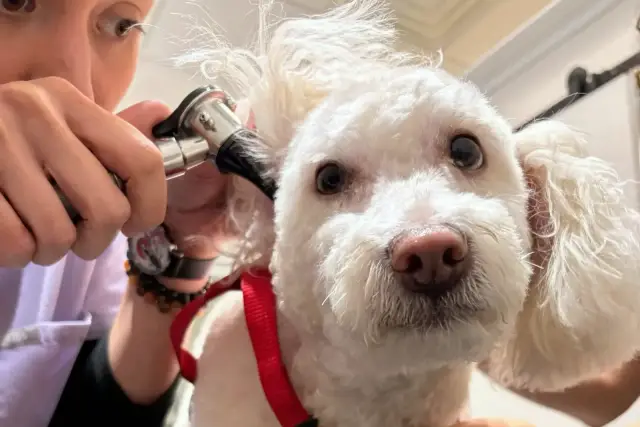 GuideMy Dog Keeps Shaking His Head: Ear Infection GuideDog shaking head, scratching ears or smelly ears? Ear infection signs, causes, ear haematoma, emergency signs, what to do and what to avoid.GuideMy Dog Injured His Paw: First Aid and When to See a VetDog paw injury: cut pads, torn nails, grass seeds, hot pavement burns and limping.
When to see a vet
Book a visit the same day, or go straight in, when:
 GuideMy Dog's Eye Is Red: Causes and When to See a VetRed, weepy or squinting dog eye? Emergency signs, common causes like conjunctivitis and ulcers, what to do at home, what to avoid, and when to see a vet.
- Your dog was stung more than once or twice.
- Swelling is spreading, hot, getting bigger after the first hour, or around the eyes.
- Your dog is limping badly or will not put a stung paw down.
- The spot looks infected after a day or two: pus, strong smell, heat, or a wound that is getting worse.
- Your dog has had a reaction before, is a puppy, is very old, or has another illness.
- Your dog is dull, off food or generally not right in the hours after the sting.
- You are not sure what stung your dog.
A vet can examine your dog, check the airway, give an injection to calm a reaction, give fluids, or prescribe medicine for swelling and itch. For a dog with a known strong reaction, ask about a plan for next time.
 GuideWhy Does My Dog Eat Grass? What Studies SayDog eating grass? What a large owner survey found, why dogs do it, when it is normal, when to worry (vomiting, lawn chemicals, toxic plants), what to do.GuideMy Dog's Eye Is Red: Causes and When to See a VetRed, weepy or squinting dog eye? Emergency signs, common causes like conjunctivitis and ulcers, what to do at home, what to avoid, and when to see a vet.
Preventing stings
For help with the general first-aid kit and other everyday health signs, see dog paw injury for stings and other trouble that start on the paw, and dog licking paws if your dog keeps licking one after the sting has gone. If vomiting is the main worry, see dog vomiting. A sting-related stomach upset can also cause loose stools, covered in dog diarrhoea.
 GuideDog Runny Nose: Causes, Discharge Colours and Vet SignsDog nose leaking or sneezing? Clear vs coloured discharge, nosebleed emergencies, causes like allergies and grass seeds, home care, and when to see a vet.
- Watch dogs on walks in flowering clover, heather, orchards and fallen fruit, where bees and wasps feed.
- Pick up fallen fruit in the garden.
- Keep a close eye on dogs that snap at flying insects. Teach "leave it".
- Keep dogs away from nests, hives and holes in the ground. Call a pest professional for nests near your home and keep your dog indoors while it is handled.
- Keep outdoor food, sugary drinks and open bins covered in summer.
- Know the number and route of your nearest emergency clinic before you need it.
 GuideMy Dog Is Lethargic: Causes and When to Call a VetDog tired, weak or not himself? Normal tiredness vs lethargy, emergency signs, common causes, what to note for the vet and what to avoid.GuideDog Runny Nose: Causes, Discharge Colours and Vet SignsDog nose leaking or sneezing? Clear vs coloured discharge, nosebleed emergencies, causes like allergies and grass seeds, home care, and when to see a vet.
FAQ
My dog stepped on a bee. What should I do first?
Stay calm, check for a stinger, scrape it off if it is a bee, and cool the spot. Then watch your dog closely for the next 24 hours. Go to a vet at once for swelling of the face or throat, trouble breathing, collapse, pale gums or vomiting.
How long does a dog bee sting take to go down?
Mild swelling usually settles within a day or two. A swollen area that gets bigger, stays hot, or leaks pus after that needs a vet.
How fast do allergic reactions to stings start?
Most start within minutes, and clinic guidance puts most within the first 20 minutes or so. A delayed second reaction can appear hours later, so keep watching.
Can I give my dog Benadryl for a bee sting?
Not on your own guess. Call your vet first. They can tell you whether to use an antihistamine and the right dose for your dog's weight and health.
My dog was stung in the mouth. Is that serious?
Yes, treat it as an emergency. Swelling in the mouth or throat can block the airway even if your dog seems fine at first. Go to a vet now.
What about wasp and hornet stings?
First aid is the same, except there is no stinger to remove. Hornet and wasp stings can sting more than once, so check the whole body for multiple spots.
Does a dog stung once get worse reactions next time?
It can happen in some dogs, because the immune system may react more strongly after earlier exposure. Tell your vet about any reaction so it is on the record.
Is a swollen muzzle always an allergic reaction?
Not always. Loose skin on the face swells easily from a simple local sting. Swelling that grows quickly, spreads to the eyes or throat, or comes with breathing trouble or vomiting is the warning pattern.
Read next
 Family storyAlpineRead the family's story: origins, members, DNA
 Family storyAmerican Cur & FeistRead the family's story: origins, members, DNA
 Family storyAmerican TerrierRead the family's story: origins, members, DNA
Sources (1)
- PDSA, "Insect bites and stings in dogs" (stings most often on face and paws, mild cases at home, allergic signs or several stings need a vet, bees may leave a stinger, wasps do not).