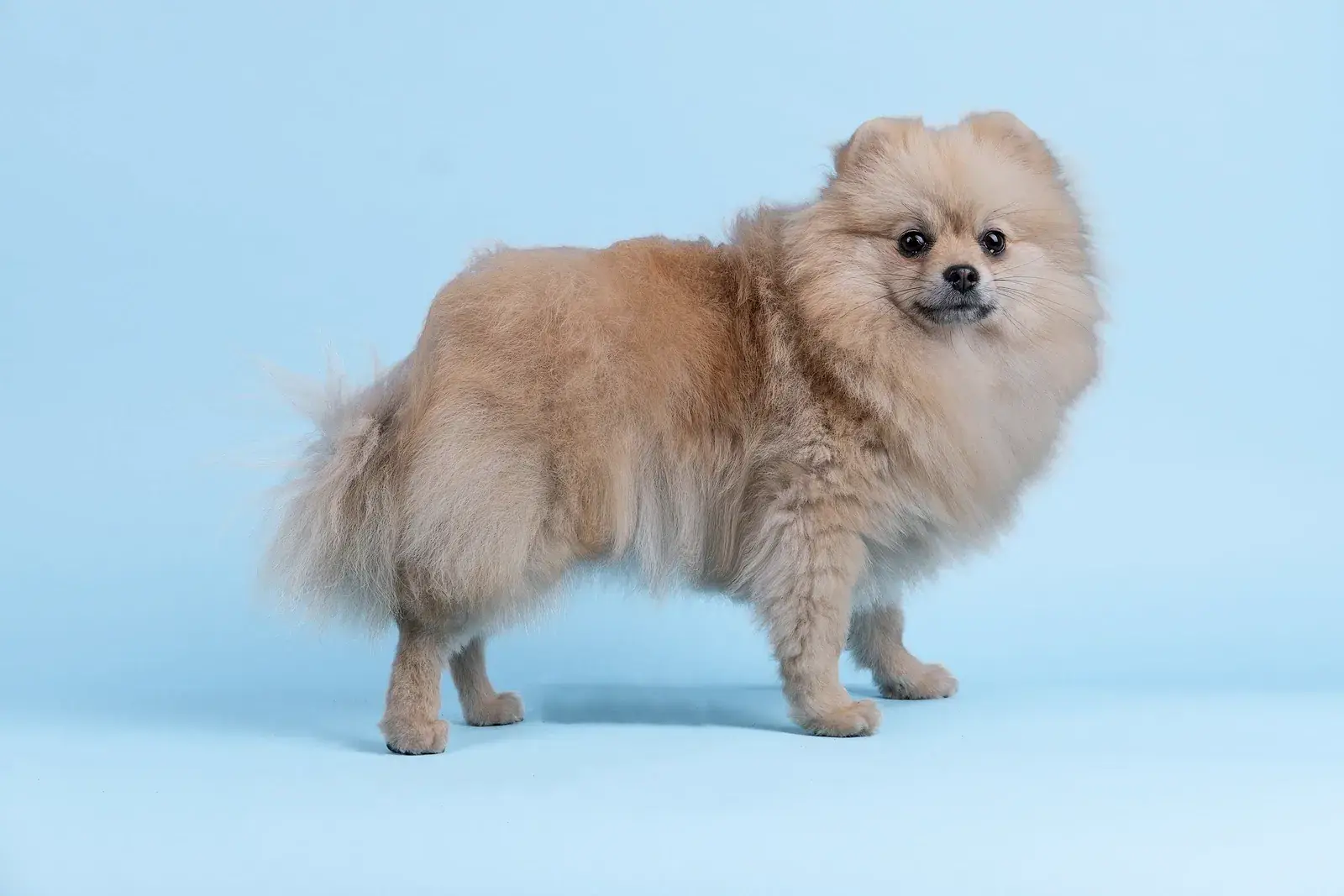
It was bred down from larger German Spitz farm and watch dogs, mostly in Britain in the 1800s, to the 2 to 3 kg companion of today. Queen Victoria made the small type fashionable, keeping Pomeranians from 1888. Adults wear a thick double coat with a plume tail over the back. It is a bold, talkative companion that suits owners who want a small, alert dog and can manage grooming, a loud voice and a few known health risks, especially windpipe, kneecap and coat problems.
Pomeranian quick facts
 Related breedPug400 BCE to 1885 · ChinaAncient World
- Closest DNA relatives
- Volpino Italiano, Keeshond, Standard Schnauzer, American Eskimo Dog
- Country of origin
- Germany (Pomerania region); developed into its small form in Britain
- Period of development
- About 1800 to 1900 (atlas data); small type fixed in the 1890s to early 1900s
- Type
- Toy spitz. AKC Toy Group; UK Kennel Club Toy Group. FCI lists it as the Zwergspitz (dwarf) size of the German Spitz, standard no. 97, Group 5
- Height
- FCI standard for the Zwergspitz: 21 cm at the withers, plus or minus 3 cm
- Weight
- UK Kennel Club ideal: dogs 1.8 to 2 kg, bitches 2 to 2.5 kg. AKC: 3 to 7 lb (about 1.4 to 3.2 kg), show ideal 4 to 6 lb (about 1.8 to 2.7 kg)
- Coat
- Double coat: short soft undercoat, long straight harsh outer coat, heavy ruff, tail carried flat over the back
- Colours
- Many. Orange is the best known; also cream, , black, brown, white, blue, parti and others
- Life span
- Atlas data: 12 to 16 years. UK Kennel Club analysis (Lewis et al. 2018): 12.2 years
- Family (DNA)
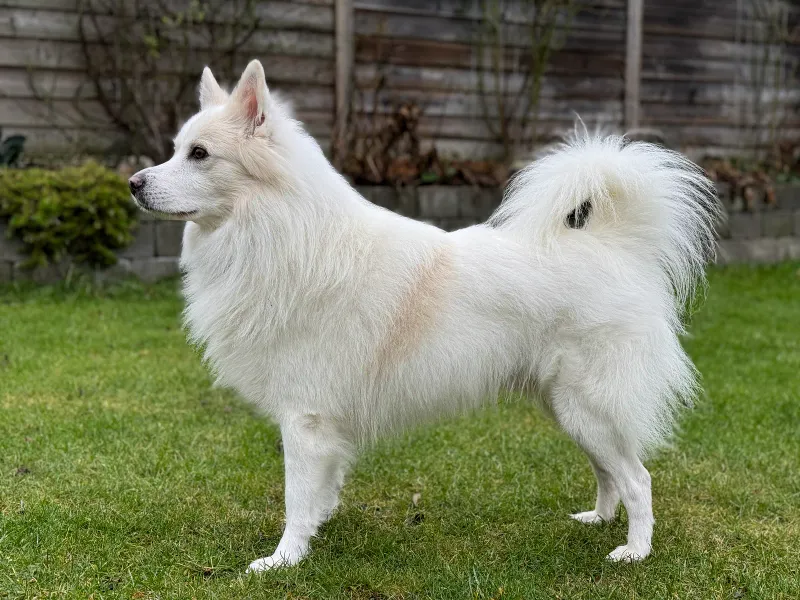
- "Small Spitz" (Parker et al. 2017), strong support
- Related breeds
- Parent: German Spitz. Listed descendants: American Eskimo Dog, Pomsky, Alaskan Klee Kai
Drawn to scale in real centimetres. Its back reaches about 21 cm, your shin; its head about 27 cm, your shin.
Where it sits in the tree
Industrial Revolution · 1800 to 1849
Where does the name "Pomeranian" come from?
 Related breedAustralian Cattle Dog1840 to 1903 · AustraliaIndustrial Revolution
The name comes from Pomerania, a historic region on the southern shore of the Baltic Sea. Its lands now lie partly in northeastern Germany and partly in northwestern Poland. The region gave the breed its English name. Spitz dogs of many sizes lived across central and northern Europe, so the region name is a label more than a proof of local origin.
The country of origin is Germany: the FCI lists the German Spitz, which includes the Pomeranian, under Germany. The small modern type was developed in Britain.
Owners shorten it to "Pom". In Germany and under the FCI the dog is the Zwergspitz, "dwarf spitz" (the FCI lists "Pomeranian" as the English name). "Spitz" is German for "pointed", describing the sharp muzzle and ears. The small "pocket" Pomeranian is a later British product (see below).

Pomeranian history facts: from big German Spitz to royal lapdog
 Same eraAustralian Shepherd1840 to 1957 · United StatesIndustrial Revolution
The Pomeranian descends from larger German Spitz farm and watch dogs, reportedly about 13 kg. It was bred down to toy size, mostly in Britain in the 1800s, with Queen Victoria's interest helping. The Pomeranian Club was formed in Britain in 1891.
Before the name: the German Spitz family
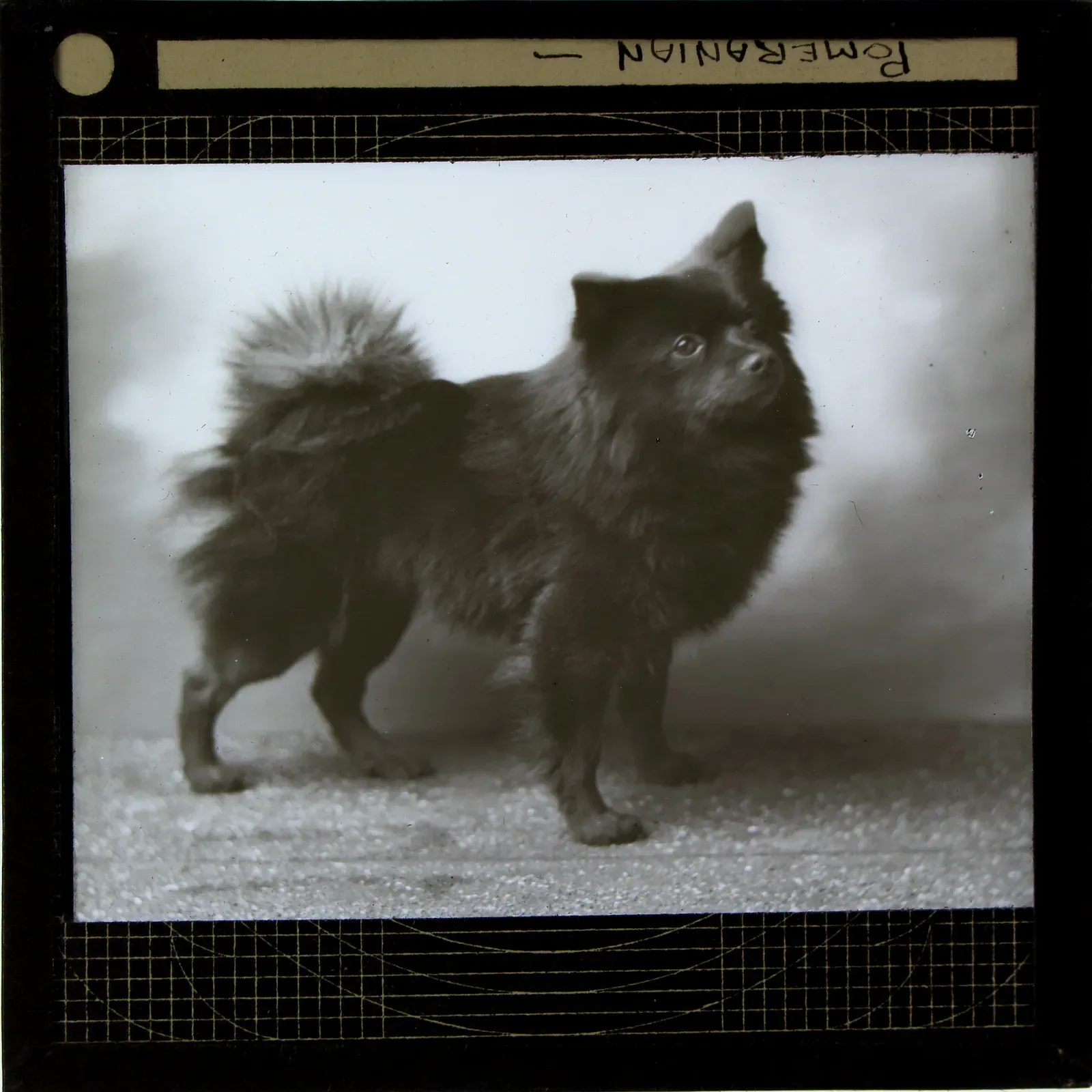
The Pomeranian descends from larger spitz dogs of the German lands. The atlas data lists the German Spitz as its parent breed, with medium confidence, citing the Wikipedia entry for the breed. The German Spitz itself is old: the atlas data dates its development to between 1400 and 1899. The big ancestors were working farm and watch dogs, including the white and wolf-grey types that became the Wolfspitz and Grossspitz. Reports put early Pomeranians around 13 kg, about three times the weight of a modern one. Those figures come from breed histories, not from weighed records, so treat the exact number with care. Some sources give a higher range of 14 to 23 kg for the dogs of the 1700s.
The five German Spitz sizes
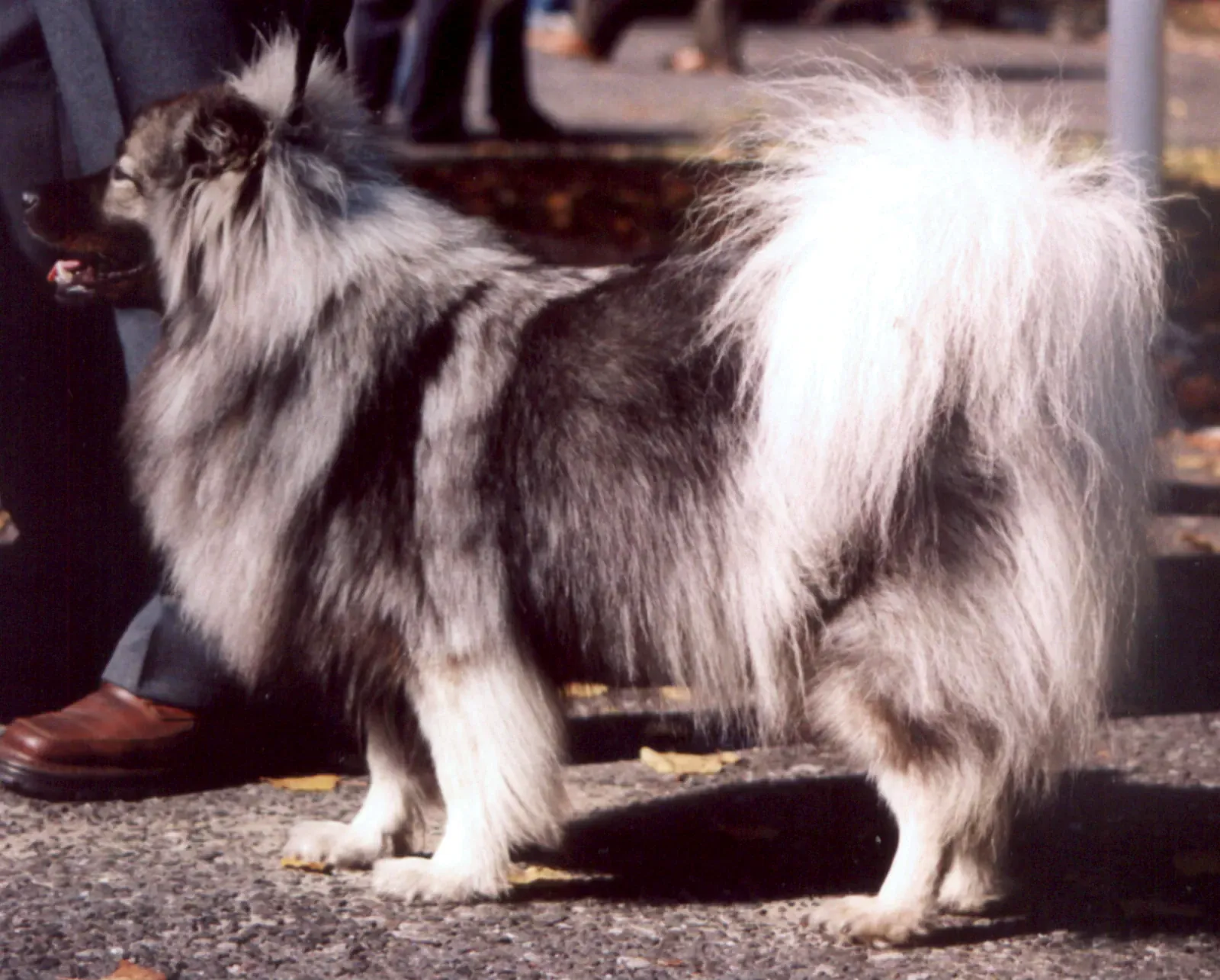
The German Spitz is one breed in five size varieties: the Wolfspitz (Keeshond), Grossspitz (giant), Mittelspitz (medium), Kleinspitz (miniature) and Zwergspitz (dwarf). The Pomeranian is the Zwergspitz, the smallest. Heights in the FCI standard run from about 21 cm for the Zwergspitz up to about 45 to 50 cm for the Grossspitz and Wolfspitz. In the UK the Kennel Club registers the Pomeranian and Keeshond as separate breeds.
Queen Charlotte and the first royal Pomeranians
Royal ownership began before Victoria. Queen Charlotte, the German-born wife of George III, is said to have brought two Pomeranians, Phoebe and Mercury, to England around 1767, and Thomas Gainsborough painted them. Sources differ on the exact year. The earliest written mention of a Pomeranian in English is a diary entry by James Boswell dated 2 November 1764. These dogs were large, nothing like the toy of today.
Here sources and kennel clubs disagree on what a Pomeranian is. The English-speaking world, the AKC and the UK Kennel Club treat the Pomeranian as its own breed. The FCI does not: it has no separate Pomeranian standard and instead lists the Zwergspitz as one of five size varieties of the German Spitz under standard no. 97, with the Pomeranian named as the English term for the smallest. The atlas data holds the Pomeranian as a separate breed with a German Spitz parent, which matches the English-language view.
 Save
 Save
Queen Victoria and the size reduction
The small Pomeranian is mostly a Victorian story. Queen Victoria met a small red dog named Marco in Florence in 1888 and brought him to Britain as a Pomeranian, although some sources call him a small spitz of Italian or German type. Breed histories give his weight as about 12 lb, roughly 5.4 kg, which was small for the time but still twice today's ideal. Marco was shown in 1891, the year the Pomeranian Club formed in Britain. Victoria's dogs began the move from big white farm dogs to small coloured companions, and later breeders took it much further.
The Queen's interest made small Pomeranians fashionable. Breeders began to select the smallest dogs for breeding, and the average weight fell fast. Breed histories describe the size roughly halving within her lifetime, and the show standard drifted down to the 2 kg or so of today. This is the origin of the breed's modern health picture: the same selection that made it small also concentrated traits such as a narrow windpipe and loose kneecaps. That link is a reasonable reading of the evidence, not a proven finding for this breed.
Kennel club recognition
| Year | Event |
|---|---|
| 1891 | Pomeranian Club formed in Britain on 11 February, during Crufts, by nine founding members |
| 1898 | First in Britain (revised 1909) |
| 1900 | AKC recognises the Pomeranian |
| 1909 | American Pomeranian Club becomes an AKC member club |
Dates come from breed club histories and are consistent across the sources checked. The atlas data lists recognition by the AKC, UK Kennel Club and UKC. The FCI route is the German Spitz standard, as described above.
 Save
Which breeds are ancestors, descendants and relatives of the Pomeranian?
 Same familyBouvier des Flandres1800 to 1912 · Belgium, FranceIndustrial Revolution
Ancestor. The German Spitz is the recorded parent. The Pomeranian is its smallest form in English-language breed registries.
Descendant and spin-off breeds (atlas data).
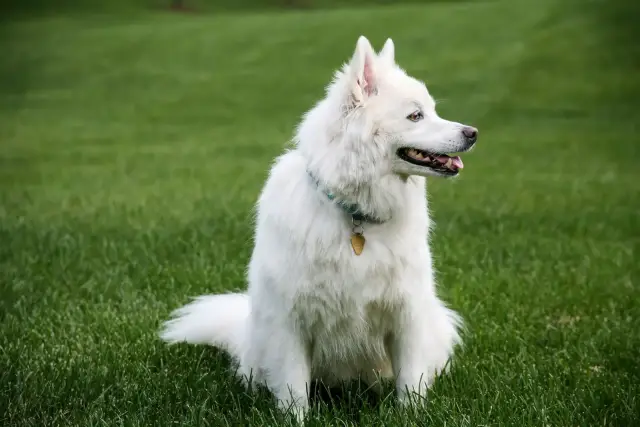
- American Eskimo Dog. Listed as a Pomeranian descendant. The American Eskimo Dog is a white spitz with a German immigrant background; the exact share of Pomeranian blood is not settled.
- Pomsky. A modern designer cross, usually Pomeranian with Siberian Husky. It is a , not a recognised breed.
- Alaskan Klee Kai. Listed in the atlas data as a more distant descendant. Treat this link as low confidence.
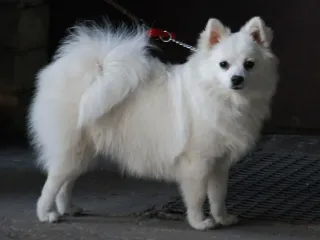
Sibling breeds. The atlas data names the Volpino Italiano, Keeshond, Indian Spitz, American Eskimo Dog and Japanese Spitz as relatives of the Pomeranian. The Volpino Italiano is the one called "closely related", with medium confidence.
What does DNA say?
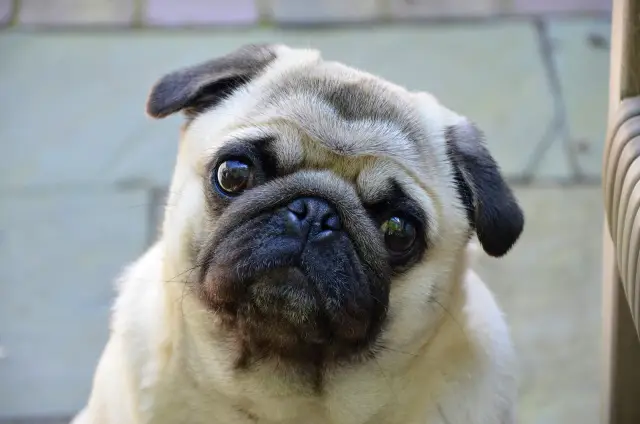
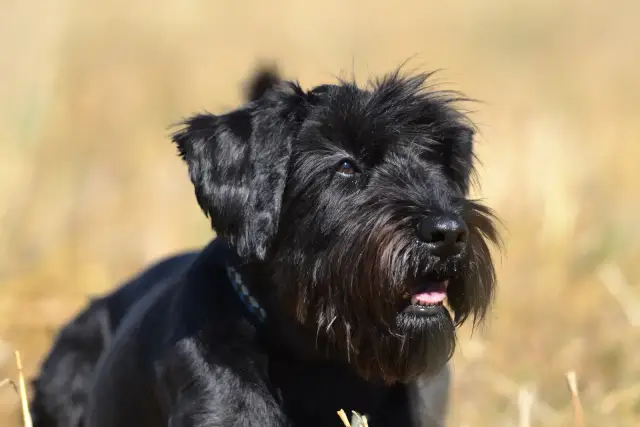
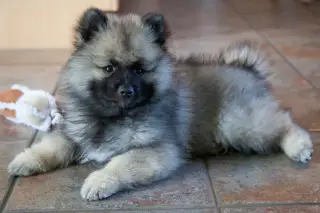
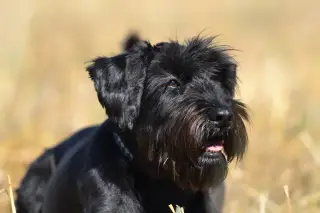
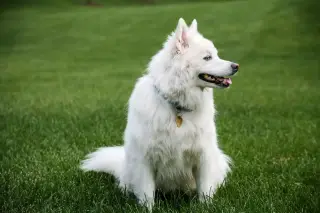
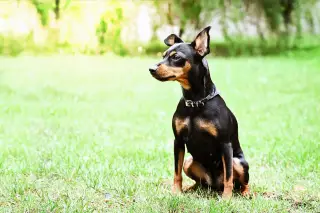
Parker and colleagues (Cell Reports, 2017) analysed 1,346 dogs from 161 breeds and grouped them into 23 supported clades. The Pomeranian sits in the Small Spitz clade with strong support. The study also measured shared , long stretches of identical DNA. In the atlas data the Pomeranian shares most with the following breeds.
Source: Parker et al. 2017, as recorded in this site's breed database.
Two results stand out. The Volpino Italiano leads by a wide margin, which fits the shared small, fox-faced spitz look. The Miniature Pinscher, Pug and Schnauzer appear lower in the list. These are German and wider European breeds, so the overlap probably reflects shared European small-dog stock, not a spitz link. That is an interpretation, not a stated finding of the study.
 Save
Sister breeds · 5
- Volpino Italiano1500 to 1903
- Keeshond1700 to 1926
- Indian Spitz1850 to 1990
- American Eskimo Dog1900 to 1917
- Japanese Spitz1920 to 1948
Descend from it · 2
- American Eskimo DogUnited States
- PomskyUnited States
- Volpino Italiano28.7 Mb 1.2%
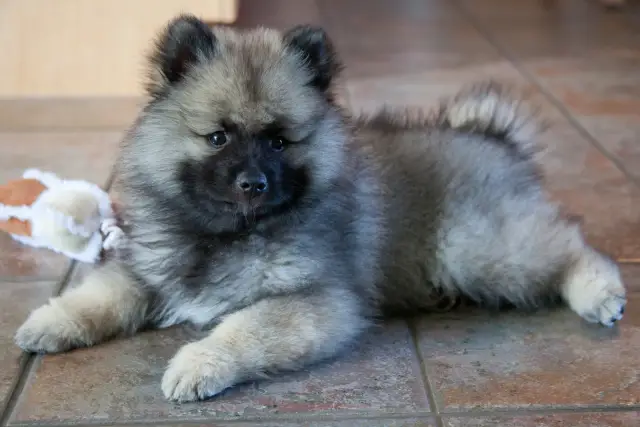
- Keeshond15.1 Mb 0.6%
- Standard Schnauzer12.9 Mb 0.5%
- American Eskimo Dog12.7 Mb 0.5%
- Miniature Pinscher12.7 Mb 0.5%
- Pug10.3 Mb 0.4%
- Schipperke10.2 Mb 0.4%
Source: Parker et al. 2017. Percent of the whole genome.
| Breedwith Pomeranian | with Pomeranian ()Shared DNA (Mb) |
|---|---|
| Volpino Italiano | 28.7 |
| Keeshond | 15.1 |
| Standard Schnauzer | 12.9 |
| American Eskimo Dog | 12.7 |
| Miniature Pinscher | 12.7 |
| Pug | 10.3 |
| Schipperke | 10.2 |
Source: Parker et al. 2017, Cell Reports, shared haplotypes between 161 breeds (1,346 dogs).
The breed standard
 Looks relatedBulldog1835 to 1875 · United KingdomIndustrial Revolution
A breed standard is the written ideal for a breed that kennel clubs judge dogs against. The Pomeranian standards agree on a compact, short-backed toy dog but measure size in different ways.
| Trait | What the standards say |
|---|---|
| Height | FCI (Zwergspitz): 21 cm at the withers, 3 cm tolerance either way; AKC: no height stated, weight governs; UK KC: no height stated, weight governs |
| Weight | AKC: 3 to 7 lb (1.4 to 3.2 kg), 4 to 6 lb (1.8 to 2.7 kg) preferred for show dogs; UK KC: 1.8 to 2 kg dogs, 2 to 2.5 kg bitches |
| Coat | All clubs: double coat |
| Colour | All clubs: many colours accepted |
| Head | All clubs: wedge-shaped, fox-like |
| Ears | All clubs: small, erect |
| Eyes | All clubs: dark, almond |
| Tail | All clubs: set high, carried flat over the back |
Many pet Pomeranians are heavier than the show ideal. "Teacup" or "mini" Pomeranians are not a separate breed, and extreme small size is linked to higher health risk in toy breeds generally.
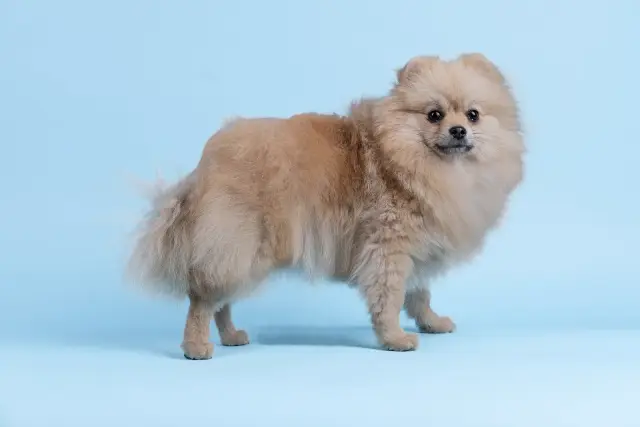
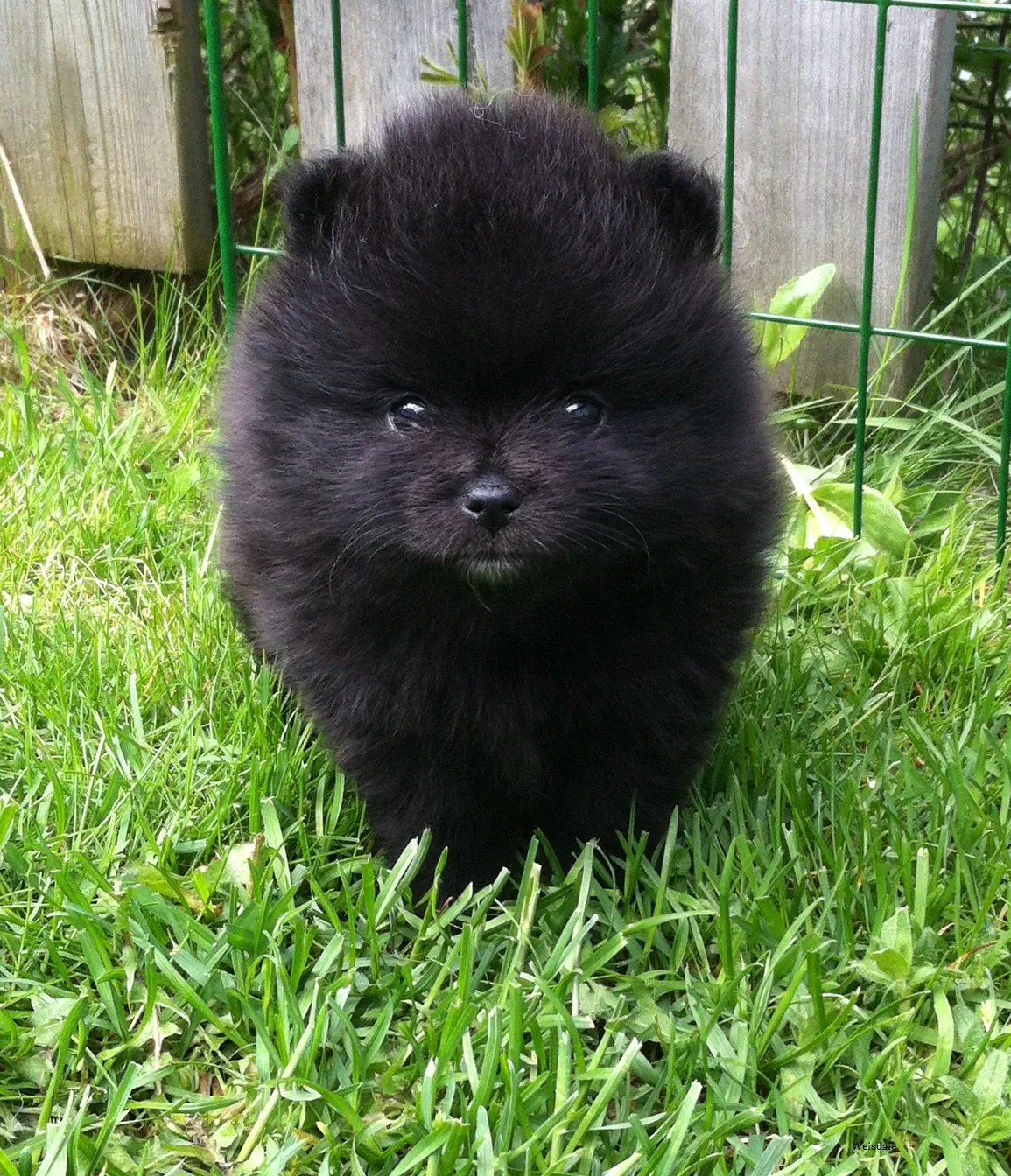
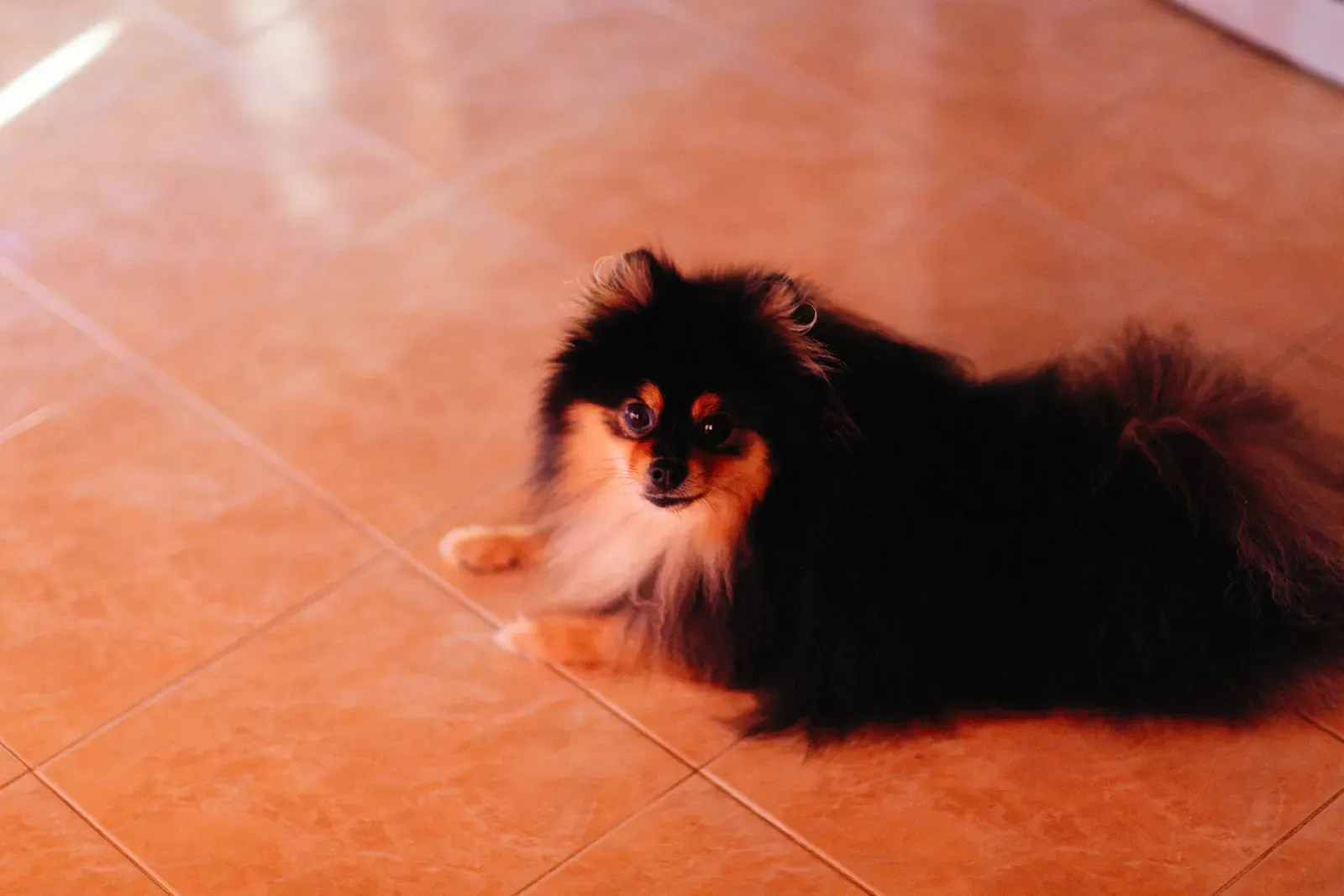
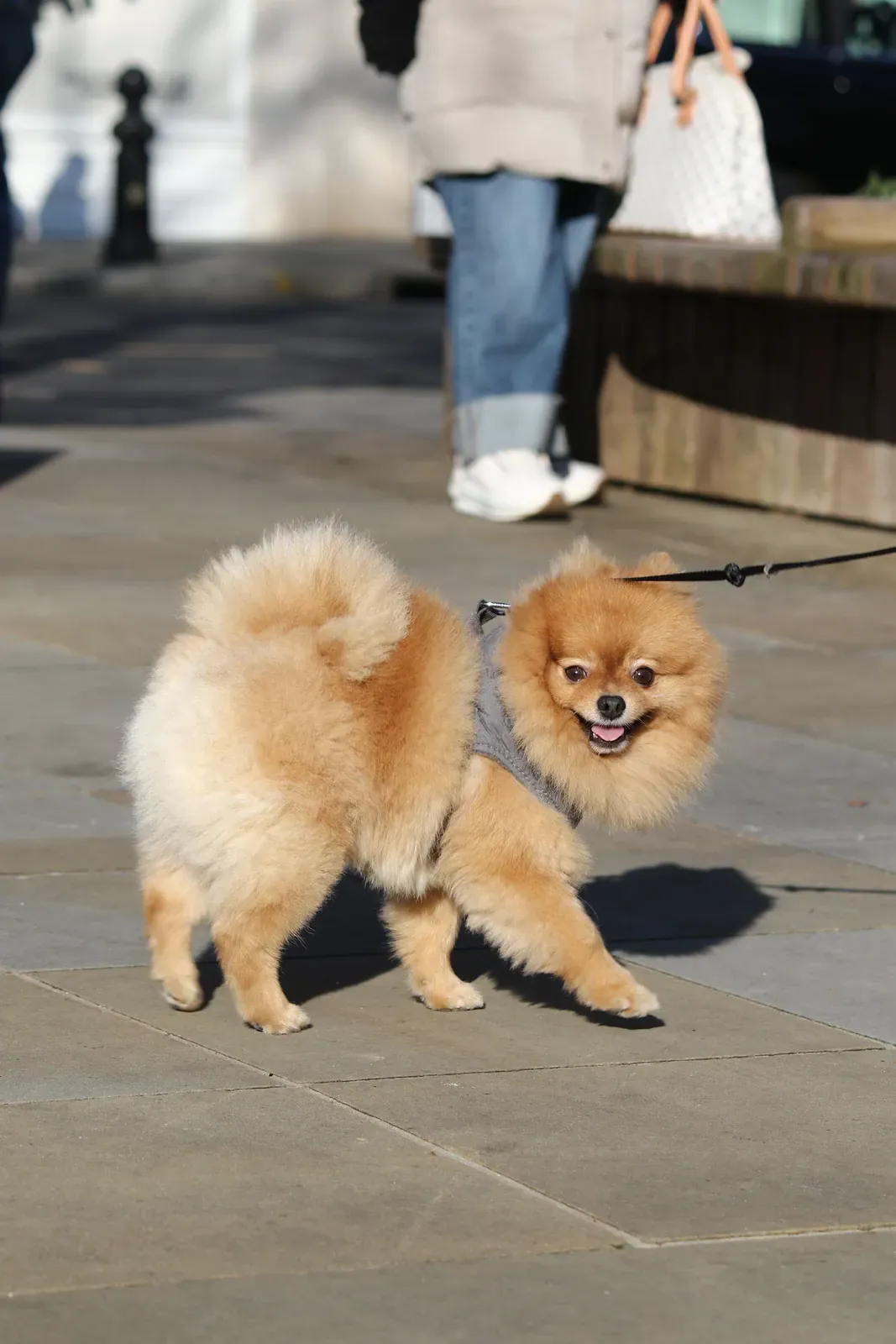
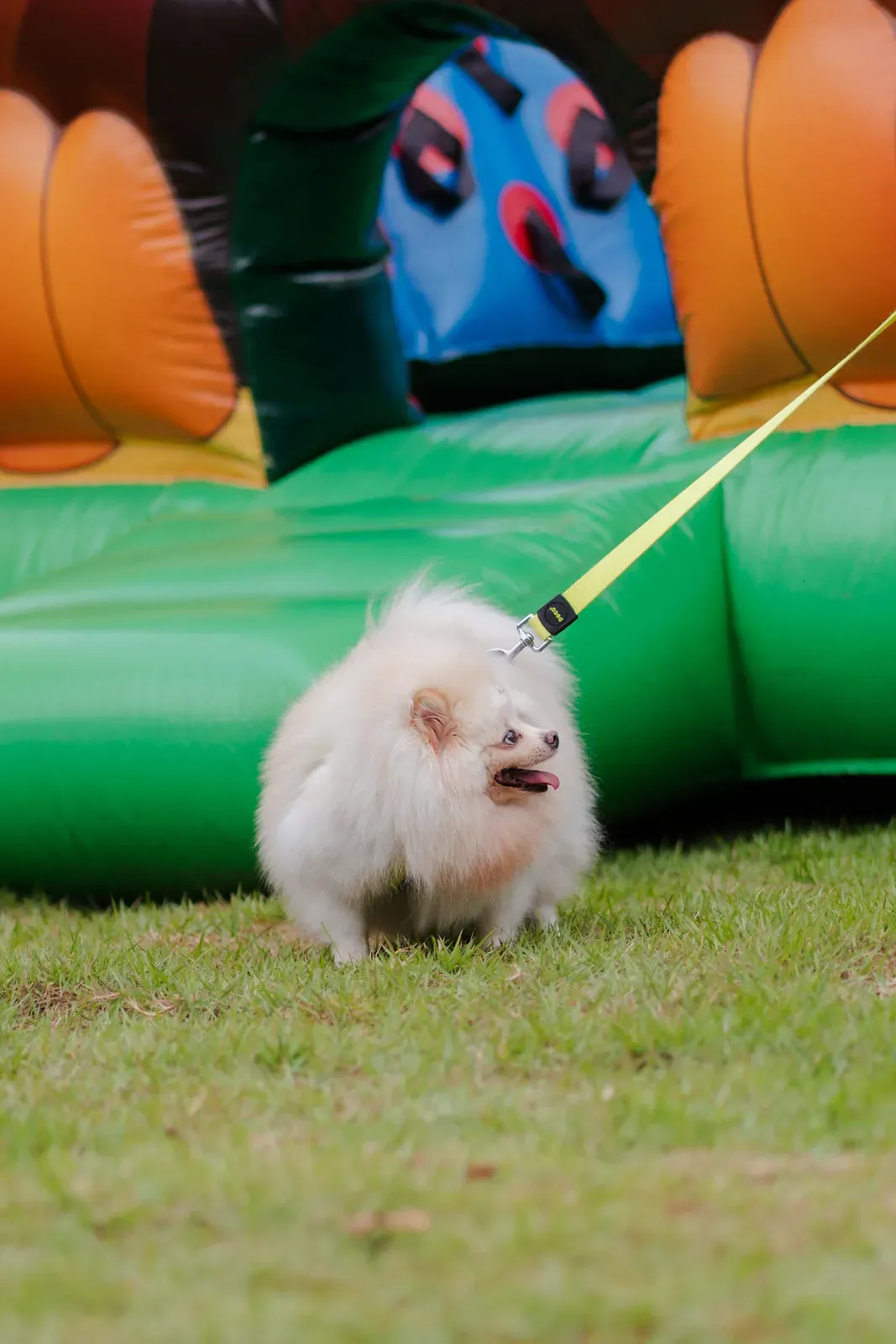
Coat. A double coat: a short, soft, dense undercoat and a long, straight, harsh outer coat. The ruff on the neck and chest, the feathered legs and the plume tail give the breed its look. The coat needs regular brushing, and more in the seasonal shed.
Colours. Orange is the colour most people picture. The standards accept many others, including cream, sable, black, brown, white, blue and parti-colour. Colours can change as a puppy coat is replaced by the adult coat.
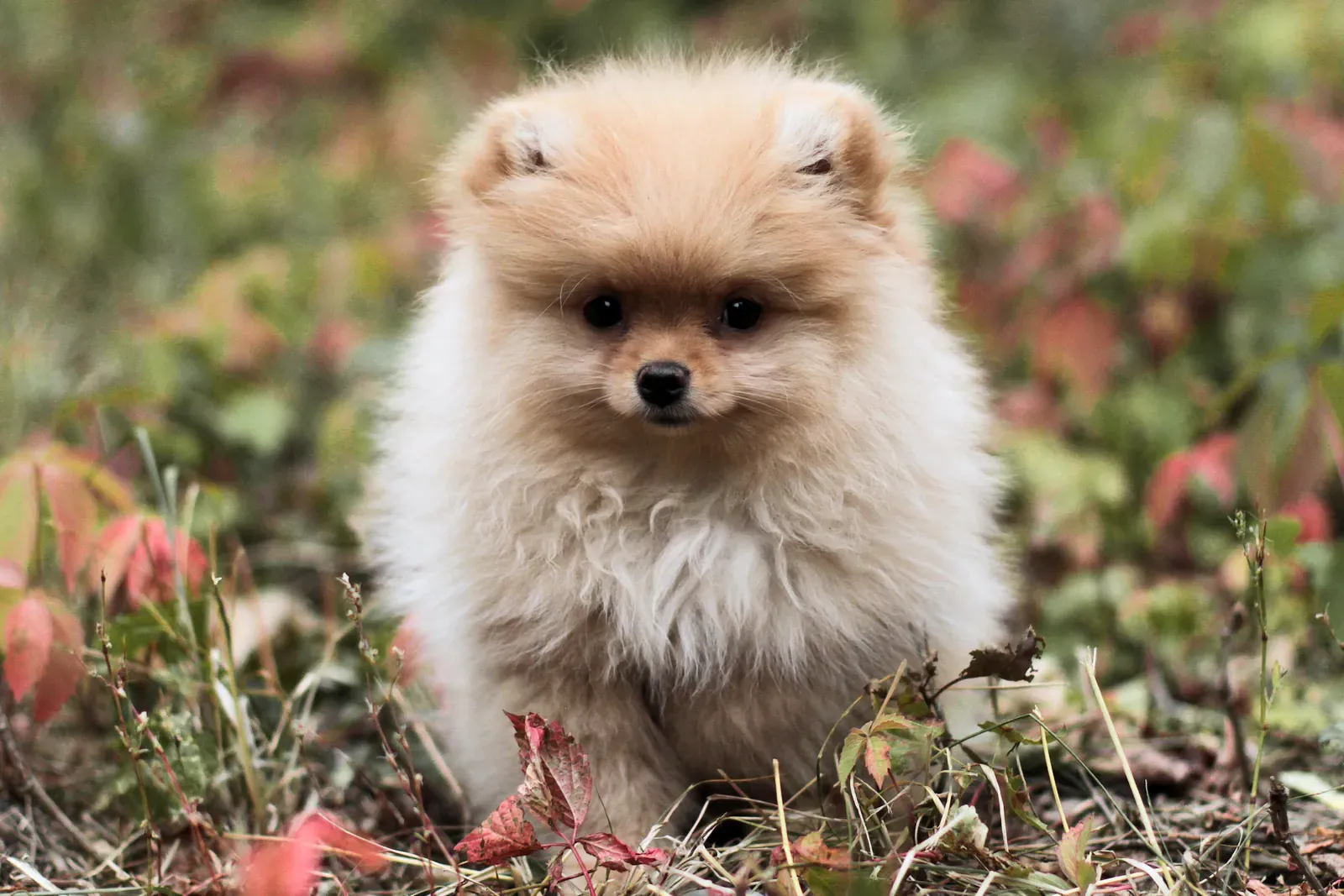
The overall effect is a ball of fur on a light frame.
What is the Pomeranian's temperament like?
 Related breedChesapeake Bay Retriever1807 to 1918 · United StatesIndustrial Revolution
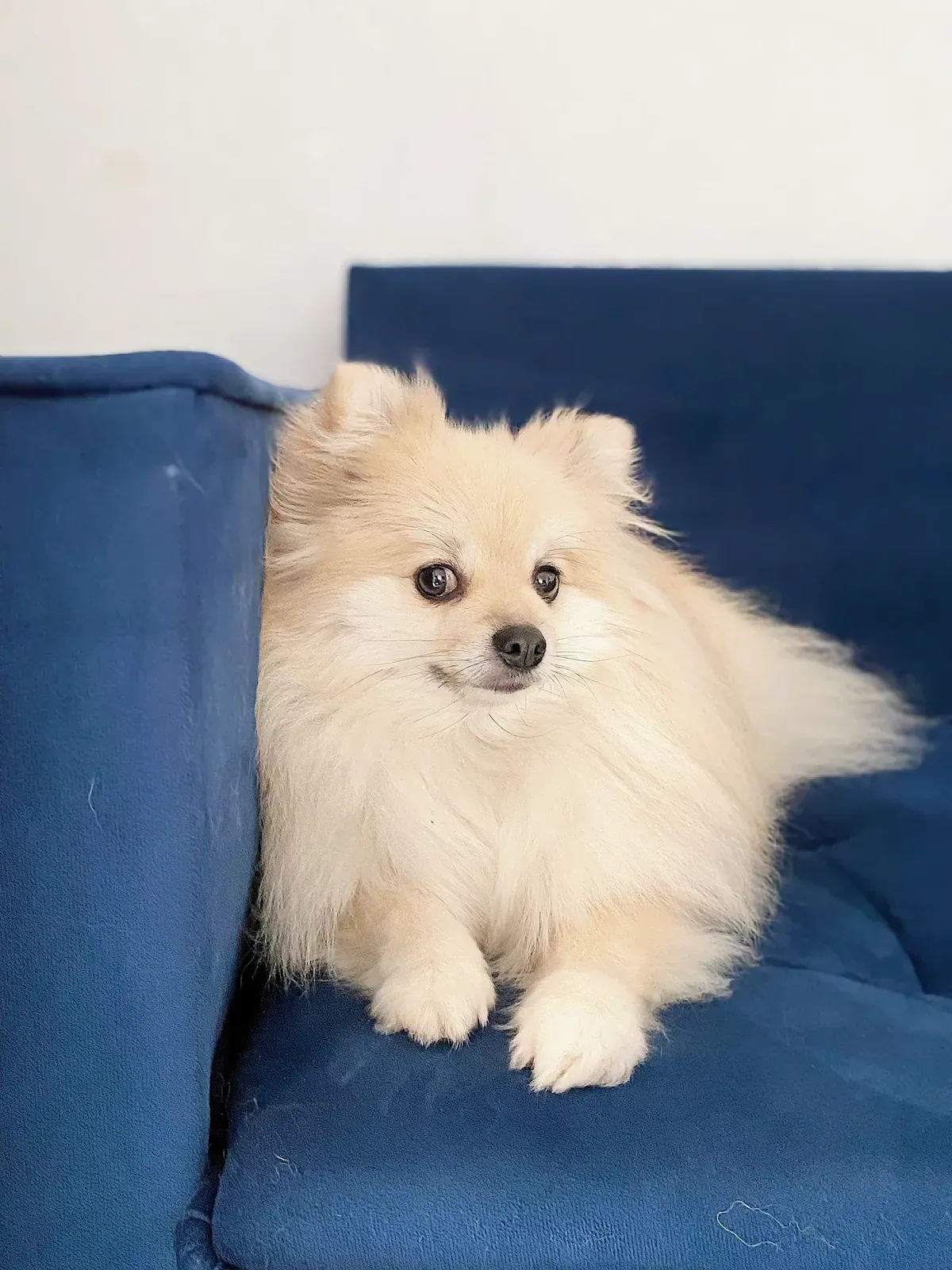
Breed standards and breed clubs describe the Pomeranian as extroverted, alert, lively and intelligent, with a confident attitude out of proportion to its size. It tends to bond closely with its people and to follow them around the house.
- Voice. Spitz dogs were farm and watch dogs, and the Pomeranian keeps the habit of announcing visitors and noises. Expect a barking dog unless it is trained early.
- Confidence. Many Pomeranians treat larger dogs as equals. This can cause trouble on walks and needs supervision.
- With children. A very small dog can be hurt by a rough hug or a fall. Households with young children need rules about handling. This is common sense for any toy breed, not a breed-specific study result.
- With other pets. Usually fine when socialised young, but guarding behaviour can show up around food and toys.

Why does a Pomeranian bark, spin and fuss over its coat?
 Related breedEnglish Cocker Spaniel1800 to 1892 · United KingdomIndustrial Revolution
The Pomeranian is a small spitz, and spitz dogs were bred to give warning, not to stay quiet. A short burst of barking at a doorbell is normal behaviour for the type. Constant barking usually means boredom, lack of exercise or lack of training.
Pomeranians are also easy to train when sessions are short and reward-based, since they are quick and keen to please. Sources for "spinning" and other quirks are mostly anecdotal, so treat claims about the exact cause as unproven.
The dog needs daily walks, play and company. It does not need hours of running, and it is well suited to apartment living as long as barking is managed. Coat care takes time: regular brushing, with extra attention during the shed, helps prevent mats.
What health problems affect Pomeranians?
 Related breedEnglish Springer Spaniel1800 to 1902 · United KingdomIndustrial Revolution
Atlas data gives a life span of 12 to 16 years. A UK Kennel Club analysis (Lewis and colleagues, Canine Genetics and Epidemiology, 2018) lists a life expectancy of 12.2 years for the breed. The wider range comes from breeder and owner claims, and the lower figure is closer to what large surveys find.
The information below is general. Ask a vet about any individual dog.
| Condition | What it is | Evidence |
|---|---|---|
| Tracheal collapse | The windpipe loses rigidity and narrows, causing a honking cough, exercise intolerance and breathing difficulty. Usually shows up in middle age | A 2024 retrospective study in Frontiers in Veterinary Science confirmed collapse in 19 of 25 Pomeranians examined (76 percent), alongside Maltese and Poodles. Referral caseloads in several countries list Pomeranians among the most frequent breeds |
| Patellar luxation | The kneecap slips out of its groove. Ranges from occasional skipping to painful lameness and arthritis | O'Neill and colleagues (Canine Genetics and Epidemiology, 2016): 6.5 percent of Pomeranians in English primary-care vets were diagnosed, with odds 6.5 times higher than crossbreeds. Orthopaedic Foundation for Animals data (1974 to 2014) reported by secondary sources: 37.2 percent affected. Soontornvipart and colleagues, The Veterinary Journal, 2013: high incidence and a genetic component in Thailand |
| Alopecia X ("black skin disease") | Progressive hair loss, usually on the trunk, thighs and tail, with darkening skin; head and legs are typically spared. Not painful by itself, but changes appearance | Cause unknown. Genetic predisposition suspected. AKC Canine Health Foundation grant 03431 funded a -wide study in Pomeranians. A 2025 case report described coat regrowth after deslorelin implant in one spayed female. Neutering helps some dogs; no treatment works for all |
| Dental disease | Crowding and tartar are common in toy breeds | General veterinary teaching; no published breed-specific figure |
Tracheal collapse. The cause is thought to be partly inherited and partly driven by weight, collars and respiratory irritants. Obesity makes signs worse. Veterinary guidance commonly suggests a chest-strap lead instead of a neck collar for affected dogs.
Patellar luxation. Breeders in many countries screen knees. A vet can grade the kneecap by hand. Mild cases may need only weight control; severe cases need surgery.
Alopecia X. The coat may regrow after spaying or neutering, but results vary and the coat can fall out again. Avoid claims that a diet or supplement cures it. Colorado State University has reported microneedling as an experimental option. It is not yet a proven standard.
Healthy-looking puppies can still carry problems. Ask breeders for knee evaluations and to see the parents.
 Save

Living with a Pomeranian
 Related breedGerman Shorthaired Pointer1800 to 1872 · GermanyIndustrial Revolution
| Daily reality | Rating | Why |
|---|---|---|
| Exercise per day | Low | Daily walks and play, not hours of running |
| Training needs | Medium | Easy to train with short reward-based sessions |
| Grooming | High | Double coat needs regular brushing, more in the seasonal blow-out |
| Shedding | Medium | Double coat sheds all year, more in the blow-out |
| Barking | High | Keeps the spitz habit of announcing visitors and noises |
| Time alone | Fair | Needs daily company; unsuited to being away all day |
| Children | Poor | A very small dog can be hurt by rough handling |
| Other dogs | Fair | Treats larger dogs as equals; needs supervision on walks |
| Cats and small pets | Good | Varies, not covered in the sources used |
| Flat living | Good | Well suited to apartments if barking is managed |
| Heat tolerance | Varies | Varies, not covered in the sources used |
| Cold tolerance | Varies | Varies, not covered in the sources used |
| First-time owner fit | Good | Small, trainable and light, but needs coat care and barking control |
A great fit if
- You want a small, alert, affectionate dog.
- You live in an apartment or small house and are home often.
- You enjoy grooming and can tolerate some barking.
- You are an older owner who wants a light dog that does not need long runs.
Think twice if
- You are away all day.
- You want a quiet dog.
- You have very small children who handle dogs roughly.
- You cannot afford possible vet bills for knees, windpipe or coat, or want a fully hands-off coat.
Before you get one
- Health tests. Ask breeders for knee (patella) evaluations and to see the parents. Ask about tracheal collapse in the family line.
- Coat. Ask how the parents' coats have held up, since Alopecia X is a known concern in the breed.
- First year. Plan short reward-based training, early socialisation with larger dogs, and a lean weight to ease the windpipe.
Similar breeds to consider
- German Spitz. The wider spitz family the Pomeranian comes from, with a similar coat.
- Volpino Italiano. A small spitz-type watch dog with a fluffy coat.
- Japanese Spitz. A white spitz companion that is larger, with the same coat care.
- Papillon. Small, alert and lively, with a silky coat that is easier to keep.

Pomeranian fun facts
 Related breedJack Russell Terrier1819 to 1976 · United KingdomIndustrial Revolution
- Queen Victoria kept Pomeranians from 1888; her dog Marco is said to have been about 12 lb, twice a modern show ideal.
- The AKC placed the Pomeranian in the Toy Group; the FCI instead lists it as the dwarf size of the German Spitz.
- A Pomeranian can weigh a third or less of its Wolfspitz-type ancestors.
- Orange is the colour people picture, but the breed comes in many others.
- The Pomsky, a Pomeranian and Siberian Husky cross, is a modern designer mix, not a breed.
Frequently asked questions
Are Pomeranians good family dogs?
They can be, in calm households that handle them gently. Very young children are a risk to a toy dog.
How big do Pomeranians get?
The UK Kennel Club ideal is 1.8 to 2.5 kg. The gives 21 cm tall, plus or minus 3 cm. Pet dogs are often heavier.
How long do Pomeranians live?
Atlas data gives 12 to 16 years. A UK Kennel Club analysis found 12.2 years.
What health problems do Pomeranians have?
The best documented are tracheal collapse, patellar luxation and alopecia X.
Where do Pomeranians come from?
From Pomerania, a Baltic region now in Germany and Poland. Germany is the country of origin under the FCI, but the small modern type was bred down from larger German Spitz dogs in Britain in the 1800s.
Were Pomeranians once big dogs?
Yes. Breed histories put early Pomeranians at about 13 kg or more, several times today's weight. Selection for small size, helped by Queen Victoria's interest, brought it down.
Which royals owned Pomeranians?
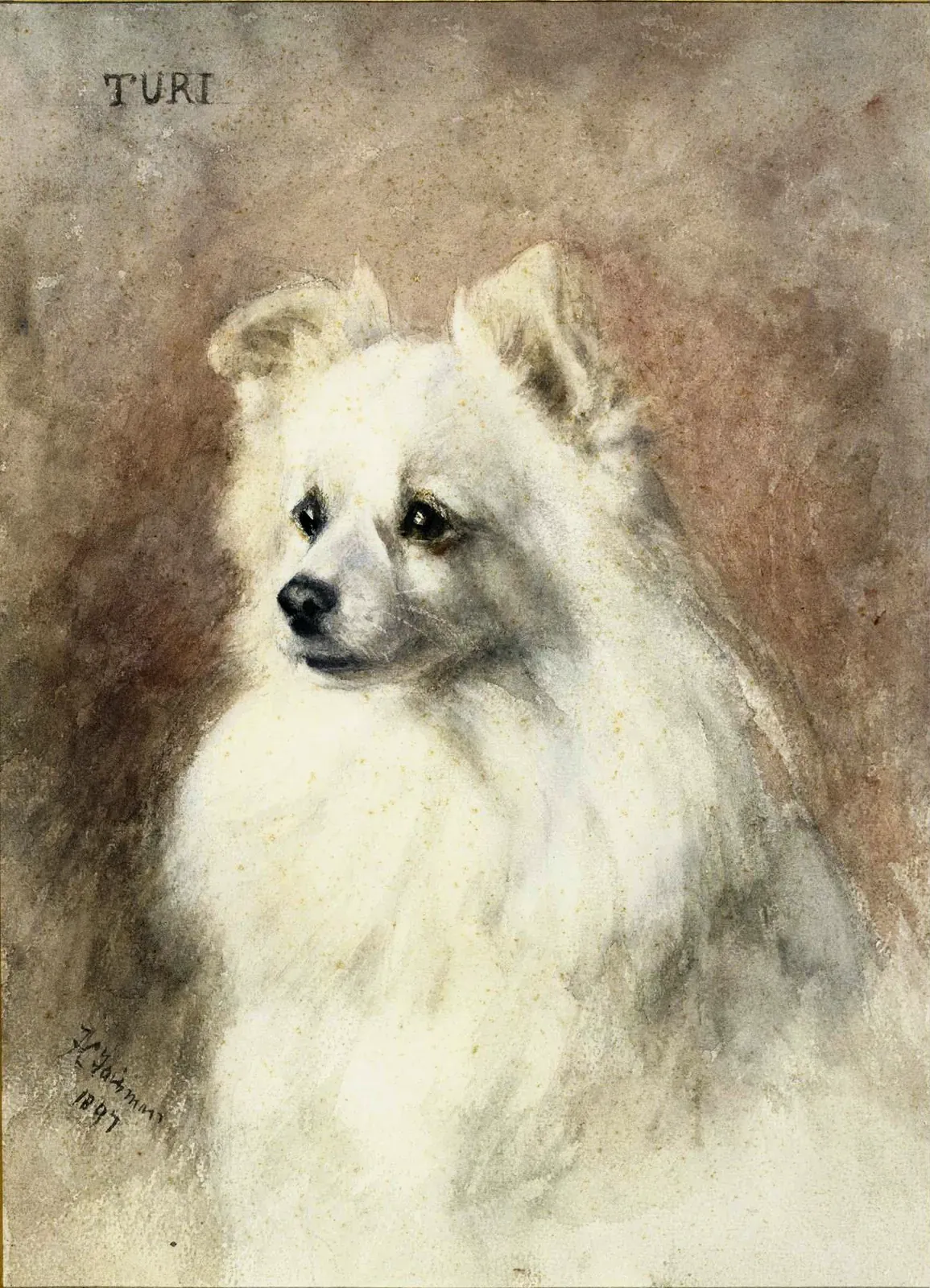
Queen Charlotte reportedly brought Pomeranians to England in the 1760s. Queen Victoria kept them from 1888, including Marco and Turi.
Is the Pomeranian a German Spitz?
Yes, in the FCI view. It descends from the German Spitz and is its smallest size, the Zwergspitz. The UK Kennel Club and register it as a separate breed.
Do Pomeranians shed?
Yes. The double coat sheds throughout the year and more in the seasonal blow-out.
Do Pomeranians bark a lot?
Many do. Early training reduces it, but the trait comes from the type.
Read next
 Closest DNAKeeshond15.1 Mb shared
 FamilySmall SpitzThe whole family
 Adopt a dogDog Shelters in GermanyTen big cities checked, how adoption works, what it costs
Sources (19)
- American Kennel Club, Pomeranian breed page and standard.
- AKC Canine Health Foundation, grant 03431, "Genome-wide investigation of alopecia X in Pomeranians".
- Colorado State University, College of Veterinary Medicine, report on microneedling for alopecia X in Pomeranians.
- Deslorelin implant case report in a neutered female Pomeranian with alopecia X, 2025.
- Fédération Cynologique Internationale, Deutscher Spitz (German Spitz), standard no. 97.
- Frontiers in Veterinary Science, retrospective study of tracheal collapse in dogs, 2024.
- Lewis T.W. et al., "Longevity and mortality in Kennel Club registered dog breeds in the UK in 2014", Canine Genetics and Epidemiology, 2018.
- O'Neill D.G. et al., "The epidemiology of patellar luxation in dogs attending primary-care veterinary practices in England", Canine Genetics and Epidemiology, 2016.
- Orthopaedic Foundation for Animals, patellar luxation data 1974 to 2014 (as reported in Wikipedia, "Pomeranian dog").
- Parker H.G. et al., "Genomic analyses reveal the influence of geographic origin, migration, and hybridization on modern dog breed development", Cell Reports, 2017.
- Soontornvipart K. et al., "Incidence and genetic aspects of patellar luxation in Pomeranian dogs in Thailand", The Veterinary Journal, 2013.
- The Kennel Club (UK), Pomeranian breed standard.
- Wikipedia, "Pomeranian dog" and "German Spitz".
- Pomeranian breed club histories (Queen Victoria, Pomeranian Club 1891, AKC recognition 1900).
- Pomeranian Club of America (pomeranian.org), "Pomeranian firsts: a journey through Pomeranian history": Marco 1888, club 11 February 1891, standard 1898 and 1909.
- Fédération Cynologique Internationale, breed nomenclature page, Deutscher Spitz no. 97 (country of origin Germany, five varieties).
- German Spitz Breed Owners Club (UK), "The German Spitz in Europe".
- Wikipedia, "Pomerania".
- Atlas data, breed records and Parker 2017 shared-haplotype table (this site).