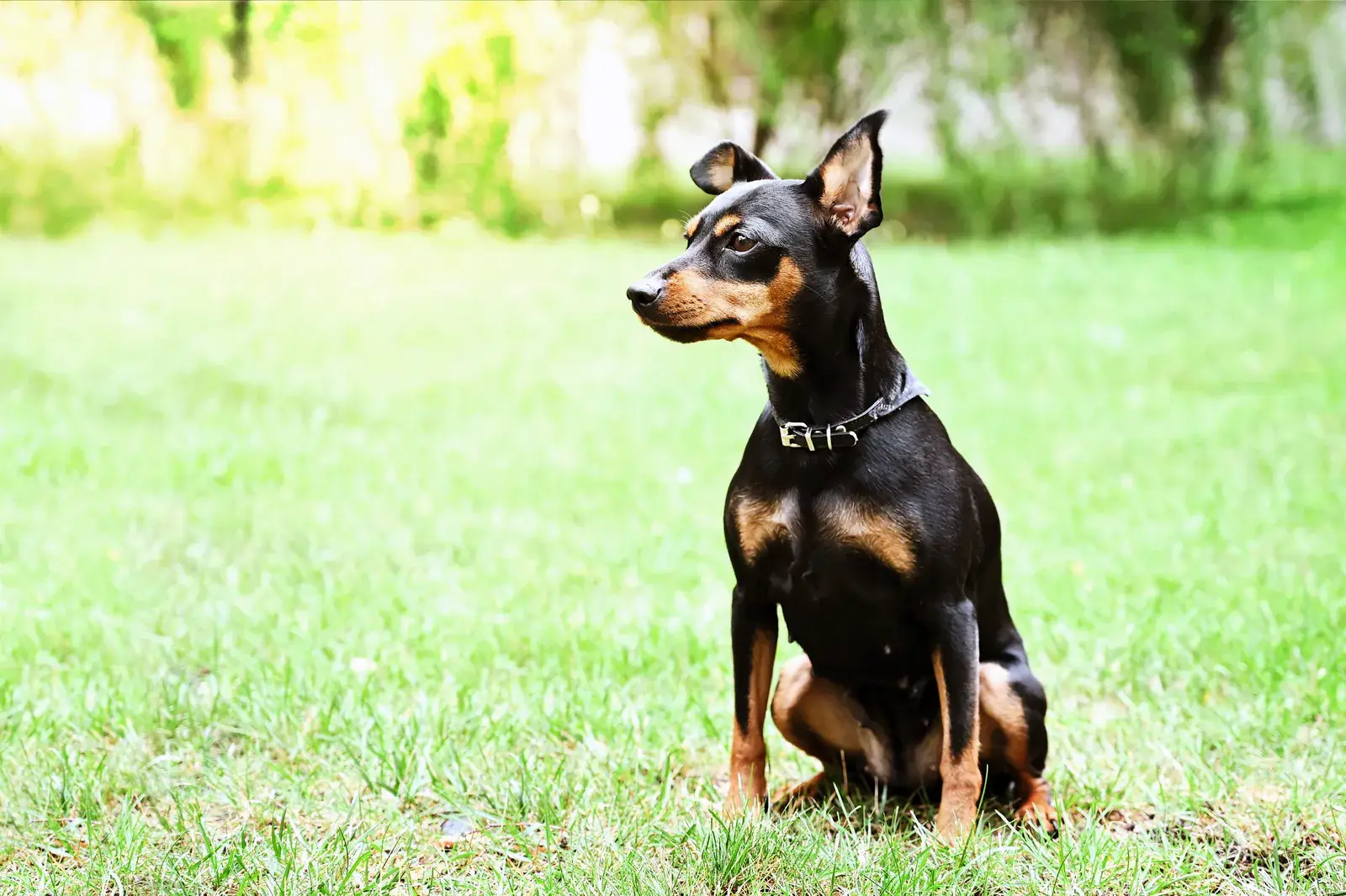
It began as a farm and stable ratter, and in Germany it was once called the Reh Pinscher because its red coat and fine legs reminded people of a roe deer. It is not a shrunken Dobermann: the two are cousins in the Pinscher family, and the Min Pin is the older of the pair. Today the Min Pin is a lively, alert and funny companion that needs daily exercise, early training and a firm, kind owner who can handle a small dog with a big opinion. The atlas data gives a life span of 12 to 16 years.
Miniature Pinscher quick facts
 Related breedAkita1600 to 1931 · JapanEarly Modern Era
- Country of origin
- Germany
- Period of development
- About 1600 to 1895 (atlas data, medium confidence)
- Original job
- Ratting on farms and in stables; later a house companion
- Type
- Pinscher and ratter (FCI Group 2, Pinscher and Schnauzer, Molossoid and Swiss Mountain and Cattledogs; FCI standard no. 185; AKC Toy Group)
- Family
- Pinscher (Parker 2017 DNA , strong support)
- Parent breed in the atlas data
- German Pinscher (listed as a variety by Beckmann in 1895)
- Height
- FCI 25 to 30 cm; AKC 10 to 12.5 in; UKC 10 to 12 in
- Colours
- Black with rust, chocolate with rust, and solid red shades (see the )
- Life span
- 12 to 16 years (atlas data)
- Other names
- Min Pin, Zwergpinscher, Reh Pinscher
Drawn to scale in real centimetres. Its back reaches about 29 cm, your shin; its head about 36 cm, just below your knee.
Where it sits in the tree
Early Modern Era · 1600 to 1799

Name and origin
 Related breedAmerican Bulldog1700 to 1980 · United StatesEarly Modern Era
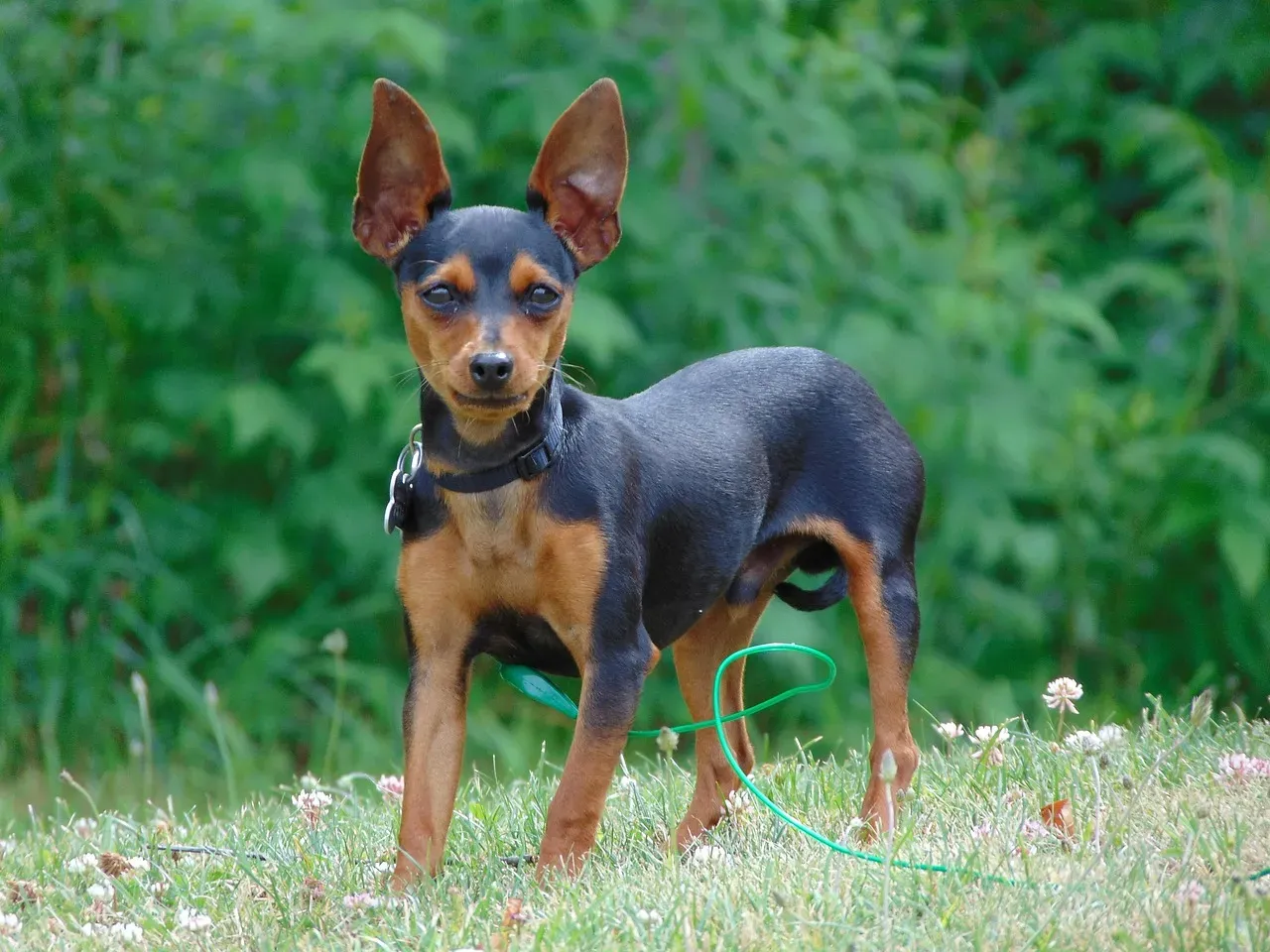
"Pinscher" is a German word of uncertain origin, and the atlas data records it that way. "Zwerg" means "dwarf", so Zwergpinscher is the "dwarf Pinscher", the name used by the FCI. The English name Miniature Pinscher is the direct translation. The old German name Reh Pinscher ("roe-deer Pinscher") describes the red coat, the slim legs and the way the dog lifts its feet.
The breed comes from Germany, where small short-haired ratters were kept on farms and in stables long before there was a . The atlas data dates its development from about 1600 to 1895, with medium confidence. That range is wide because the early dogs were working animals that nobody wrote down. The end date is the year Beckmann wrote the breed down.
The Min Pin is often described as a miniature Dobermann. The American Kennel Club says this is wrong: the Dobermann was created later, around the 1890s, and the Min Pin is the older dog. The atlas data lists the Dobermann as a sibling of the Min Pin, which fits the idea of two relatives from one Pinscher stock rather than a parent and a copy.

History
 Same eraBlack Mouth Cur1700 to 1900 · United StatesEarly Modern Era
Farm and stable ratters
The early Pinscher type was a short-coated dog of the German countryside, used to keep rats and mice out of barns, stables and grain stores. The larger form became the German Pinscher. A smaller version, which could hunt in tight places and live in a house, was kept alongside it. The idea that the small dogs were just the small puppies of the large type is a common guess, but there is no written record of how the size was fixed.
Beckmann and the first club
In 1895 the German dog writer Ludwig Beckmann listed the Miniature Pinscher as a variety of the Pinscher. That is the source of the 1895 date in the atlas data. The same year, German breeders founded a club for the Pinscher and, later, the Schnauzer, the Pinscher-Schnauzer Klub. Its job was to write a standard and keep a stud book. Dogs of the red-brown colour were known as Reh Pinschers in these years.
German show records also name Reh Pinschers at a Swiss show in 1882, and the AKC history says that the German Kennel Club registered the breed in 1883. These dates come from a single breed history and are given as the club states them.
Crossing the Atlantic
The breed reached the United States, where the Miniature Pinscher Club of America (MPCA) promotes it, and the AKC placed it in the Toy Group. One breed history says the AKC listed the dog as "Pinscher (Toy)" until the current name was adopted in 1972.
The FCI breed is the Zwergpinscher, and the FCI standard (no. 185, 2007 edition) is the German-led document. The AKC and UKC standards are written separately for American shows.
The Min Pin today
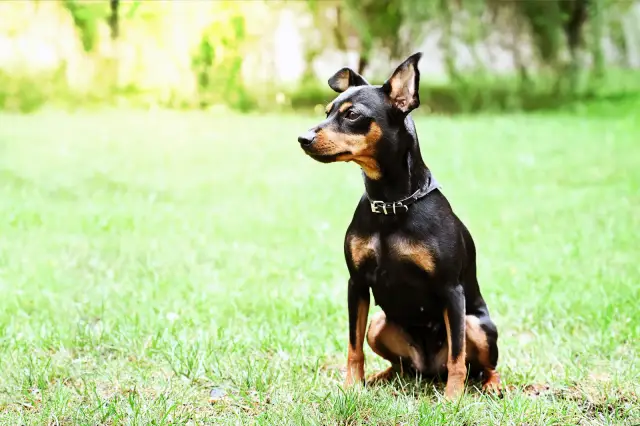
The Min Pin has stayed popular as an apartment-sized dog with a lively character. It competes in , obedience, agility and rally. Its smooth coat suits owners who want a clean house, and its size is easy to carry on a train. It is not a fragile lapdog, and many owners say that is the whole appeal.
Ancestors, descendants and relatives
 Same familyBluetick Coonhound1700 to 1945 · United StatesEarly Modern Era
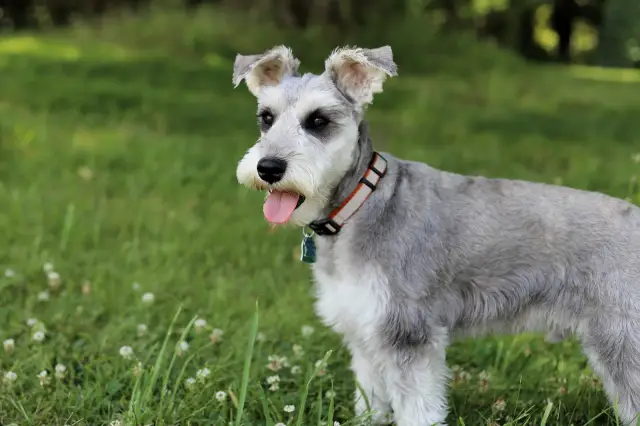
The atlas data places the Min Pin in the Pinscher clade of the Parker 2017 DNA study, with strong support. It records the German Pinscher as the parent breed, based on Beckmann's 1895 listing of the Min Pin as a variety of the Pinscher. The Miniature Schnauzer is recorded as a descendant in the atlas data, but the link has low confidence: some writers suggest that Min Pin blood was used when the Miniature Schnauzer was made, and there is no strong record for it.
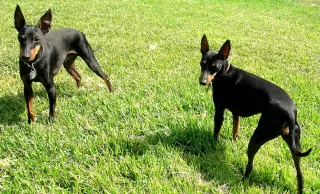
The Parker 2017 study measured how much DNA the Min Pin shares with other breeds. The biggest shared stretch is with the Toy Manchester Terrier, a slim black-and-tan English ratter that looks like a Min Pin in some colours.
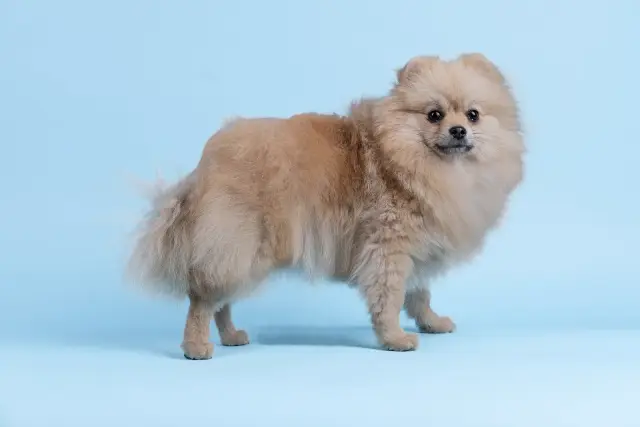
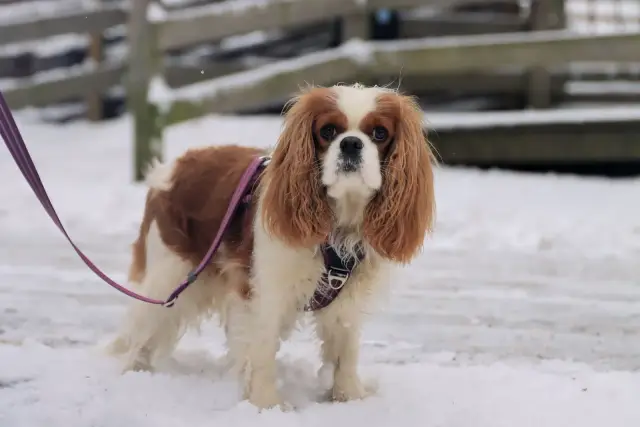
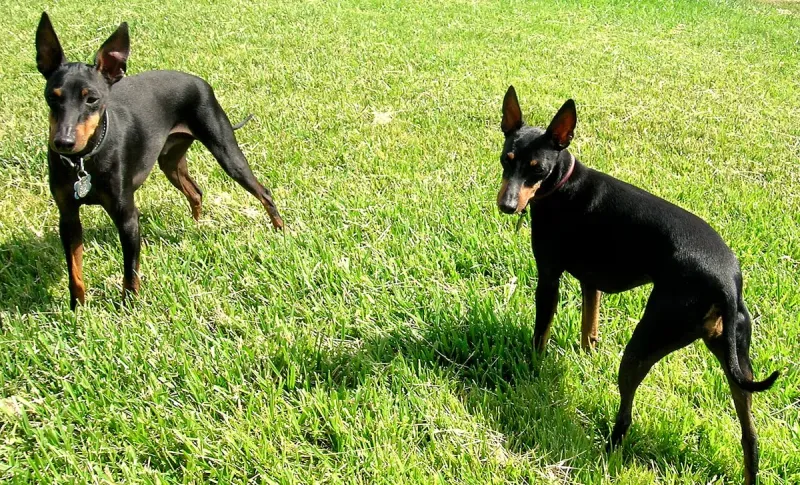 Miniature Pinscher and Toy Manchester Terrier
- Miniature Pinscher and Pomeranian
- Miniature Pinscher and Cavalier King Charles Spaniel
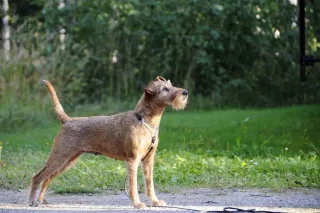
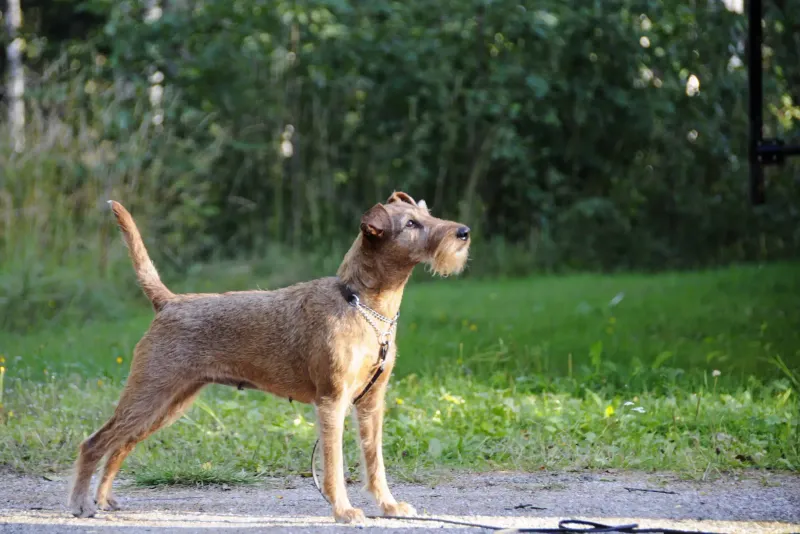 Miniature Pinscher and Irish Terrier
is a hint of common ancestry, not a family tree. The Pomeranian and the Cavalier are small companion breeds that were mixed with many others in the 1800s, which may explain some of those stretches.
Sister breeds · 2
- Dobermann1880 to 1900
- Toy Manchester Terrier1900 to 1934
Descend from it · 1
- Miniature SchnauzerGermany
- Toy Manchester Terrier21.1 Mb 0.9%
- Pomeranian12.7 Mb 0.5%
- Cavalier King Charles Spaniel12.1 Mb 0.5%
- Irish Terrier9.9 Mb 0.4%
Source: Parker et al. 2017. Percent of the whole genome.
| Relative | Relationship in the data | Shared DNA (Parker 2017) |
|---|---|---|
| Toy Manchester Terrier | Sister breed (medium confidence) | 21.1 Mb |
| Pomeranian | DNA link | 12.7 Mb |
| Cavalier King Charles Spaniel | DNA link | 12.1 Mb |
| Irish Terrier | DNA link | 9.9 Mb |
Source: Parker et al. 2017, Cell Reports, shared haplotypes between 161 breeds (1,346 dogs).
The breed standard
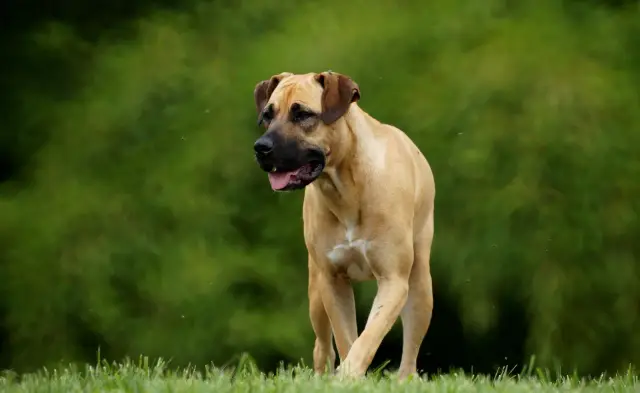 Looks relatedBoerboel1650 to 1983 · South AfricaEarly Modern Era
A breed standard is the written ideal for a breed that kennel clubs judge dogs against. The Miniature Pinscher standards agree on the picture: a small, sturdy, short-coupled dog with a lively, confident bearing. They differ in the numbers, in how colours are listed, and in what is said about ears and tails.
| Trait | What the standards say |
|---|---|
| Height | FCI: 25 to 30 cm. AKC: 10 to 12.5 in (about 25 to 32 cm), with 11 to 11.5 in preferred; dogs under 10 in or over 12.5 in are disqualified. UKC: 10 to 12 in (about 25 to 30 cm) |
| Weight | UKC: in proportion to the build, neither too fat nor too thin. AKC: no weight range, height governs |
| Coat | Short, smooth, hard and glossy, close to the body |
| Colours | AKC: black with rust markings, chocolate with rust markings, solid red (stag red). FCI: red and brown shades, and black or chocolate with tan |
| Head | Fine, narrow and in proportion to the body, with a flat skull and a strong muzzle |
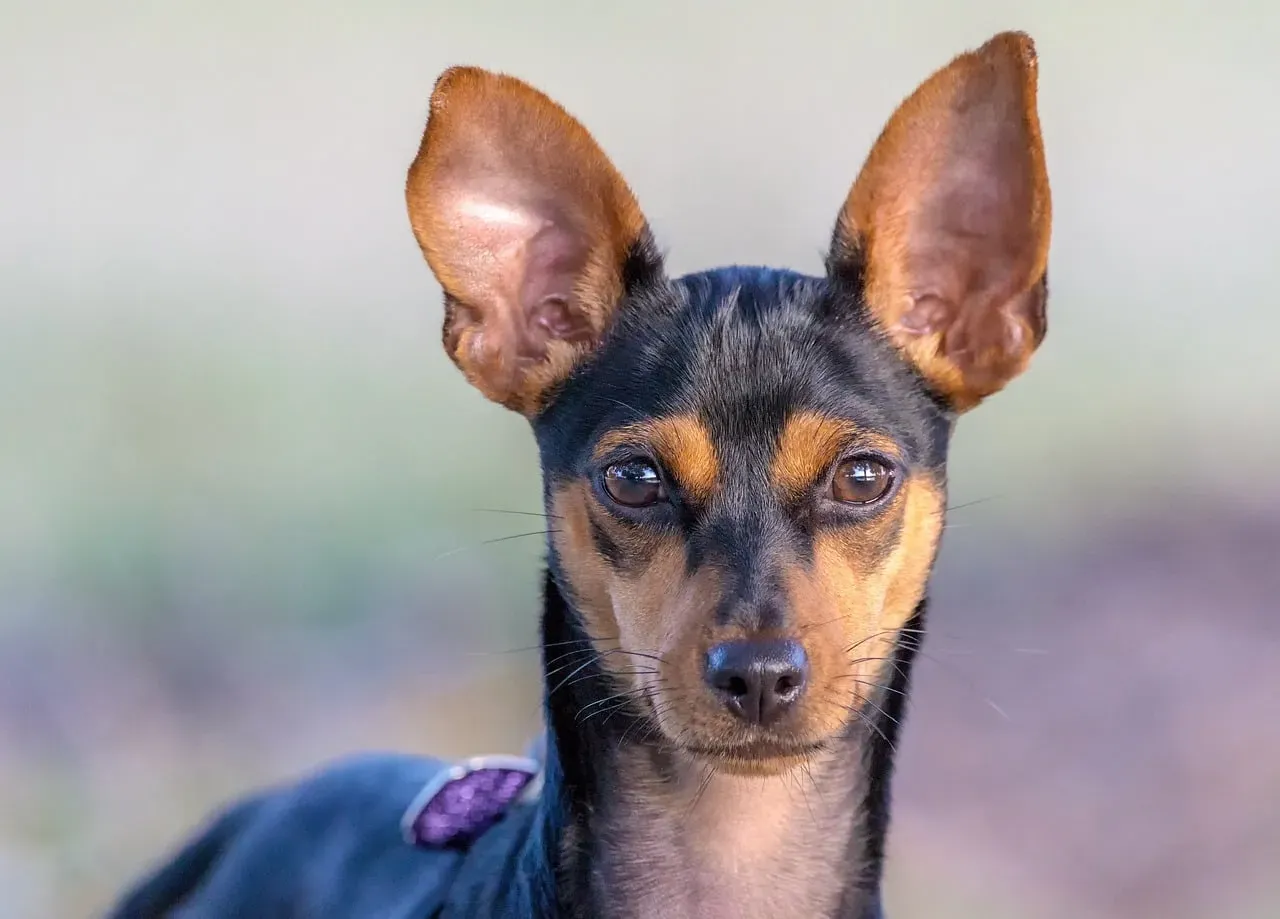
| Ears | AKC: set high and erect, cropped or natural |
| Gait | AKC: a high-stepping, springing "hackney" action that is a defining feature of the breed |
| Tail | AKC describes a docked tail. Docking is banned or restricted in much of Europe |
Colours. In the show ring the colours are black, chocolate and red. Solid red dogs are the colour that earned the Reh Pinscher its old name. Dogs sold as "blue" or "isabella" are not in the club standards listed here.
Hackney gait. The signature of the show Min Pin is the way it lifts its front feet high, like a hackney pony. Judges look for it, and it also tells you something about the dog's spirit: a Min Pin with a flat, slow walk is not in the mood to play.
Not a Dobermann. The Min Pin has the same colours as the Dobermann, but it is a different dog with its own shape: shorter in the body, finer in the head and, by most owners' accounts, much more cheeky.
Temperament
 Related breedBorder Terrier1700 to 1920 · United KingdomEarly Modern Era
The Min Pin has the temperament of a working terrier in a toy body. The AKC describes a spirited, fearless and proud dog that is playful and curious. The same source says that Min Pins may try to test their owners' limits, so patience and consistency matter.
- Bold. It will challenge a dog three times its size and has to be taught not to.
- Alert. It is quick to notice a noise or a stranger and can be a barker without training.
- Energetic. The AKC calls it very active and athletic, with a need for both physical exercise and mental stimulation.
- Clever. It learns fast and gets bored fast. Short, varied training sessions work better than drills.
- Attached. It usually bonds closely to its people and wants to be in the room.
Like most small, bold dogs, a Min Pin that is allowed to run the house can become a nuisance. Early socialisation, consistent rules and a daily job (a puzzle, a trick, a short run) keep the dog happy. The breed is quick to learn what gets a reaction.
With children and other pets
The breed is small and light, so a toddler can hurt it by accident, and a boisterous young Min Pin can knock a small child over. The breed was a ratter, so it may chase and kill small pets such as hamsters and mice. No breed club study measures this, and individual dogs differ.

Health
 Related breedCatahoula Leopard Dog1700 to 1979 · United StatesEarly Modern Era
Many Miniature Pinschers live long, active lives, and the MPCA describes the Min Pin as fairly healthy compared with many other breeds. This section sets out what the breed club and researchers report, and what breeders and owners can do. No published study gives a reliable "about 1 in N" figure for any of these conditions in the Min Pin, so the table says so rather than guessing.
What the breed club lists
The MPCA health pages list the following among the breed's main concerns: patellar luxation, cervical disc disease, Legg-Calve-Perthes disease, epilepsy, thyroid problems, heart defects and eye problems. The MPCA says the breed takes part in the OFA Canine Health Information Center (CHIC) programme, and its health committee runs a survey to learn which problems matter most and how severe they are.
| Condition | What it is | How common | What helps |
|---|---|---|---|
| Patellar luxation | The kneecap slips out of its groove; the dog may skip or hold up a back leg | Described as one of the most frequent orthopaedic problems in the breed; no published figure | Patella examination of parents before breeding; lean body weight; a vet exam if the dog skips |
| Legg-Calve-Perthes disease | The top of the thigh bone loses its blood supply and collapses, usually in young small dogs | Listed by the breed club; no published figure for the breed | Vet exam for any young dog that limps on a back leg; surgery is the usual treatment; research on the genetics in small breeds is under way |
| Mucopolysaccharidosis type VI | An inherited enzyme shortage that affects bone and joints | Rare; a DNA test exists | DNA test of breeding dogs (PennGen, University of Pennsylvania) |
| Cervical disc disease | A disc in the neck bulges and presses on the spinal cord | Listed by the breed club; no published figure | Avoid rough jumping; use a harness rather than a collar; see a vet quickly for neck pain |
| Epilepsy | Repeated seizures with no other cause found | Listed by the breed club; no published figure | Vet work-up; ask breeders about seizures in the line |
| Heart defects and thyroid problems | Heart structure faults and low thyroid hormone | Listed by the breed club; no published figure | Heart check by the vet; thyroid blood test if signs appear |
| Eye problems | Several inherited eye conditions | Listed by the breed club; no published figure | Annual eye exam of breeding dogs |
The big picture is simple. Ask the breeder what tests the parents had, keep the dog lean, and see a vet quickly for limping, neck pain or a fit.
Research on Legg-Calve-Perthes disease
Legg-Calve-Perthes disease is the best-known bone problem in small dogs. A 2021 research award at the Cornell University College of Veterinary Medicine described a -wide search in small breeds that found a risk region in the West Highland White Terrier and the Miniature Poodle. The summary does not report Miniature Pinscher data, and nobody should read it as a Min Pin result. It shows that a gene test for the disease in small breeds may arrive in future.

Living with a Miniature Pinscher
 Related breedCoton de Tulear1600 to 1970 · MadagascarEarly Modern Era
| Daily reality | Rating | Why |
|---|---|---|
| Exercise per day | Medium to High | Very active and athletic (AKC); two walks plus play suit most dogs |
| Training needs | Medium | Clever but tests limits (AKC); needs firm, kind, regular training |
| Grooming | Low | Smooth coat; weekly brushing with a soft brush or hound glove, and regular nail trims (AKC) |
| Shedding | Low | Sheds very little (AKC) |
| Barking | Varies | Alert; depends on training and the individual dog |
| Time alone | Fair | Bonds closely; long hours alone are hard for most Min Pins |
| Children | Varies | Small and easy to injure; works with calm, older children; supervise |
| Other dogs | Varies | Bold with other dogs; early socialisation is needed |
| Cats and small pets | Varies | Ratter heritage; depends on early exposure; evidence is thin |
| Flat living | Good | Small size; still needs daily outdoor exercise |
| Heat tolerance | Fair | Short coat helps; no source rates it |
| Cold tolerance | Poor | Very short coat and little body fat; no source rates it, but owners often use a coat |
| First-time owner fit | Fair | Easy to handle but strong-willed; a puppy class helps |
A great fit if
- You want a small, tidy, active dog that is happy in a flat but gets outdoors daily.
- You like a dog with a sense of humour and will make training a game.
- You are home for much of the day, or can take the dog with you.
- You have no tiny pets such as hamsters, or can keep them apart.
Think twice if
- You want a quiet lap dog that sleeps all day.
- You have a toddler who is too young to be gentle.
- You are away for long hours every day.
- You want a dog that gets on with every stranger without effort.
Before you get one
- Health tests. Ask the breeder for a patella exam result, an eye exam result and the MPS VI DNA result for both parents. Ask for the original certificates, and ask whether Legg-Calve-Perthes or seizures have appeared in the line.
- Puppy or adult rescue. Breed rescues exist and often place adults whose size and character are known. An adult can be a good start for a first-time owner.
- First year. Plan for puppy classes, a daily routine of exercise and play, and safe jumping habits: Min Pins love to leap off sofas, which is hard on small legs.
Similar breeds to consider
- Toy Manchester Terrier. The closest DNA relative in the atlas data, with a similar smooth coat and ratter spirit.
- Chihuahua. Small and bold with a short, easy coat, but often more clingy.
- German Pinscher. The larger parent breed, with more exercise needs and more room needed.
- Miniature Schnauzer. Sturdy and lively with a coat that needs trimming.

Miniature Pinscher fun facts
 Related breedDachshund1600 to 1888 · GermanyEarly Modern Era
- The Min Pin is nicknamed the "King of Toys".
- The name Reh Pinscher comes from the German word for roe deer, a nod to the red coat and the light, high step.
- The Min Pin is older than the Dobermann and is not a scaled-down copy of it.
- The breed's high-stepping hackney gait is written into the AKC standard.
Frequently asked questions
How big does a Miniature Pinscher get?
The standard gives 25 to 30 cm. The gives 10 to 12.5 in (about 25 to 32 cm), with 11 to 11.5 in preferred, and the UKC gives 10 to 12 in.
How long does a Miniature Pinscher live?
The atlas data gives 12 to 16 years. No published study gave a median life span for the breed that this article could use.
Is a Miniature Pinscher a miniature Dobermann?
No. The Dobermann was created in the 1890s, and the Min Pin is the older breed. Both belong to the Pinscher family in the atlas data.
Are Miniature Pinschers good family dogs?
They can be, with calm older children and an owner who trains them. They are small and can be hurt by rough handling.
Do Miniature Pinschers bark a lot?
They are alert and often vocal. Training from puppyhood and enough exercise help.
What health problems do Miniature Pinschers have?
The breed club lists patellar luxation, Legg-Calve-Perthes disease, cervical disc disease, epilepsy, thyroid and heart problems and eye problems. See the Health section.
Read next
Closest DNAPomeranian12.7 Mb shared Sister breedDobermann1880 to 1900
 Adopt a dogDog Shelters in GermanyTen big cities checked, how adoption works, what it costs
Sources (13)
- Fédération Cynologique Internationale, Zwergpinscher (Miniature Pinscher), standard no. 185, 2007.
- American Kennel Club, Miniature Pinscher breed standard.
- American Kennel Club, Miniature Pinscher history and breed information.
- United Kennel Club, Miniature Pinscher breed standard, revised 2017.
- Miniature Pinscher Club of America, history and characteristics.
- Miniature Pinscher Club of America, health and research information.
- University of Pennsylvania School of Veterinary Medicine (PennGen), mucopolysaccharidosis VI test for the Miniature Pinscher.
- Cornell University College of Veterinary Medicine, research award on mutation detection in Legg-Calve-Perthes disease in small breeds, 2021.
- Orthopedic Foundation for Animals, Canine Health Information Center programme.
- Parker H.G. et al., "Genomic analyses reveal the influence of geographic origin, migration, and hybridization on modern dog breed development", Cell Reports, 2017.
- Beckmann L., Geschichte und Beschreibung der Rassen des Hundes, 1895.
- Fogle B., The New Encyclopedia of the Dog, Dorling Kindersley, 2009.
- Dogs Atlas breed records and Parker 2017 shared-haplotype table (this site).