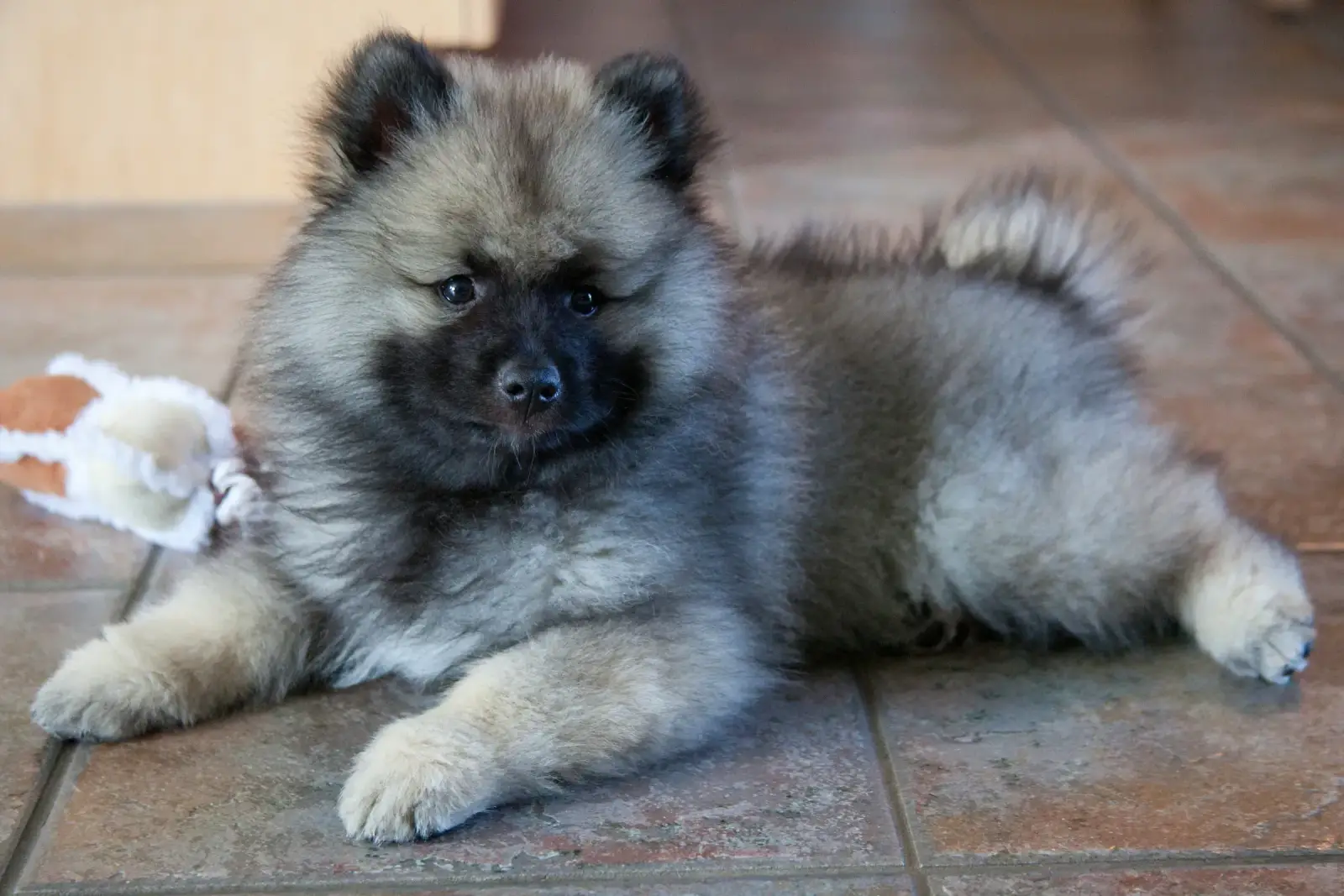
It was the dog of the Dutch barges and farms, a watchdog that rode the canals, and in the 18th century it became a symbol of the Dutch Patriot party. Today it is a friendly, talkative, people-loving companion that wants to be part of everything. This profile covers where the breed came from, how the name and the Patriot story fit together, what the standards say, what is known about its health, and who it suits.
Keeshond quick facts
 Related breedAkita1600 to 1931 · JapanEarly Modern Era
- Country of origin
- Netherlands and Germany (atlas data)
- Period of development
- 1700 to 1926 (atlas data); named Keeshond in England in 1926
- Original job
- Barge and farm watchdog, companion
- Type
- Spitz. AKC: Non-Sporting Group. UK Kennel Club: Utility Group. FCI: treated as a variety of the German Spitz (the Wolfsspitz)
- Height
- AKC: about 46 cm for dogs, 43 cm for bitches. FCI: about 49 cm, with a tolerance of 6 cm either way
- Weight
- Not set in the standards. Adults are commonly about 15 to 20 kg
- Coat
- Double: harsh, standing-off outer coat over a thick, woolly undercoat, with a ruff
- Colour
- Wolf-grey: grey and black shading, with a pale undercoat
- Life span
- Atlas data: 12 to 15 years
- Exercise
- Moderate: a good daily walk and play
- DNA family
- Nordic Spitz
- Closest relatives
- Eurasier, Swedish Vallhund, Pomeranian (, Parker 2017)
- Other names
- Wolfspitz, Wolfsspitz (German), Dutch Barge Dog
Drawn to scale in real centimetres. Its back reaches about 46 cm, your knee; its head about 58 cm, just above your knee.
Where it sits in the tree
Early Modern Era · 1600 to 1799
Name and origin
 Related breedAmerican Bulldog1700 to 1980 · United StatesEarly Modern Era
"Keeshond" is pronounced roughly "kayss-hond". The atlas data gives the name's meaning as Dutch Kees, after the patriot Cornelis "Kees" de Gyselaer, plus hond, "dog". Kees is a pet form of Cornelis, and hond is the Dutch word for dog. The plural is Keeshonden.
The name is a story in itself. It is usually traced to Kees de Gyselaer, a leader of the Dutch Patriots in the late 18th century, and said to be the owner of a dog of this kind that became a party emblem. The older name for the breed in England was the Dutch Barge Dog, and the dog was also called the Wolfspitz in Germany, where it is still known as the Wolfsspitz. The story of the Patriot connection is widely repeated, but it is a tradition and not a court record, so treat the details as legend.

History
 Same eraBlack Mouth Cur1700 to 1900 · United StatesEarly Modern Era
Spitz of the Rhine and the barges
The Keeshond belongs to the large European spitz family: dogs with a thick double coat, pricked ears and a tail carried over the back. In the Netherlands and the Rhineland these dogs were kept on farms and, above all, on the barges that moved goods along the rivers and canals. A watchdog that barked at strangers on the quay was useful on a boat with no door to lock. The atlas data places the breed's development between 1700 and 1926.
The Patriot dog
In the 1780s the Dutch Patriots challenged the House of Orange. Tradition says Kees de Gyselaer, a Patriot leader in Dordrecht, kept a dog of this type, and that the dog became a symbol of the movement. When the Prince of Orange regained power, in 1787 with Prussian help, the Patriots were put down. The story goes that the dog fell out of favour with the people who had adopted it and that the breed was left to the barge and farm families. This explanation of why the breed almost vanished from polite society is widely retold. It may be partly true, and it makes a good legend, but it should be read as tradition.
Barges, farms and survival
Through the 19th century the Keeshond lived on as a working man's dog, on barges and small farms along the rivers of Holland. It did not have a formal standard, and the type varied. It was a practical dog that did not need refined breeding, and that probably saved it.
Mrs Wingfield-Digby and England
The breed came to a wider audience in England through Mrs Wingfield-Digby, who is credited with bringing Dutch dogs of this type to Britain and promoting them. Sources disagree on the date: one gives 1905 for the first imports, while others describe her finding the dogs kept by Dutch barge captains and farmers in the years just after. In 1926 the name was changed in England from German Spitz or Wolfspitz to Keeshond, which is the date that stuck in most breed histories.
America and later growth
The breed reached the United States in the 1920s and was recognised by the American Kennel Club, where it sits in the Non-Sporting Group. The UK Kennel Club lists it in the Utility Group. The FCI does not list it separately; it treats the Keeshond as a variety of the German Spitz, the Wolfsspitz, differing in size and colour from the other spitz varieties.
A companion today
The Keeshond is now almost entirely a companion dog, with a following in obedience, agility, rally and therapy work. It remains less common than the other spitz breeds, which is part of its appeal.
 Save
Relatives and DNA
 Same familyBluetick Coonhound1700 to 1945 · United StatesEarly Modern Era
The atlas data places the Keeshond in the Nordic Spitz family. In the 2017 Parker et al. study of 161 breeds (Cell Reports), the spitz breeds of northern Europe formed a clear group. The atlas data lists its closest DNA relatives, measured in () of shared DNA.
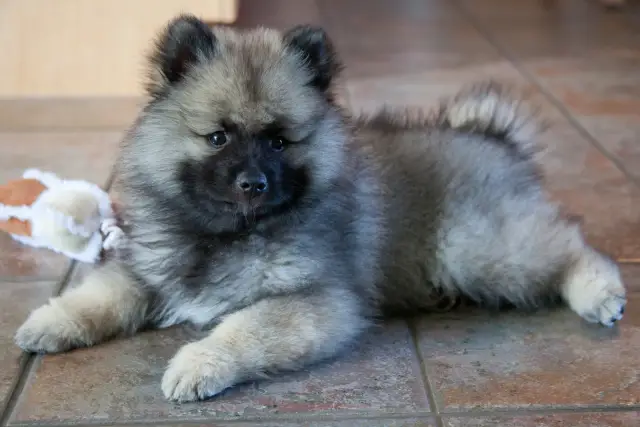
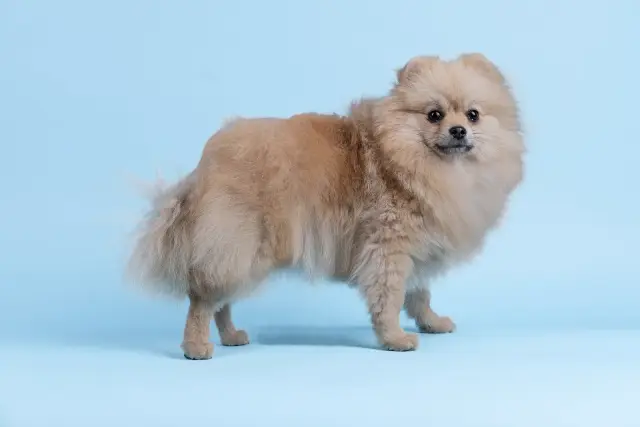
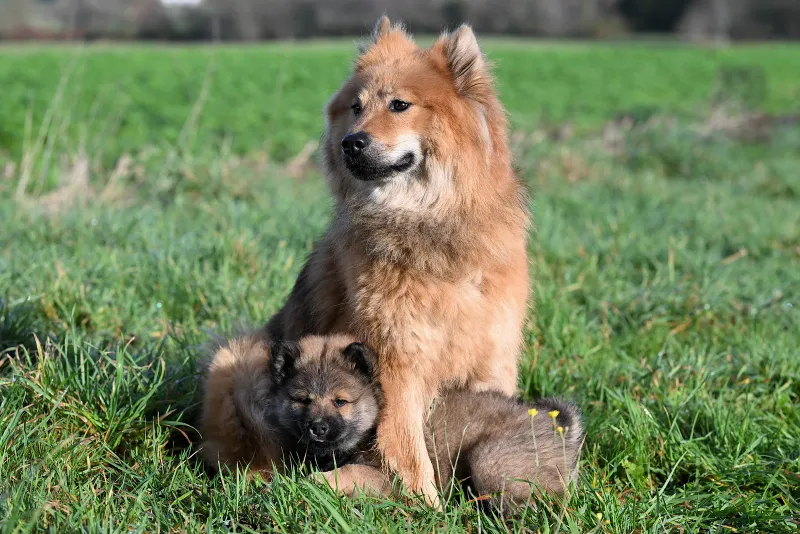 Keeshond and Eurasier
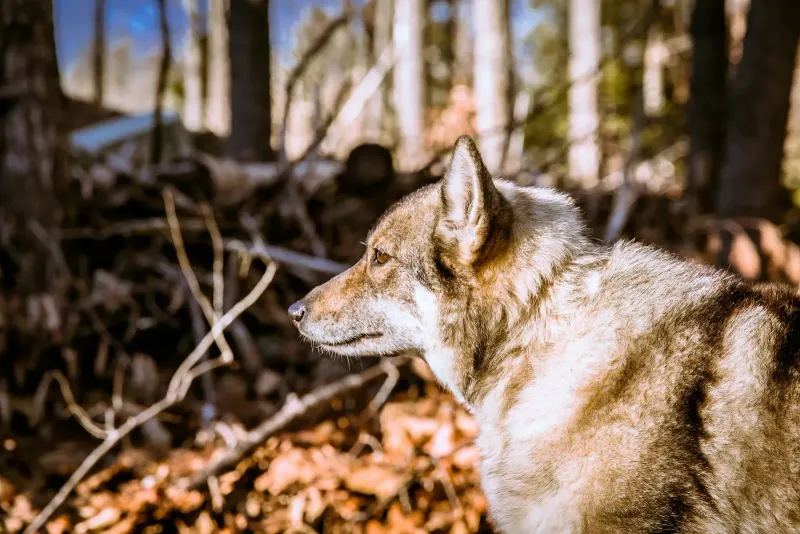 Keeshond and Swedish Vallhund
- Keeshond and Pomeranian
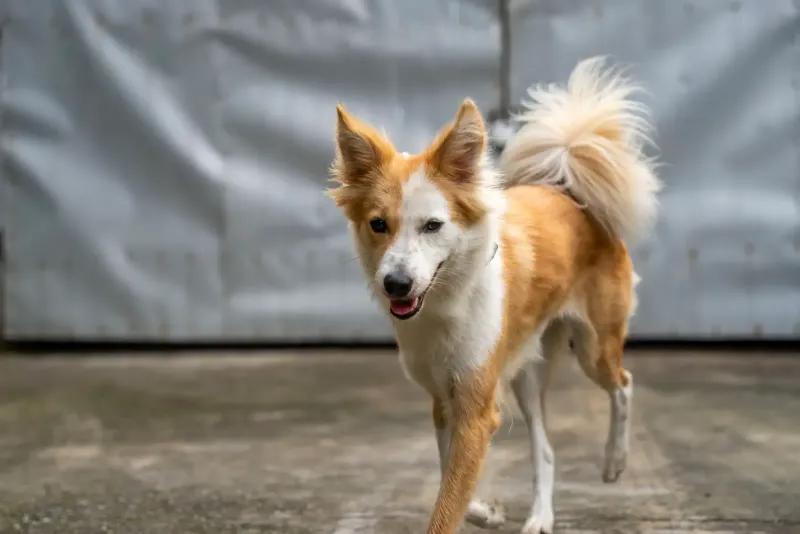 Keeshond and Icelandic Sheepdog
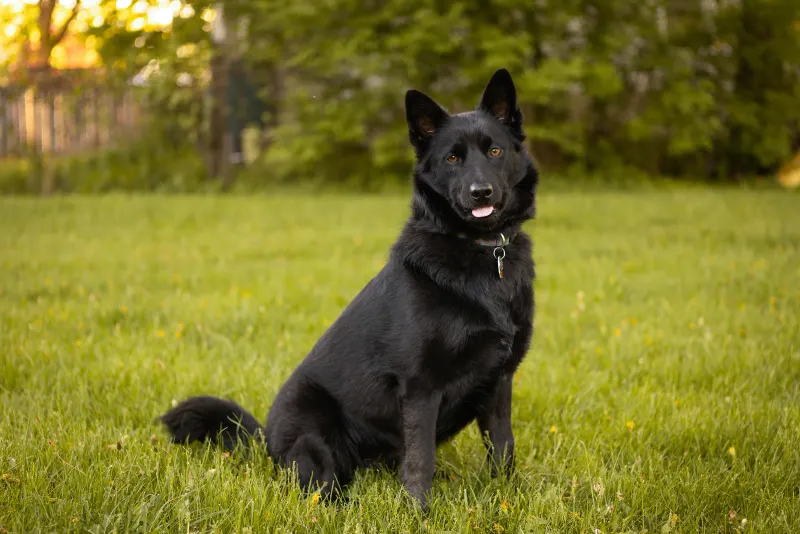 Keeshond and Schipperke
The Eurasier is the clearest relative, and the atlas data lists it as a child of the Keeshond, along with the American Eskimo Dog. Further down, the Alaskan Klee Kai is listed as a descendant. The FCI treats the Keeshond as a variety of the German Spitz, which is the parent in the atlas data.
Eurasier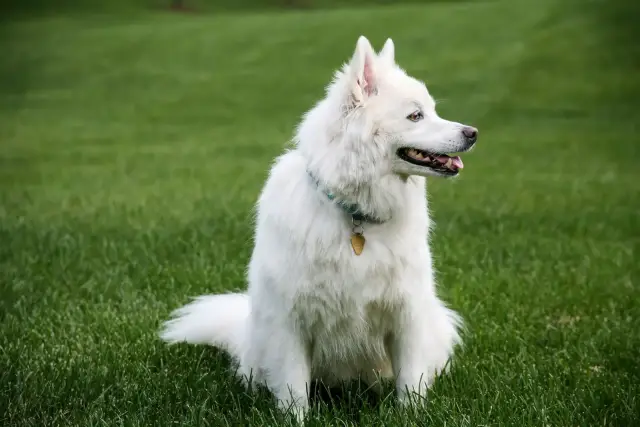 American Eskimo DogEurasierAmerican Eskimo Dog
The siblings in the atlas data are the Pomeranian, the Japanese Spitz, the American Eskimo Dog and the Indian Spitz. To see where the Nordic Spitz family sits among all the others, open the dog breed family tree.
Keeshond vs Pomeranian
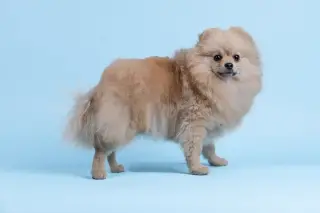
Both belong to the German spitz tradition and share a fox-like face and a curled tail, but they are very different in size.
Keeshond vs German Spitz
The FCI treats the Keeshond as the Wolfsspitz variety of the German Spitz, with the grey colouring. The other varieties of the German Spitz differ in size and colour, from the small Klein to the large Gross. The main differences are the wolf-grey colour and a size around 49 cm in the FCI standard.
 Save
Sister breeds · 4
- Pomeranian1800 to 1900
- Indian Spitz1850 to 1990
- American Eskimo Dog1900 to 1917
- Japanese Spitz1920 to 1948
Descend from it · 2
- American Eskimo DogUnited States
- EurasierGermany
- Eurasier36.7 Mb 1.5%
- Swedish Vallhund16.0 Mb 0.7%
- Pomeranian15.1 Mb 0.6%
- Icelandic Sheepdog12.4 Mb 0.5%
- Schipperke10.5 Mb 0.4%
- Standard Schnauzer10.5 Mb 0.4%
- American Eskimo Dog10.4 Mb 0.4%
- Miniature Schnauzer10.2 Mb 0.4%
Source: Parker et al. 2017. Percent of the whole genome.
| Point | Keeshond | Pomeranian |
|---|---|---|
| Size | Medium, about 43 to 46 cm | Toy, about 18 to 24 cm |
| Weight | About 15 to 20 kg | About 2 to 3.5 kg |
| Colour | Wolf-grey with black tips and spectacles | Many colours, with orange the best known |
| Role | Watchdog and companion | Toy companion |
| Exercise | Moderate daily walks | Short walks and play |
| Group | AKC Non-Sporting, KC Utility | AKC and KC Toy |
The breed standard
 Looks relatedBoerboel1650 to 1983 · South AfricaEarly Modern Era
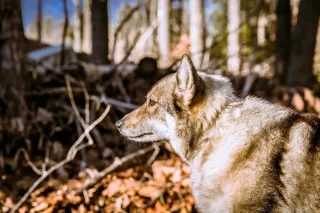
The standards describe a compact, well-balanced spitz, bright and alert, with a coat that stands out from the body.
| Trait | What the standards say |
|---|---|
| Height | AKC: 18 inches (46 cm) for dogs and 17 inches (43 cm) for bitches. FCI: about 49 cm, with a tolerance of 6 cm either way |
| Build | AKC and KC: short-coupled and compact, well balanced, with a strong back |
| Head | AKC and KC: wedge-shaped, fox-like, with a clearly marked stop |
| Ears | AKC and KC: small, triangular, erect and set high |
| Eyes | AKC and KC: dark and oblique, with fine dark lines that run from the outer corner of each eye to the ear, forming the spectacles |
| Coat | AKC and KC: long, straight, harsh outer coat that stands off the body, with a thick, soft, pale undercoat; a mane and ruff, and feathered legs and tail |
| Colour | AKC and KC: a mixture of grey and black, with a pale cream or grey undercoat; clear grey legs and feet |
| Tail | AKC and KC: set high and carried tightly curled over the back, with a black tip |
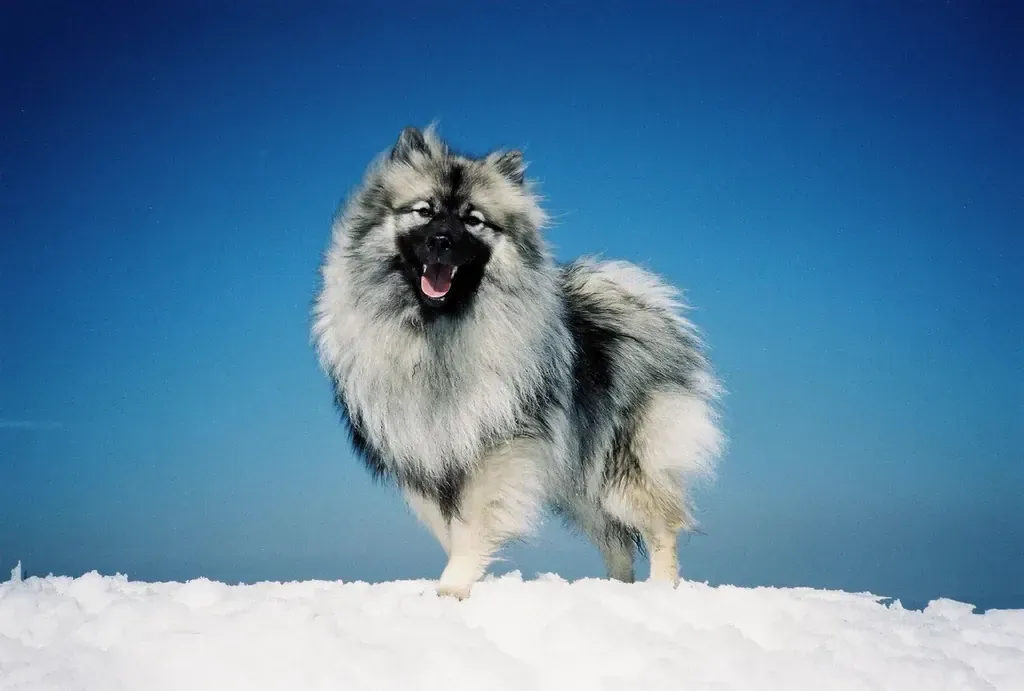
Spectacles. The delicate dark lines and shading around each eye give the dog its quizzical expression. Breed sources describe the spectacles as a defining feature, and the standards treat poor markings as a fault.
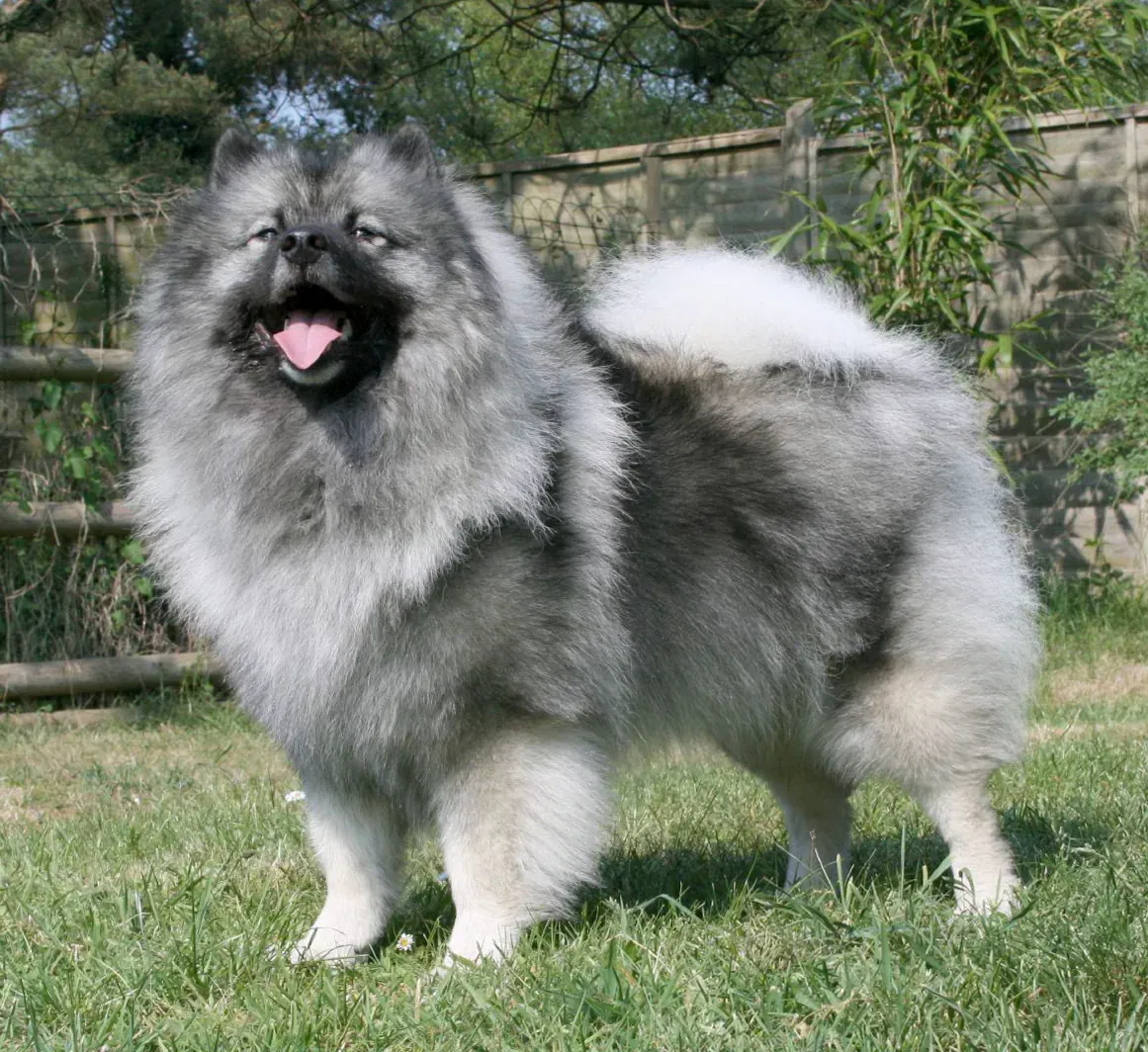
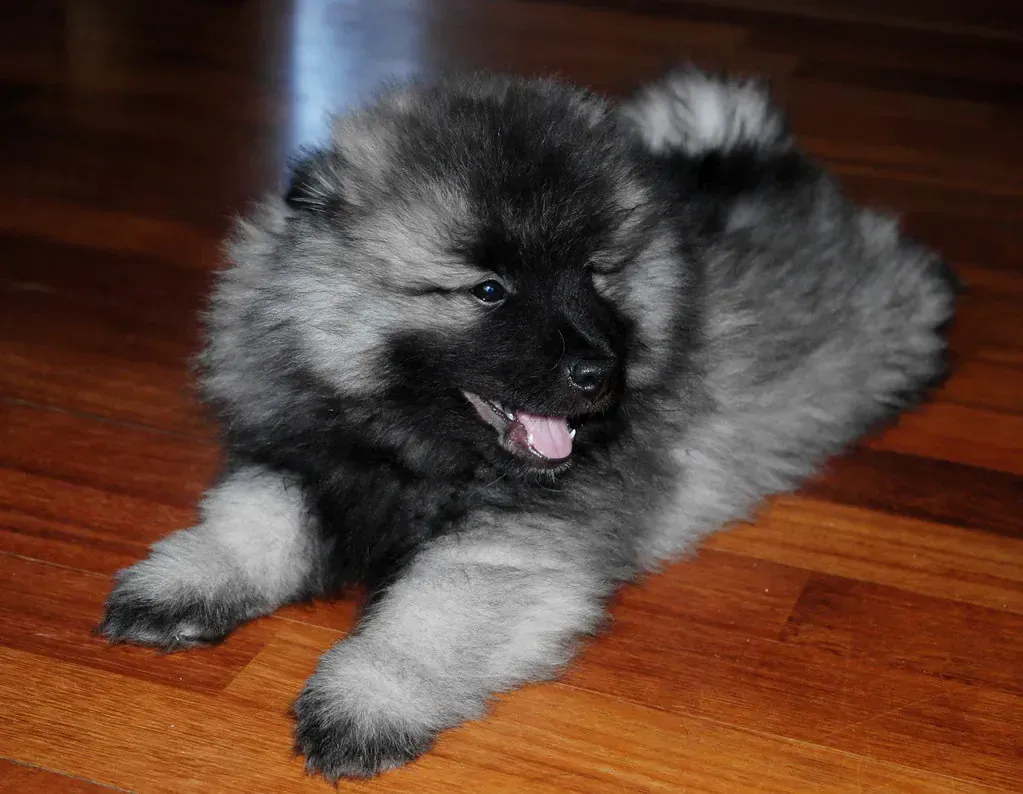
The coat. The outer coat is harsh and straight, and the undercoat is thick and woolly. The result is a plush look that comes from the undercoat pushing the outer coat out. A coat that lies flat, curls or parts in the middle is not what the standards want.
Colour. The Keeshond is a wolf-grey dog with black tips on the outer hairs. Puppies are born darker and lighten as the coat comes in.
Tail. The tail curls tightly over the back and lies against the body. It is a hallmark of every spitz.
Coat and grooming
 Related breedBorder Terrier1700 to 1920 · United KingdomEarly Modern Era
The Keeshond's coat looks as though it needs trips to a salon, but most owners say it is easier than it looks. The harsh outer hair does not mat much, and the dog does not need clipping. Its job is to keep the dog warm and dry, and it should never be shaved.
Brushing. A thorough brush and comb once or twice a week keeps the coat in order. Work down to the skin, because the undercoat is where the tangles start. Focus on the ruff, the britches and behind the ears.
Seasonal blowout. Keeshonden shed their undercoat heavily once or twice a year, and for a few weeks the house fills with fur. More frequent brushing during these weeks helps. Outside the blowout, shedding is steady but manageable.
Never shave. Shaving the coat for the summer does not cool a spitz. The double coat insulates against heat as well as cold, and a shaved coat may grow back patchy. A trim of the feet and hocks is the most that is needed. For the basics of coat care, see the dog grooming guide.
Bathing. Rarely needed. The coat is naturally clean and sheds dirt when dry.
 Save
Temperament
 Related breedCatahoula Leopard Dog1700 to 1979 · United StatesEarly Modern Era
The Keeshond is often described as a "people dog". It was a companion on the barge and the farm, not a hunter or a guard in the sense of attacking, and it wants to be with the family.
Friendly and affectionate. Most are warm with their own household and cheerful with guests. It is common for a Keeshond to follow its owner from room to room.
Alert and talkative. It was bred to warn of strangers, and it will announce visitors and passers-by. Barking is the breed's main fault for many owners. Training and exercise help, but a quiet Keeshond is not a typical Keeshond.
Clever and eager. It learns quickly and enjoys training that involves treats, praise and games. It often does well at obedience and rally. See dog training basics for how to start.
Sensitive. A Keeshond that is shouted at or left alone for long periods may become anxious. It needs company and a calm, consistent routine.
With children and other pets. Most are good with children and can get on well with other dogs and with cats, when raised together. Their size and sturdiness make them suited to family life. See the best dog breeds for families for how breeds compare.
Separation. The breed is known to dislike being alone. Long hours alone can lead to barking and chewing.
Training tips
- Start early. Puppy classes and calm exposure to noises, people and other dogs.
- Teach "quiet". Reward the pause after the first bark and build from there.
- Use games. A food-motivated, social dog learns fast when training feels like play.
- Practise being alone. Build up absences in small steps from puppyhood.
- Keep it kind. Reward-based methods; sharp handling upsets a sensitive dog.

Health
 Related breedCoton de Tulear1600 to 1970 · MadagascarEarly Modern Era
The Keeshond is generally a long-lived breed. The atlas data gives 12 to 15 years. As with most breeds, no single large veterinary survey is quoted here, so figures for how common each condition is are not available except where stated.
| Condition | What it is | How common | What helps |
|---|---|---|---|
| Primary hyperparathyroidism | An overactive parathyroid gland that raises blood calcium and can cause thirst, urinary stones and weakness; reported as inherited in Keeshonden | No published figure | Blood calcium tests in older dogs; ask the breeder about the line |
| Heart defects present from birth | A group of structural heart defects; a defect of the heart outflow has been studied in the breed | No published figure | Heart check; ask the breeder about the parents |
| A loose or poorly shaped hip joint | No published figure for the Keeshond | Hip scoring of both parents, lean weight | |
| Patellar luxation | A kneecap that slips out of its groove | No published figure | Vet check; breeding stock should be examined |
| Epilepsy | Seizures, often starting in young adult dogs | Reported in the breed; no published figure | Vet work-up, medication if needed |
| Eye disease | Cataract and other eye changes | No published figure | Eye test of breeding dogs |
| Skin and coat problems | Hair loss, flaking and coat changes | No published figure | Vet diagnosis; do not shave the coat |
| Thyroid disease | An underactive thyroid, with weight gain and dull coat | No published figure | Blood test, daily medication |
Hyperparathyroidism. The condition best known in the Keeshond is primary hyperparathyroidism, which was studied in the breed at a US veterinary school and described as an inherited disorder. It usually appears in middle-aged and older dogs. A vet can check blood calcium. Ask the breeder whether the condition has appeared in the line.
Heart disease. The breed has been used in research on inherited heart defects. Breeding dogs should be examined by a vet, and a puppy buyer should ask for the results.
Lifespan. 12 to 15 years is a typical range, not a measured median. No large breed-specific study of age at death is quoted here.
Weight. The thick coat hides a dog's shape. Feel the ribs and keep the dog lean. Extra weight is hard on the joints and heart.
Before you buy. Ask for hip and eye test results for both parents, a heart check, and the breeder's knowledge of hyperparathyroidism and epilepsy in the line. The national breed clubs publish health guidance.

Living with a Keeshond
 Related breedDachshund1600 to 1888 · GermanyEarly Modern Era
| Daily reality | Rating | Why |
|---|---|---|
| Exercise per day | Moderate | A good walk plus play and training |
| Training needs | Medium | Clever and eager, but sensitive |
| Grooming | Medium to high | Brushing twice a week and daily during the blowout |
| Shedding | High | A heavy seasonal blowout plus steady shedding |
| Barking | High | A natural watchdog and talker |
| Time alone | Poor | Needs company |
| Children | Good | Friendly and sturdy |
| Other dogs | Good | Usually sociable |
| Cats and small pets | Good to varies | Fine with those it grew up with |
| Flat living | Fair | Possible with daily exercise, but barking can annoy neighbours |
| Heat tolerance | Poor to fair | Heavy coat; keep cool and walk in the early morning |
| Cold tolerance | Good | Thick double coat |
| First-time owner fit | Good | Friendly and trainable, but needs time and brushing |
A great fit if
- You want a friendly, devoted companion that wants to be part of the family.
- You are home a lot, or you can take the dog with you.
- You enjoy brushing, and you accept the fur.
- You like a dog that warns you when someone arrives.
Think twice if
- You are away from home for long hours.
- You live in a thin-walled flat and cannot tolerate a barking dog.
- You want a low-shedding dog.
- You live somewhere very hot and cannot keep the dog cool.
Before you get one
- Health tests. Ask for hip and eye results, and for heart and parathyroid history in the line.
- Coat. Prepare for the seasonal blowout; a good brush, a comb and a vacuum cleaner are useful.
- Barking. Meet the parents, and ask the breeder how noisy the line is.
- Rarity. The breed is not common, and a wait for a well-bred puppy is normal.
Similar breeds to consider
- German Spitz. The same tradition, in several sizes and colours.
- Eurasier. A calm, family-minded dog that comes from the Keeshond line.
- American Eskimo Dog. A white spitz with a similar build and a friendly nature.
- Schipperke. A black Belgian barge dog, smaller and more fox-like.
Daily rhythm
A typical Keeshond day is built around its people: a morning walk, some play or a short training session, a long stretch of lying near the family, and an evening walk. Many owners say the dog wants company more than it wants distance. A dog that gets a purposeful hour outdoors, and is then allowed to be in the room while the household goes about its day, is usually content. Puzzle feeders, scent games and short obedience practice take the edge off boredom on wet days.

Keeshond fun facts
 Related breedDalmatian1700 to 1890 · CroatiaEarly Modern Era
- The name comes, by tradition, from a Dutch Patriot leader called Kees de Gyselaer.
- The breed was called the Dutch Barge Dog before the name Keeshond was adopted in England in 1926.
- The dark "spectacles" around the eyes are a feature of the .
- The plural of Keeshond is Keeshonden.
- The Eurasier and the American Eskimo Dog are listed in the atlas data as the Keeshond's offspring breeds.
Frequently asked questions
Is a Keeshond a good family dog?
Yes, for most families. It is friendly, sturdy and devoted. It needs company, brushing and a tolerance for barking.
How big is a Keeshond?
The gives 46 cm for dogs and 43 cm for bitches. The gives about 49 cm with a tolerance of 6 cm. Adults commonly weigh about 15 to 20 kg.
How long do Keeshonden live?
Atlas data gives 12 to 15 years. No large study of age at death is quoted here.
Do Keeshonden shed a lot?
Yes. They shed steadily and have a heavy seasonal blowout once or twice a year. Regular brushing helps.
Do Keeshonden bark a lot?
They are talkative and alert. Training and exercise reduce it, but they are not a quiet breed.
Why is it called a Keeshond?
By tradition it was named after Kees de Gyselaer, a Dutch Patriot leader, with hond meaning dog. The name replaced German Spitz and Wolfspitz in England in 1926.
Should I shave a Keeshond in summer?
No. The double coat protects against heat, and shaving can harm it. Brush out the undercoat instead.
What are the spectacles on a Keeshond?
They are fine dark lines and shading around each eye, running to the ear, and the standards treat them as a key feature.
Read next
Closest DNAPomeranian15.1 Mb shared FamilyNordic SpitzThe whole family
 Adopt a dogDog Shelters in GermanyTen big cities checked, how adoption works, what it costs
Sources (12)
- The Kennel Club (UK), Keeshond breed standard.
- American Kennel Club, Keeshond breed standard and history.
- Fédération Cynologique Internationale, German Spitz including Keeshond (Wolfsspitz) standard.
- Canadian Kennel Club, Keeshond breed standard.
- Dogs Australia, Keeshond breed standard.
- Keeshond Club of America, breed history and health information.
- The Keeshond Club (UK), breed history.
- Parker H.G. et al., "Genomic analyses reveal the influence of geographic origin, migration, and hybridization on modern dog breed development", Cell Reports, 2017.
- Fogle B., The New Encyclopedia of the Dog, 2009.
- Goldstein R.E. et al., study of primary hyperparathyroidism in Keeshonden, Cornell University College of Veterinary Medicine, 2007.
- Showsight magazine, "The Keeshond: A Primer".
- United Kennel Club, Keeshond breed standard.