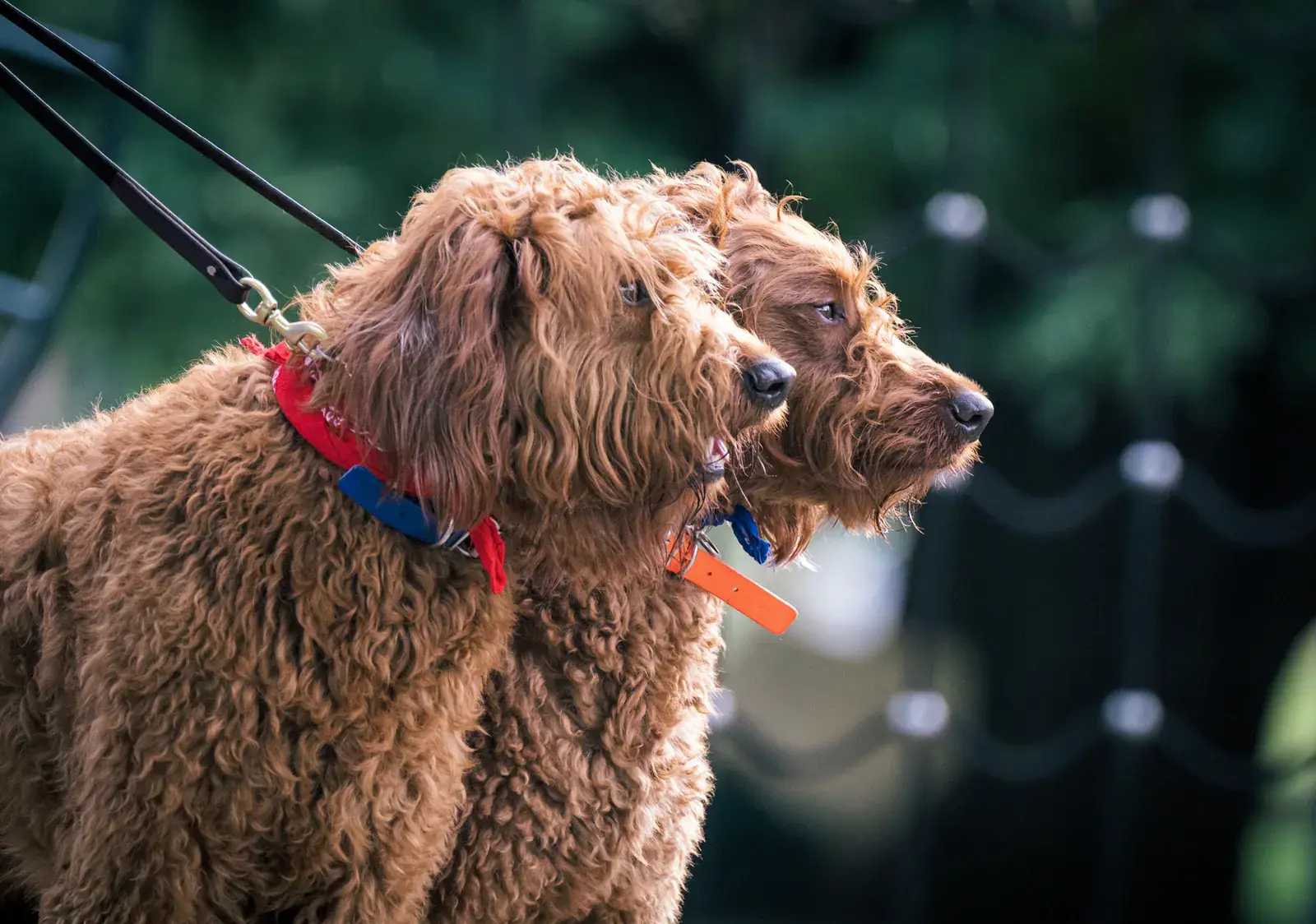
It was first bred on purpose in 1989 at a guide dog centre in Victoria, Australia, by the breeding manager Wally Conron. His aim was one guide dog for one blind woman whose husband was allergic. The dog worked. The idea spread far beyond guide dogs, and Conron later said he regretted what followed. The Australian Labradoodle is a related but separate line, built by Australian breeders who added other breeds to the Labrador and Poodle mix to fix a steadier type. Neither is a recognised breed with the major kennel clubs. This page covers both, with the evidence on coats, allergies and health, and no breeder promotion.
Labradoodle quick facts
 Related breedPomsky2011 to 2014 · United StatesModern Era
- Country of origin
- Australia, Victoria (atlas data)
- Period of development
- 1988 to 1989
- What it is
- A cross of the Labrador Retriever and the Poodle
- Recognition
- Not a recognised breed with the major kennel clubs
- Family
- Modern (project grouping by history, not DNA)
- Other names
- Labrapoo
- Size
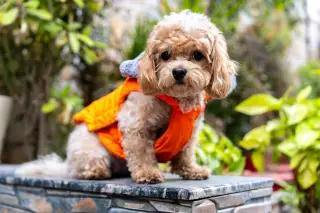
- Follows the Poodle parent used; large when a Standard Poodle is used
- Life span
- Atlas data: 12 to 14 years
- Coat
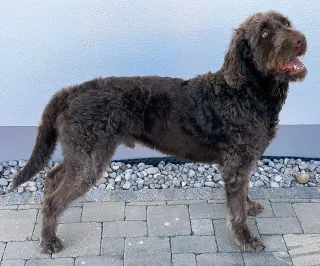
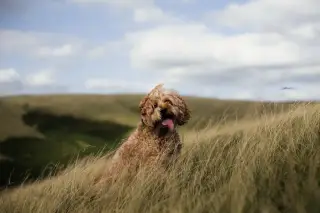
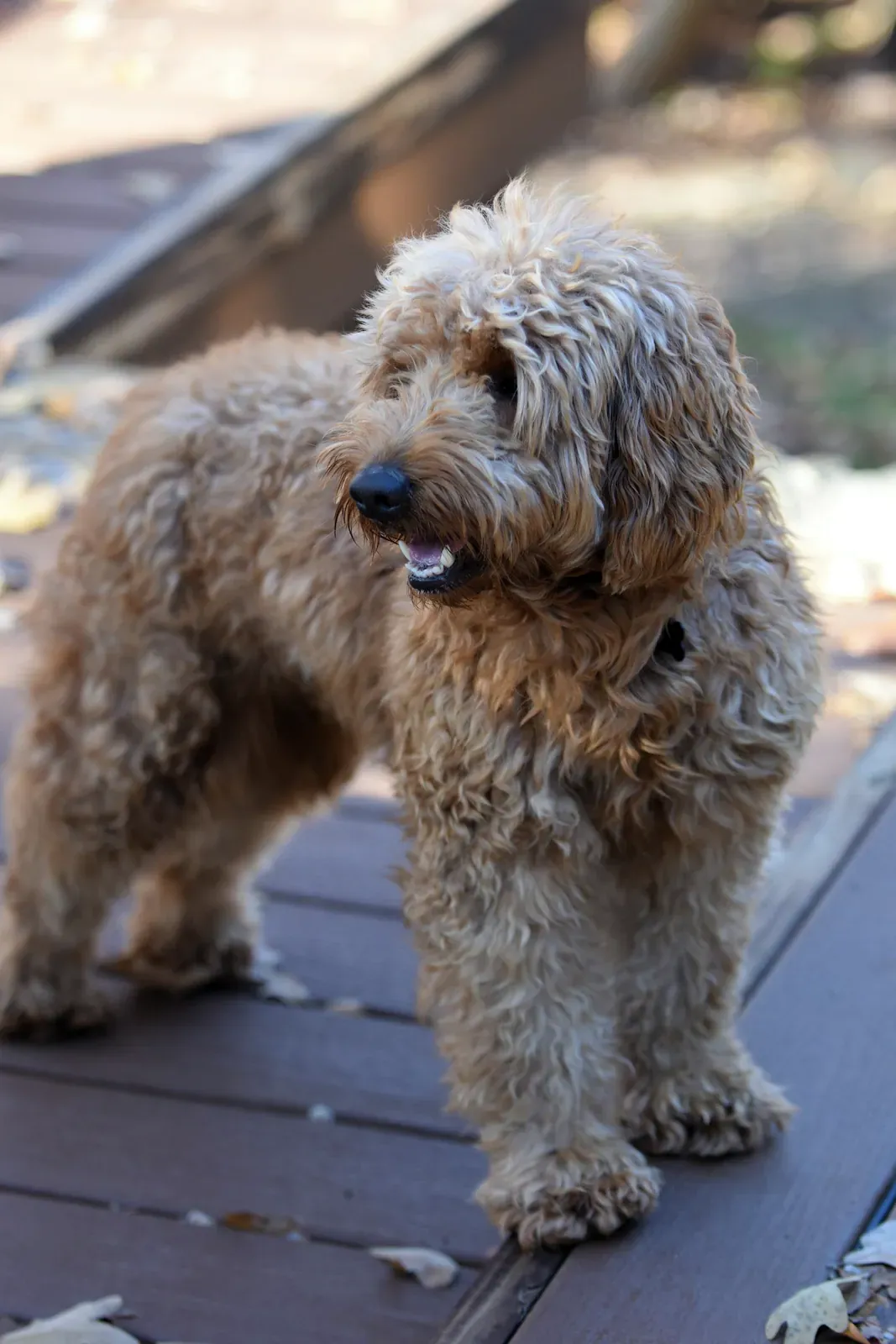
- Varies: curly, wavy or straight
Where it sits in the tree
Modern Era · 1914 to today
Name and origin
 Related breedPuggle1980 to 1990 · United StatesModern Era
"Labradoodle" is a portmanteau of Labrador and "doodle", from "Pudel", the German word that gave English "poodle". It is the model for a family of names: Goldendoodle, Cockapoo, Cavapoo. The Labradoodle is not a descendant of one parent. Both parent breeds contributed, so in the atlas data it sits in the Modern Crossbreed family, which groups crosses by history and not by DNA.

History
 Same eraAlaskan Klee Kai1970 to 1988 · United StatesModern Era
Wally Conron and the first guide dog, 1989
Wally Conron worked at what was then the Royal Guide Dogs Association of Australia, now Guide Dogs Victoria. A blind woman in Hawaii, whose husband was allergic to dog hair, wrote asking for a guide dog that would not shed. Poodles were thought to fit the allergy side of the request. Reports differ on why they did not work out: one account says Conron trained 33 Poodles over several years and none became a successful guide dog, another says their temperament was wrong for the job.
In 1989 Conron mated a Labrador Retriever with a Standard Poodle. The Labrador gave the temperament and the Poodle the low-shedding coat that he hoped for. In the first litter, coat clippings and saliva from each puppy were sent to Hawaii to be tried against the husband's allergy, and only one puppy was compatible. He was named Sultan, trained, and sent to Hawaii as the first Labradoodle guide dog. The other puppies of the litter were harder to place, and the organisation's publicity staff told the press that it had created a "hypoallergenic" guide dog. That label stuck.
For the parents' own backgrounds see the Labrador Retriever, a retriever from the St John's water dog line of Newfoundland, and the Poodle, a curly water retriever from the same part of the DNA tree as the Barbet.
Conron's later regret
Years later Conron changed his mind about the whole idea. In an ABC podcast in September 2019, when he was 90, he said: "I opened a Pandora's box and released a Frankenstein's monster." He called the Labradoodle his "life's regret" and said that other breeders had copied the cross without caring about health, so that most dogs, in his view, were "crazy or have a hereditary problem" and healthy ones were "few and far between". He had said something similar in interviews since at least 2014. This is Conron's own view, as reported by news outlets. It is not a study result, and the study evidence is given in the Health section below.
The Australian Labradoodle
Other Australian breeders took the idea further in the 1990s. Two breeding centres, Rutland Manor and Tegan Park, are named in accounts as the main founding lines. They are said to have added other breeds to the mix, to improve temperament, coat and build. Accounts name the Irish Water Spaniel and the English and American Cocker Spaniel as the main additions, and one account also lists the Curly Coated Retriever. Accounts differ on the exact list, so treat it as approximate. The atlas data dates the Australian Labradoodle to 1989 to 1998.
The result is a line that breeders call multigenerational: dogs bred to dogs of the same line for several generations, aiming at a steady size, coat and temperament. Breeders' groups have written standards for it, with several size classes. No major kennel club has recognised these standards, so the Australian Labradoodle is still a developing type and not a standardised breed.
 Save
Relatives and DNA
 Same familyAmerican Akita1945 to 1956 · United StatesModern Era
The atlas data holds no DNA study of the Labradoodle, so there is no DNA chart here. The relatives follow from the cross. The Labradoodle's parents are the Labrador Retriever and the Poodle. The Australian Labradoodle is a later line built on the same two breeds, with breeder-reported additions from the spaniels. The Goldendoodle, the Cockapoo and the Cavapoo are other Poodle crosses; see Modern Crossbreed for all of them.
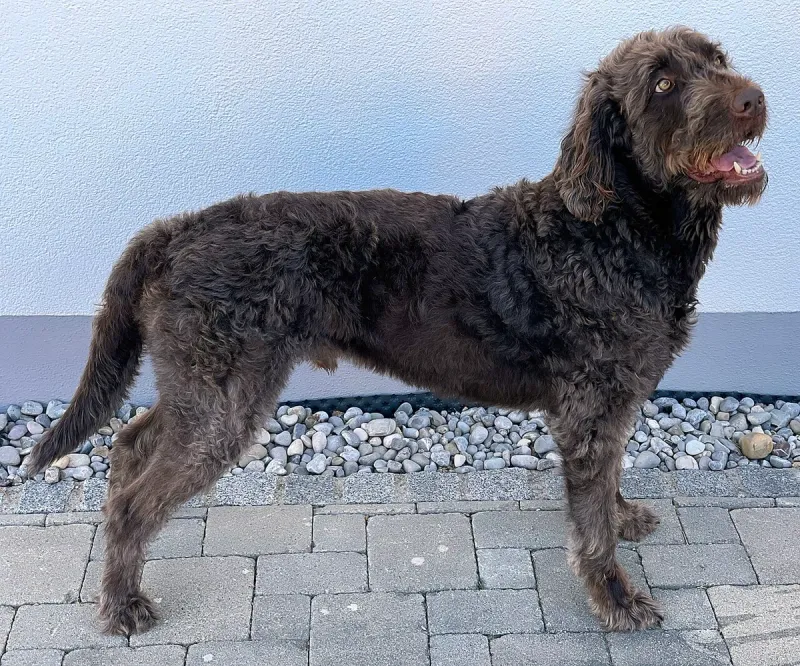 Australian Labradoodlelater lines; breeders report Cocker Spaniel and Irish Water Spaniel additions
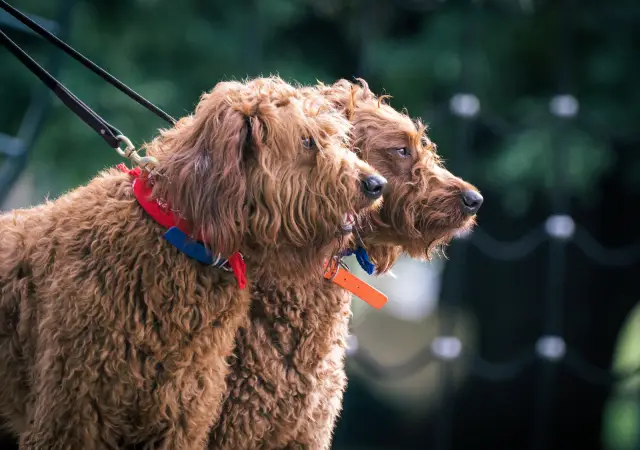 LabradoodlePoodle side of the crossAustralian Labradoodlelater lines; breeders report Cocker Spaniel and Irish Water Spaniel additions
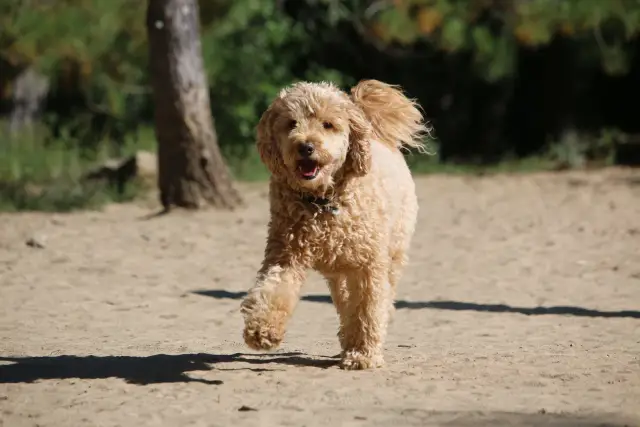
F1, F1b and multigenerational
 Related breedAmerican Bully1980 to 2004 · United StatesModern Era
Breeders label crosses by generation. The labels describe the parents and do not guarantee the puppy.
- F1. A first cross: one Labrador parent and one Poodle parent.
- F1b. An F1 mated back to a Poodle (or sometimes a Labrador), usually to get a curlier coat.
- F2. Two F1 dogs mated together.
- Multigenerational. Dogs bred to others of the same line over several generations. This is how breeders describe the Australian Labradoodle.
No published study measures how predictable coat, size or temperament is in each generation. Most online guidance comes from breeders, and it disagrees on which generation varies most. Treat a generation label as a note on ancestry, not a promise.
No breed standard: what to expect
 Looks relatedBlack Russian Terrier1949 to 1984 · RussiaModern Era
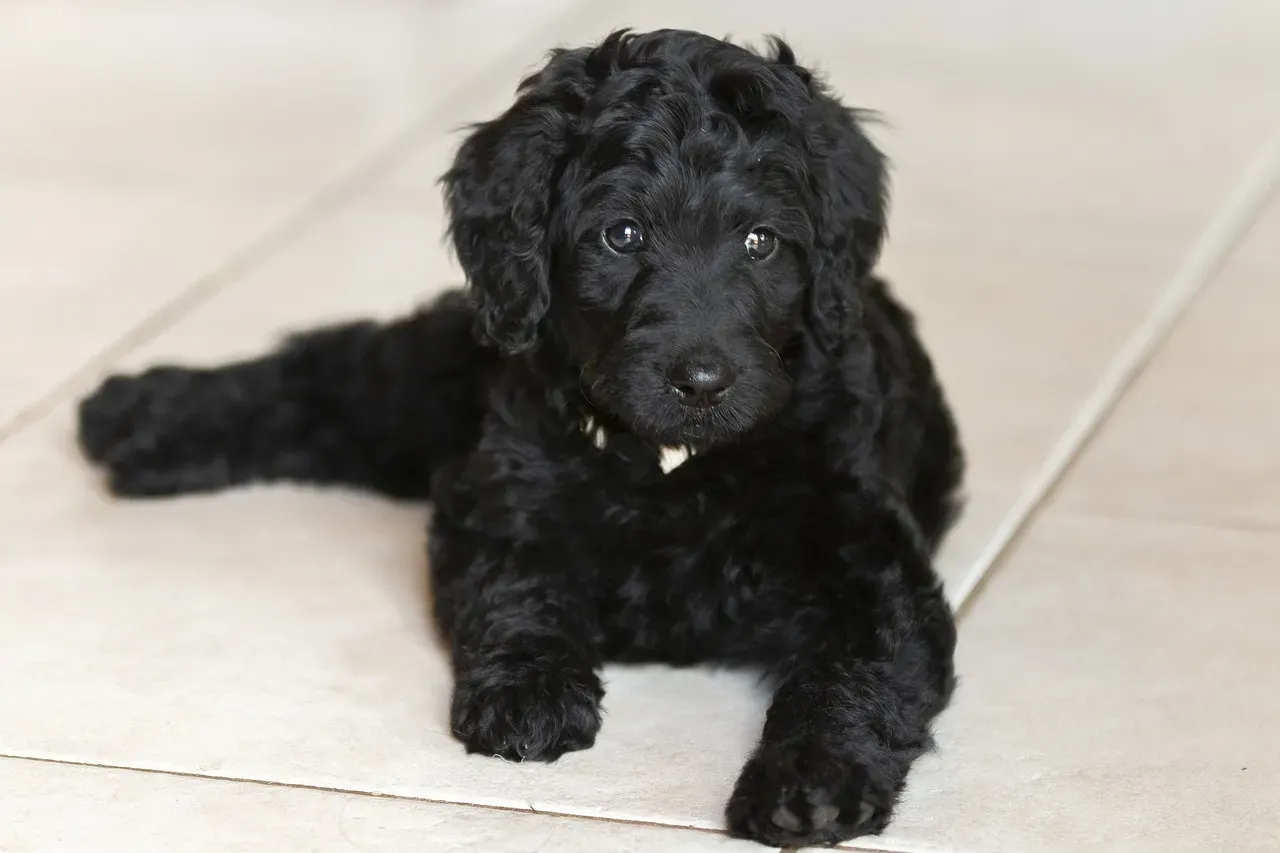
A is the written ideal that a kennel club judges dogs against. Neither the Labradoodle nor the Australian Labradoodle has one from a major kennel club or the . Breeders' groups have written their own, so two dogs sold under the same name can look very different.
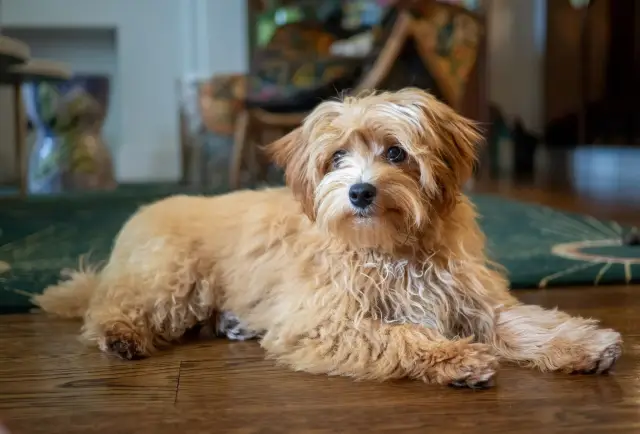
What can be said is limited to what the parent breeds tell us. Size follows the Poodle that was used. The Poodle article gives the Standard Poodle at roughly 20 to 32 kg, and Standard Poodles are the usual choice for a large Labradoodle. Smaller Poodles give smaller dogs. Coat and temperament come from both parents in mixed amounts, which is why a litter can include dogs that look and behave quite differently.
 Save
Coat types
 Related breedCavalier King Charles Spaniel1926 to 1945 · United KingdomModern Era
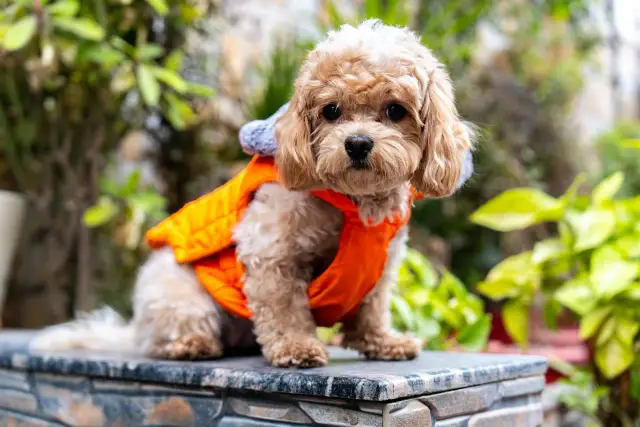
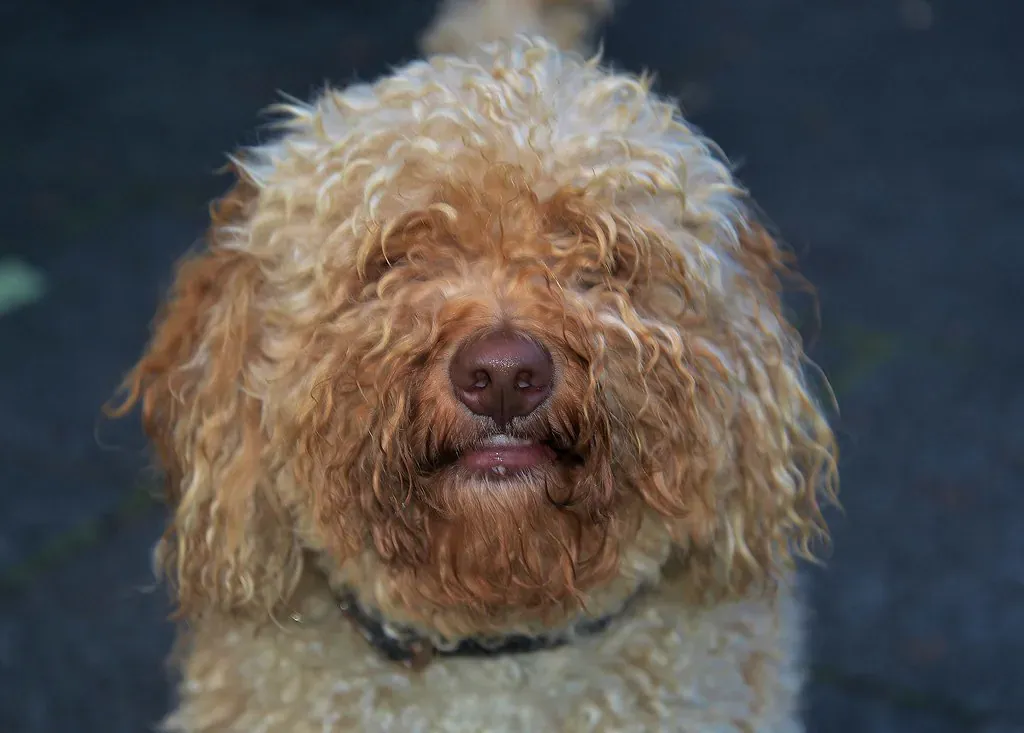
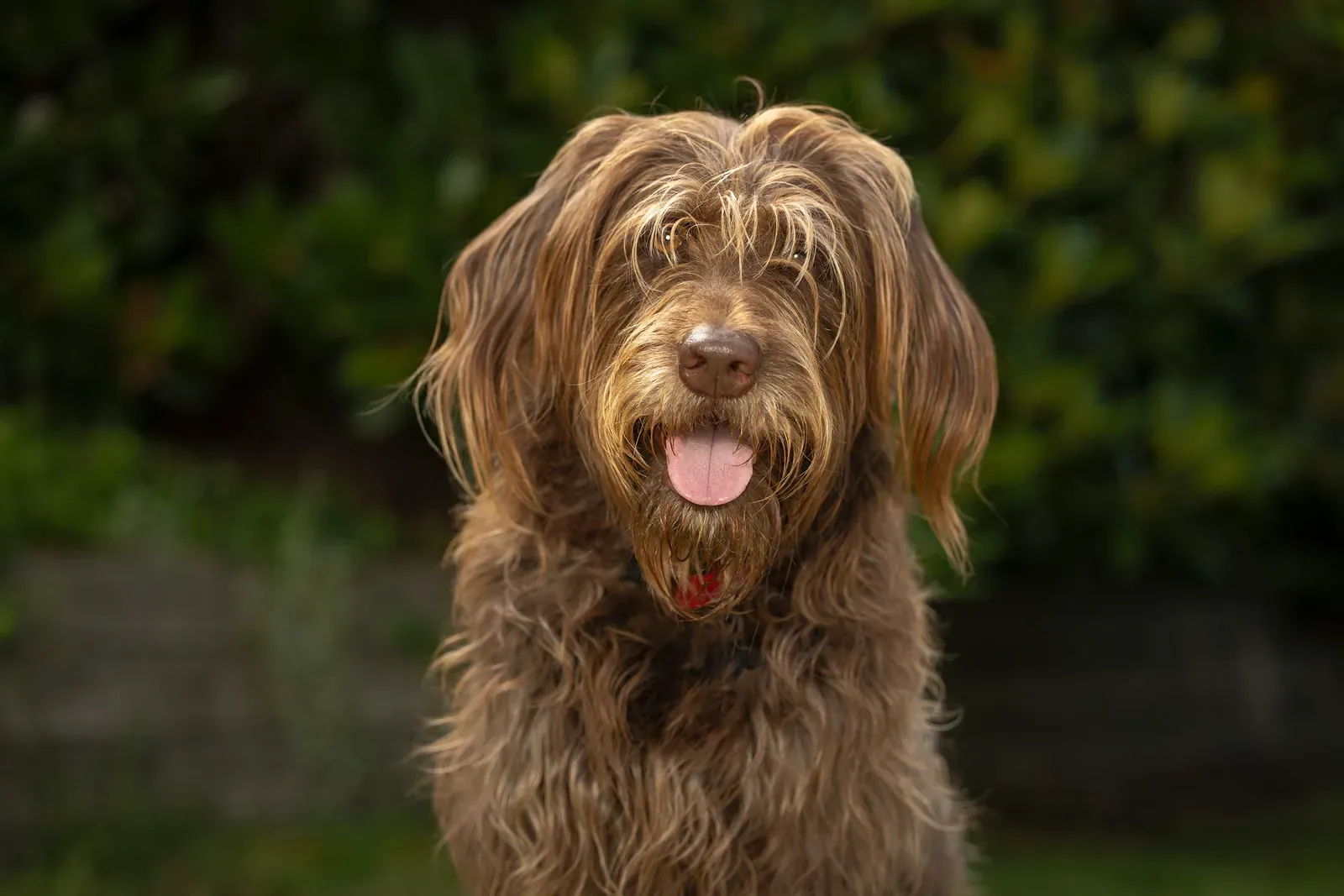
Breeders describe three coat types in the cross.
- Wool. A dense, curly coat like a Poodle's.
- Fleece. A soft, wavy coat, usually in a single layer.
- Hair. A straighter coat, closer to a Labrador's.
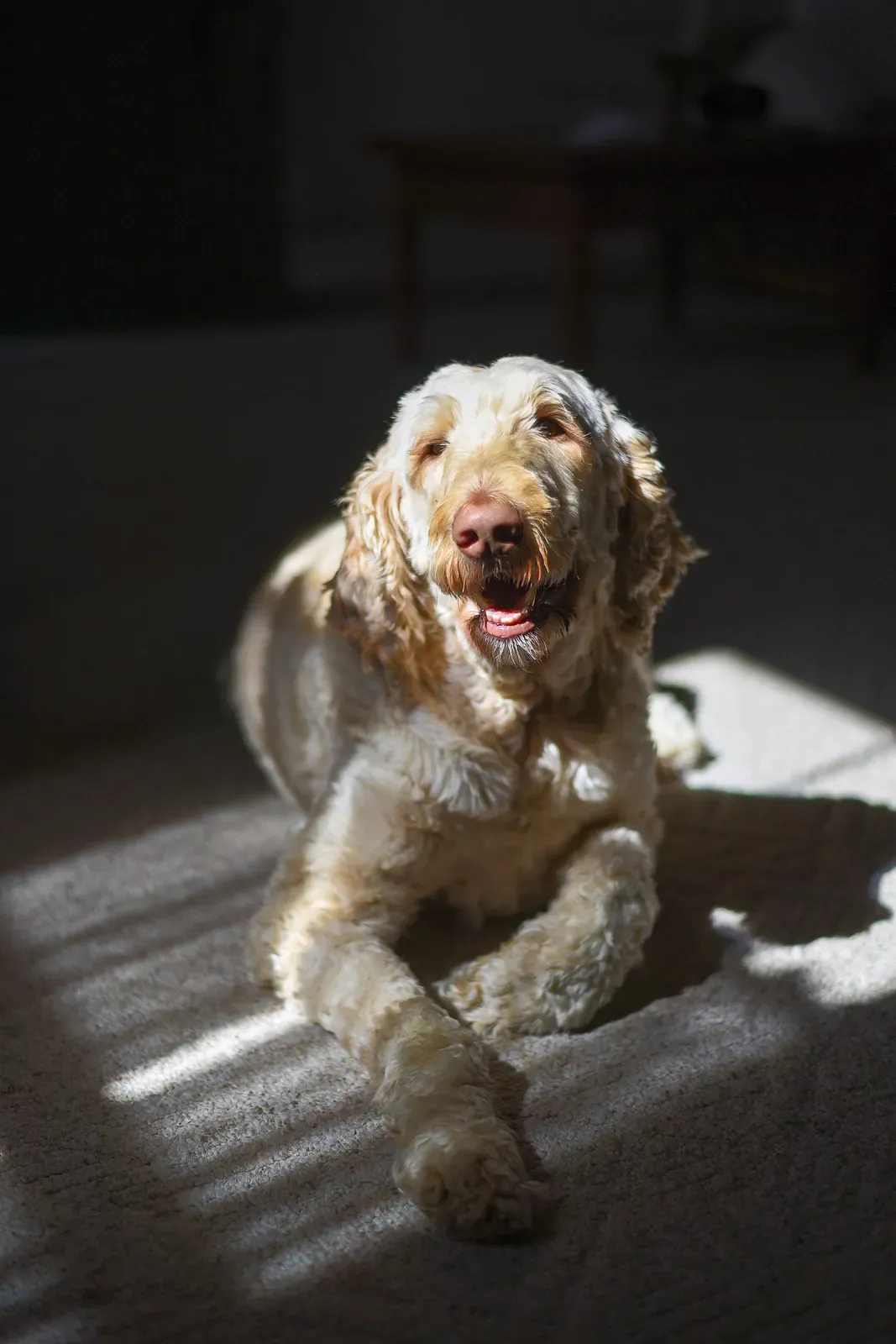
Breeder and vet-advice sources describe wool coats as shedding least, and hair coats as shedding most, with many hair coats shedding about as much as a Labrador. First-generation puppies are said to show the widest range, including straight coats, though this is a pattern reported by breeders and not a measured finding. Within one litter the coats can differ.
A curly coat also needs work. It mats if it is not brushed through, often behind the ears and under the legs, and many owners clip it every few weeks or months. Low shedding does not mean low grooming.
The "hypoallergenic" claim
 Related breedCzechoslovakian Wolfdog1955 to 1999 · Slovakia, Czech RepublicModern Era
The word came from the 1989 publicity, and it has not been backed by evidence. No breed or cross has been shown to be allergen-free. Dog allergy is mostly a reaction to proteins from skin, saliva and urine, and the coat only carries them. Two studies are often cited.
- Vredegoor and colleagues (Journal of Allergy and Clinical Immunology, 2012) measured the main dog allergen, Can f 1, in hair and coat samples and in home dust. Dogs sold as hypoallergenic, among them Labradoodles and Poodles, had more Can f 1 in their hair and coat than other dogs. Labradoodles had less in floor dust, but the other groups did not differ in the home. The authors found no evidence to call any breed hypoallergenic. The floor result may reflect how the homes were cleaned, so it is not proof about the dog.
- Nicholas and colleagues (American Journal of Rhinology and Allergy, 2011) compared dust from homes in a Detroit birth cohort. Homes with "hypoallergenic" dogs did not have different dog allergen levels from other homes.
The honest answer for a family with allergies: a low-shedding coat is not a guarantee, and coat type varies inside one litter of a cross. Spend time with the individual dog, more than once, and ask an allergy doctor before you commit.
Temperament
 Related breedDogo Argentino1928 to 1973 · ArgentinaModern Era
Both parent breeds are friendly and trainable, and the cross is often described that way. The Labrador is a retriever bred to work with people and the Poodle is a clever, athletic water retriever. A Labradoodle can inherit the Labrador's greeting-everyone manner, the Poodle's quick learning, or a mix of each. Because the parents are both working retrievers, most Labradoodles need real daily exercise and something to do with their minds. These are descriptions based on the parent breeds and on breeders' accounts, not measured studies of the cross.
The atlas data gives a large size for the Labradoodle and a medium size for the Australian Labradoodle. A large, bouncy young dog and a medium-sized one need different homes, so ask what size the parents are before choosing.

Training and activity
 Related breedMiniature American Shepherd1968 to 2015 · United StatesModern Era
The cross shares its parents' strengths: it likes food rewards, it learns quickly, and it enjoys retrieving and swimming. It also shares their weakness: a bored, under-exercised dog finds its own work. Short daily training, puppy classes and early social contact with people, dogs and noises give the cross a good start. Conron's original aim was a working guide dog; for how people get a trained assistance dog today, see how to get an assistance dog.
Health
 Related breedNeapolitan Mastiff1946 to 1949 · ItalyModern Era
Most Labradoodles live healthy lives. This section gives what the studies say, then what is known about the two parent breeds, which is the best guide to what the cross can inherit. A cross can inherit conditions from either parent, and it can also avoid them.
The cross itself. Bryson, O'Neill, Brand, Belshaw and Packer ("The doodle dilemma", PLoS ONE, 2024) from the Royal Veterinary College surveyed owners of more than 9,000 dogs: Labradoodles, Cockapoos and Cavapoos, and six parent breeds. They compared the risk of the 57 most common canine disorders. For about 87 percent of those comparisons there was no difference between the crosses and their parent breeds. In the rest, the crosses had a higher risk in about 7 percent and a lower risk in about 6 percent. Compared with Poodles, all three crosses had a higher risk of ear infections, vomiting and diarrhoea, and eating things they should not. The study was an owner survey, not a clinical-records study. Its message is that the cross is not reliably healthier than its parents. It does not say it is worse.
The Labrador parent. McGreevy and colleagues (Canine Genetics and Epidemiology, 2018) examined 33,320 Labradors under UK veterinary care. The median age at death was 12.0 years. Ear infections were the most common disorder, followed by obesity and joint problems. In the Labrador Retriever the figures are: about 1 in 9 and about 1 in 10 (OFA data, 1974 to 2015), and exercise-induced collapse in about 1 in 33 with two copies of the DNM1 variant and about 1 in 3 as (Patterson et al. 2008, 400 US Labradors).
The Poodle parent. Health in the Poodle depends on size. Standard Poodles are listed for sebaceous adenitis, Addison's disease, bloat and hip dysplasia, and Toy and Miniature Poodles for progressive retinal atrophy (prcd-PRA), kneecap problems and small-breed dental disease. No named study gives a breed-wide percentage for these conditions, so none is given here.
| Condition | What it is | How common | What helps |
|---|---|---|---|
| Ear infections | Wax, moisture and infection in the ear canal | Higher than in Poodles in all three crosses (Bryson et al. 2024); most common disorder in Labradors (McGreevy et al. 2018) | Dry ears after swimming, regular ear checks, trimming the hair inside the ear with a vet or groomer |
| Hip dysplasia | A loosely fitting hip joint | About 1 in 9 in Labradors (OFA data); listed for Standard Poodles | Hip scoring of both parents, lean weight, careful exercise while growing |
| Elbow dysplasia | Malformation of the elbow joint | About 1 in 10 in Labradors (OFA data) | Elbow scoring of both parents |
| Exercise-induced collapse | Collapse after intense exercise; DNM1 variant from the Labrador side | About 1 in 33 Labradors have two copies (Patterson et al. 2008) | DNM1 DNA test of both parents |
| Progressive retinal atrophy | Inherited loss of vision; found in Labradors and Poodles | A tested condition in both parent breeds; carriers are common | DNA test and eye exam of both parents |
| Obesity | Extra weight, hard on joints | Second most common disorder in Labradors (McGreevy et al. 2018) | Measured meals, daily exercise |
What helps. A cross has two sets of health risks and breeders cannot rely on "hybrid vigour" to remove them. Ask for the health tests that belong to both parent breeds: hip and elbow scores, eye exams and the DNA tests for conditions such as exercise-induced collapse and prcd-PRA, for both parents. A breeder who cannot show them is not testing.
Life span. The atlas data gives 12 to 14 years for the Labradoodle and 13 to 15 years for the Australian Labradoodle. These are not measured medians. The Labrador median in the large UK study is 12.0 years, and the atlas range for the Poodle is 12 to 16 years.

Living with a Labradoodle
 Save
| Daily reality | Rating | Why |
|---|---|---|
| Exercise per day | High | Two working retrievers in the family tree; a bored dog digs, chews or barks |
| Training needs | Medium | Clever and food-motivated; needs steady training and early socialisation |
| Grooming | High | Brushing every few days for curly coats and clipping every few weeks or months |
| Shedding | Varies | Depends on the coat; wool coats shed least, hair coats most |
| Barking | Medium | Varies with the dog; some bark at visitors or when bored |
| Time alone | Poor | Bred from two companion retrievers; many dogs struggle when left for long days |
| Children | Good | Both parent breeds are known as friendly; a big young dog can knock over small children |
| Other dogs | Good | Varies with socialisation |
| Cats and small pets | Varies | Retriever drive can show; depends on the dog and the introduction |
| Flat living | Fair | Possible for a smaller dog with daily outings; a large one needs room |
| Heat tolerance | Fair | A thick coat; clipping and cooler-hour exercise help |
| Cold tolerance | Good | A dense coat |
| First-time owner fit | Fair | Friendly but demanding: grooming, training and exercise all take time |
A great fit if
- You want an active, friendly dog and enjoy daily walks, swimming or training.
- You are ready for regular grooming and a clipping routine.
- You will meet the individual dog and its parents before choosing.
- You will check health tests for both parent breeds.
Think twice if
- You expect a non-shedding, allergy-proof dog. The evidence does not support that.
- You are away for long days.
- You want a coat that looks after itself.
- You hope a cross means no health risk.
Before you get one
Meet the mother and, if possible, the father. Ask which Poodle size was used, and what the parents' ages and temperaments are. Ask for hip and elbow scores, eye results and DNA test results from both parents, and for the parents' own health history. Be careful with any breeder who sells puppies as hypoallergenic, "guaranteed" non-shedding or "healthier than a purebred". Mixed-breed dogs and doodles also end up in shelters and rescues, and an adult dog shows its coat and temperament before you commit; see adopting a dog. Plan for the first year: puppy classes, grooming, and plenty of exercise.
Similar breeds to consider
- Labrador Retriever. The retriever parent, with a short coat that needs less grooming.
- Poodle. The other parent, a recognised breed with a fixed type and three or four sizes.
- Goldendoodle. The same idea with a Golden Retriever.
- Cockapoo. A smaller Poodle cross with the Cocker Spaniel.

Labradoodle fun facts
- The first Labradoodle guide dog was named Sultan.
- Conron's first Labradoodles came from a Labrador mother and a Standard Poodle father in 1989.
- Conron called the cross his "life's regret" in a 2019 interview, when he was 90.
- The word "hypoallergenic" for the first litter was used by publicity staff, not as a test result.
Frequently asked questions
Who created the Labradoodle?
Wally Conron, then at the Royal Guide Dogs Association of Australia in Victoria, bred the first litter in 1989.
Is a Labradoodle a recognised breed?
No. The major kennel clubs do not recognise it, and neither the Labradoodle nor the Australian Labradoodle has an official standard.
What is an Australian Labradoodle?
A line developed by Australian breeders, from the Labrador and Poodle cross with other breeds added, reported to include the Cocker Spaniel and Irish Water Spaniel, aiming at a steadier size and coat.
Are Labradoodles hypoallergenic?
No breed or cross has been shown to be. Studies of dogs sold as hypoallergenic found no lower allergen levels in homes. Spend time with the dog first.
Do Labradoodles shed?
It depends on the coat. Wool coats shed least and hair coats most. All need regular grooming.
Are Labradoodles healthier than purebreds?
A 2024 Royal Veterinary College owner survey found no difference for about 87 percent of 57 common disorders, so not reliably.
Read next
FamilyModern CrossbreedThe whole family Adopt a dogDog Shelters in EuropeFind dog shelters in Europe, learn how shelters differ from country to country and why adopting a dog is a good option.
Sources (10)
- Wally Conron interviews, ABC podcast and news coverage, September to October 2019 (Pandora's box, "life's regret", Sultan, the Hawaii request).
- Bryson et al., "The doodle dilemma: how the physical health of designer crossbreeds compares to their purebred progenitors", PLoS ONE 19(8), 2024, and the Royal Veterinary College summary.
- McGreevy P.D. et al., "Labrador Retrievers under primary veterinary care in the UK", Canine Genetics and Epidemiology, 2018.
- Patterson E.E. et al., exercise-induced collapse and the DNM1 variant in Labrador Retrievers, 2008.
- Orthopedic Foundation for Animals, hip and elbow dysplasia data for Labradors, 1974 to 2015.
- Poodle Club of America health statement and UK Kennel Club health information for the Poodle.
- Vredegoor D.W. et al., "Can f 1 levels in hair and homes of different dog breeds", Journal of Allergy and Clinical Immunology, 2012.
- Nicholas C. et al., "Dog allergen levels in homes with hypoallergenic compared with nonhypoallergenic dogs", American Journal of Rhinology and Allergy, 2011.
- Parker H.G. et al., "Genomic analyses reveal the influence of geographic origin, migration and hybridization on modern dog breed development", Cell Reports, 2017.
- Atlas data, Labradoodle and Australian Labradoodle knowledge records (dates, life span, lineage).