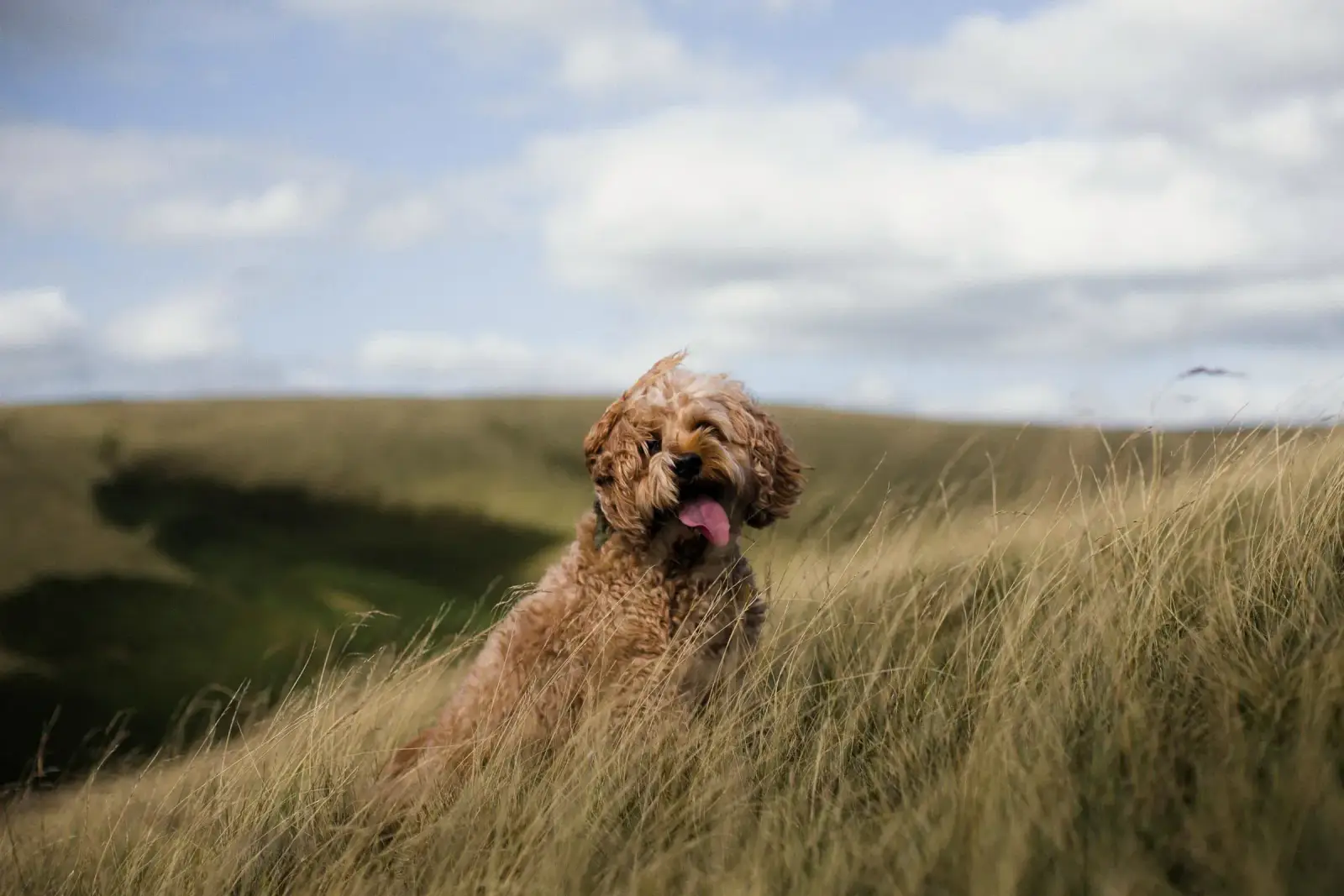
It is not a recognised breed with the FCI, the American Kennel Club or the UK Kennel Club. Accounts place its start in the United States in the 1950s and 1960s, as Cocker and Poodle matings that became deliberate. Since then it has become one of the most common Poodle crosses in Britain and North America. It is usually a small to medium, curly or wavy dog, friendly and clingy, and a Royal Veterinary College owner survey of 2024 found it is not reliably healthier than its parent breeds. This page covers the history, the generation labels, size, coat and health, with no breeder promotion.
Cockapoo quick facts
 Related breedPomsky2011 to 2014 · United StatesModern Era
- What it is
- A cross of a Cocker Spaniel and a Poodle
- Country of origin
- United States (atlas data)
- Period of development
- 1950 to 1960 (atlas data, medium confidence); some accounts say into the 1960s
- Other names
- Cockerpoo, Cock-a-poo, Cockapoo
- Recognition
- Not recognised by the FCI, AKC or UK Kennel Club
- Family
- Modern Crossbreed (atlas grouping by history, not DNA)
- Size
- Follows the Poodle size used: Toy, Miniature or larger; atlas data lists small
- Life span
- Atlas data: 14 to 16 years
- Coat
- Varies: curly, wavy or straight
- Parents
- A Poodle and an American or English Cocker Spaniel
Where it sits in the tree
Modern Era · 1914 to today

Name and origin
 Related breedPuggle1980 to 1990 · United StatesModern Era
"Cockapoo" is a portmanteau of Cocker Spaniel and Poodle. It follows the same pattern as Labradoodle and Cavapoo. In the UK the same cross is often written Cockerpoo. The atlas data records the American Cocker Spaniel as the Cocker parent, because the cross started in the United States, but in Britain the English Cocker is the usual choice. The word Cocker comes from the woodcock work of the English type; see the English Cocker Spaniel and the American Cocker Spaniel for the two parents. Neither parent is a descendant of the cross: it is a modern crossbreed with two parents, so it sits in Modern Crossbreed, which groups crosses by history and not by DNA.

History
 Same eraAmerican Akita1945 to 1956 · United StatesModern Era
The first Cockapoos, 1950s and 1960s
Most accounts agree that the first Cockapoos were American, and that they began with accidental or informal Cocker Spaniel and Poodle matings in the 1950s and 1960s. The exact start is hazy, and no single breeder or litter is reliably named. Because nobody kept a studbook, the early history rests on later retellings. The atlas data gives the period as 1950 to 1960 with medium confidence.
The appeal was practical: a small family dog with the Cocker's gentle, merry nature and the Poodle's clever mind and low-shedding coat. The cross looked like a small teddy bear, which helped it spread.
From accident to a named cross
Breeders began to give the cross its own name and clubs. Accounts date the Cockapoo Club of America to 1998 or 1999, and the American Cockapoo Club to about 2004, though a few sources disagree. These are breeder clubs: they keep registries and write their own standards, and none is recognised by the AKC or the UK Kennel Club. The Cockapoo is therefore still a crossbreed type, not a standardised breed.
The 2000s boom and a 2024 reality check
In the 2000s and 2010s the Cockapoo and its cousins, the Labradoodle and the Cavapoo, became fashionable in Britain. The story of the first doodle, the Labradoodle, shaped what followed; see the Labradoodle page for Wally Conron's 1989 cross and his later regret. In 2024 the Royal Veterinary College published the first large comparison of the health of the three crosses against their parent breeds, which is covered in the Health section.
Relatives and DNA
 Same familyAmerican Bully1980 to 2004 · United StatesModern Era
The atlas data holds no DNA study of the Cockapoo, so there is no DNA chart. Its relatives follow from the two parents. The Poodle is a curly water retriever from the same part of the family tree as the Barbet. The Cocker Spaniels are small gundogs that flush game; see the Spaniel family. Other Poodle crosses are the Labradoodle, the Goldendoodle and the Cavapoo.
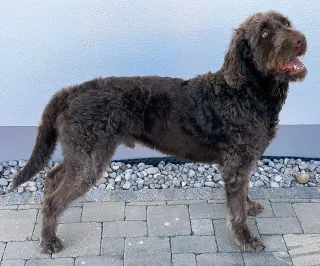
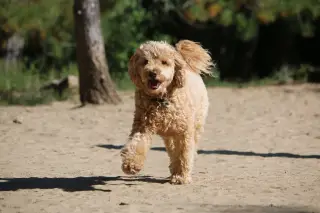
 CockapooCocker Spaniel and Poodle crossCockapooPoodle side of the cross
F1, F1b and multigenerational Cockapoos
 Related breedBlack Russian Terrier1949 to 1984 · RussiaModern Era
Breeders label the cross by generation. The label describes the parents, not the puppy.
- F1. A first cross: one Cocker Spaniel parent and one Poodle parent.
- F1b. An F1 mated back to a Poodle or a Cocker Spaniel. Breeders use a Poodle to get a curlier coat.
- F2. Two F1 dogs mated together.
- Multigenerational. Dogs bred to others of the same line for several generations, aiming at a steadier size and coat.
Generation labels say something about ancestry, and some breeders treat them as a hint about coat and shedding. They are not a quality grade or a health guarantee, and an F1 is not automatically better than an F2 or an F1b. No published study measures how predictable coat, size or temperament is in each generation, and most guidance comes from breeders. The same applies to the Labradoodle; see Labradoodle for the longer treatment.
No breed standard: what to expect
 Looks relatedCavalier King Charles Spaniel1926 to 1945 · United KingdomModern Era
A is the written ideal that a kennel club judges dogs against. The Cockapoo has none from a major kennel club or the FCI. Breeder clubs have their own descriptions, so two dogs sold under the same name can look quite different.
Size. Size follows the Poodle that was used. Breeder and club sources describe three or four size classes. Quoted weights differ by source, and the Toy and Miniature sizes are usually given at roughly 3 to 6 kg and 6 to 9 kg, with a larger Cockapoo at about 9 to 14 kg. Treat these as approximate. The Poodle page gives the Poodle's own sizes, and the Cocker parent adds its own size too: the English Cocker is about 38 to 41 cm tall and 12.5 to 14.5 kg (FCI).
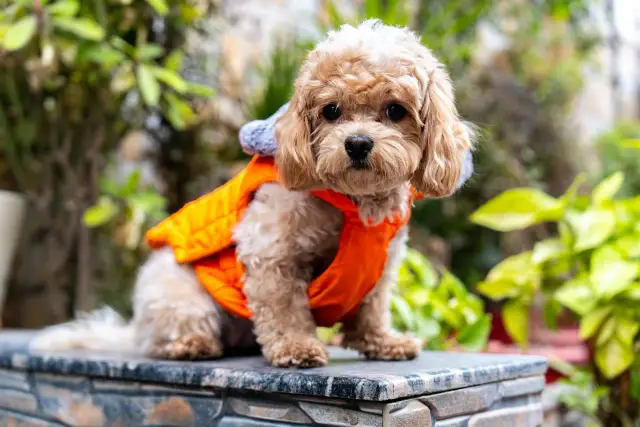
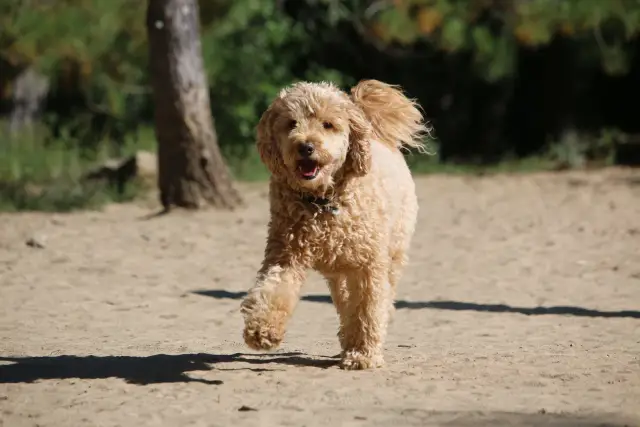
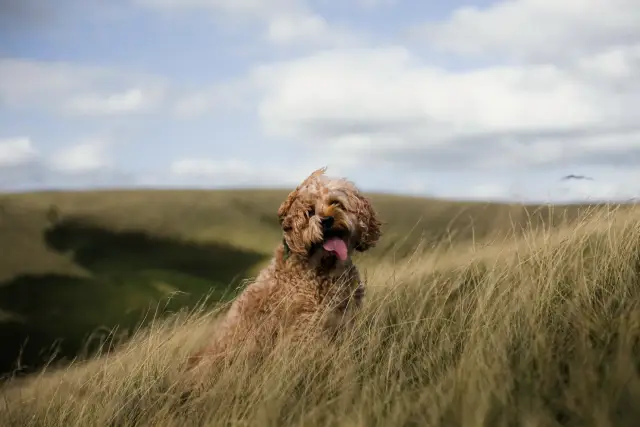
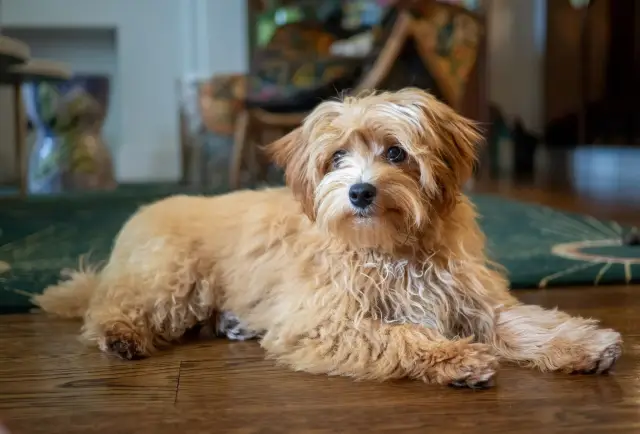
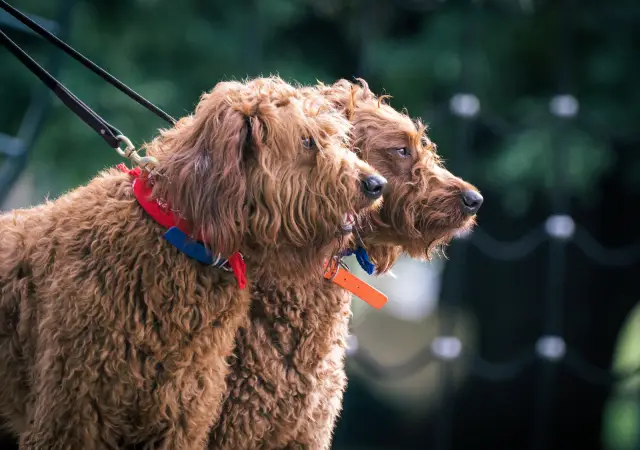
Coat. Both parents have coats that need work. The Poodle's is curly and low-shedding. The Cocker's is silky, feathered and medium-length, and sheds. A Cockapoo can inherit either, or a mix: curly, wavy or straight. Colours run from solid black, brown, cream, apricot and red to parti and roan patterns from the Cocker side.
Temperament. Both parents are friendly, clever, people-focused dogs, and the cross is often described that way. These are descriptions based on the parents and on breeders, not measurements of the cross.
Coat, shedding and allergies
 Related breedCzechoslovakian Wolfdog1955 to 1999 · Slovakia, Czech RepublicModern Era
A Cockapoo coat falls into roughly three types, as with other doodles: a tight curly coat that sheds least, a looser wavy coat, and a straighter coat that sheds more. First crosses show the widest range, even inside one litter. Curly coats mat if they are not brushed through, especially behind the ears and under the legs, and most owners clip them every six to eight weeks or have a groomer do it. Low shedding does not mean low grooming.
On allergies, no breed or cross has been shown to be allergen-free. Dog allergen is mostly in skin, saliva and urine, and the coat only carries it. Vredegoor and colleagues (Journal of Allergy and Clinical Immunology, 2012) measured the main dog allergen, Can f 1, and found that dogs sold as hypoallergenic, among them Poodles and Labradoodles, had more of it in their hair and coat than other dogs. The authors found no evidence for calling any breed hypoallergenic. If someone in the home is allergic, spend time with the individual dog more than once and ask an allergy doctor.
Temperament and training
 Related breedDogo Argentino1928 to 1973 · ArgentinaModern Era
The Cockapoo is usually a cheerful, affectionate dog that wants to be with its people and often follows them from room to room. The Poodle side adds quick learning, and the Cocker side adds a soft, eager-to-please nature and a nose that likes to follow scents. Both parents are working gundog types, so most Cockapoos need daily walks and mental work as well as garden time.
The close bond has a cost. Many Cockapoos struggle to be left alone for long days, and a bored young dog barks, chews or digs. Short, regular training, puppy classes and gradual practice at being alone from the first weeks give the best start. These points come from the parent breeds and general dog guidance, not from a study of the cross.

Grooming and daily care
 Related breedMiniature American Shepherd1968 to 2015 · United StatesModern Era
Grooming is the main running task. Brush a curly or wavy coat through to the skin every two to three days, paying attention to the armpits, behind the ears and around the collar, where mats start. Many owners have the coat clipped short every six to eight weeks, which makes it easier to keep and gives the dog a puppy look. A shorter clip also helps in summer, though a dog clipped very short may feel the cold in winter, so a coat in wet weather helps.
Ears need their own routine. Both parents have ears that hang close to the head, with hair that grows inside the canal, so air flow is poor. Look in the ears weekly, dry them after swimming or a bath, and see a vet for head shaking, smell, redness or scratching. Teeth need brushing, since small dogs collect tartar early, and nails need trimming every few weeks. Food is best measured: both parents put on weight easily, and a small dog carries extra kilos on its joints.
Health
 Related breedNeapolitan Mastiff1946 to 1949 · ItalyModern Era
Most Cockapoos live healthy lives. This section gives what the study evidence says, then what is known about the two parents, which is the best guide to what the cross can inherit.
The cross itself. Bryson, O'Neill, Brand, Belshaw and Packer ("The doodle dilemma", PLoS ONE, 2024) from the Royal Veterinary College surveyed 9,402 UK owners of Cockapoos, Labradoodles and Cavapoos and their parent breeds. They compared the risk of the 57 most common canine disorders. For about 87 percent of the comparisons there was no difference between the crosses and the parents. In the rest, the crosses had a higher risk in about 7 percent and a lower risk in about 6 percent. The study was an owner survey, not a clinical-records study. Its message is that the cross is not reliably healthier than its parents, and it does not say it is worse.
The Cocker parent. Ears are the most talked-about issue in the Cocker Spaniel. A 2023 UK study of 10,313 English Cockers (Engdahl and colleagues) found ear infections in about 1 in 10 dogs, gum disease in about 1 in 5 and obesity in about 1 in 10, with a median age at death of about 11.4 years. The UK Kennel Club lists DNA tests for familial nephropathy (inherited kidney disease) and prcd-PRA (inherited eye disease) in the English Cocker. See English Cocker Spaniel.
The Poodle parent. Health in the Poodle depends on size. Toy and Miniature Poodles are listed for prcd-PRA, Legg-Calve-Perthes disease, kneecap problems and small-breed dental disease. Standard Poodles are listed for , sebaceous adenitis and Addison's disease. No published figure gives a breed-wide percentage for most of these, so none is given here.
| Condition | What it is | How common | What helps |
|---|---|---|---|
| Ear infections | Wax, moisture and infection in the ear canal | About 1 in 10 English Cockers (VetCompass 2023); higher than in Poodles in all three doodle crosses (Bryson et al. 2024) | Weekly ear checks, dry ears after swimming, trimming hair inside the ear with a vet or groomer |
| Itchy skin | Allergic or irritated skin, often scratching and paw licking | No published figure for Cockapoos | Vet diagnosis; regular coat care |
| Progressive retinal atrophy (prcd-PRA) | Inherited loss of vision, found in both parent breeds | A tested condition in both parents; no published figure for the cross | DNA test and eye exam of both parents |
| Familial nephropathy | Inherited kidney disease from the Cocker side | No published figure | DNA test of the Cocker parent |
| Kneecap problems | The kneecap slips out of its groove | No published figure for Cockapoos; common in small Poodles | Vet check; lean weight |
| Obesity | Extra weight, hard on joints | About 1 in 10 English Cockers (VetCompass 2023) | Measured meals, daily exercise |
What helps. A cross has two sets of health risks, and "hybrid vigour" does not remove them. Ask for the health tests that belong to both parent breeds: eye exams and the DNA tests for conditions such as prcd-PRA and familial nephropathy, plus hip scores where they apply, for both parents. A breeder who cannot show them is not testing.
Life span. The atlas data gives 14 to 16 years. That is a range from the knowledge records, not a measured median. The English Cocker median in the VetCompass study was about 11.4 years, so many owners will see a figure below the atlas range.

Living with a Cockapoo
| Daily reality | Rating | Why |
|---|---|---|
| Exercise per day | Medium to high | Two gundog and water-dog parents; daily walks and play |
| Training needs | Medium | Clever and eager; needs early socialisation and steady training |
| Grooming | High | Brushing every few days and a clip every six to eight weeks |
| Shedding | Varies | Depends on the coat; curly coats shed least |
| Barking | Medium | Varies; some bark at visitors or when bored |
| Time alone | Poor | A closely bonded cross; many struggle when left for long days |
| Children | Good | Both parents are friendly; a small dog needs gentle handling |
| Other dogs | Good | Varies with socialisation |
| Cats and small pets | Varies | Cocker prey drive can show; depends on the introduction |
| Flat living | Good | Possible for a smaller dog with daily outings |
| Heat tolerance | Fair | A thick coat; clipping and cooler-hour walks help |
| Cold tolerance | Good | A dense coat, but a clipped dog may feel cold |
| First-time owner fit | Fair | Friendly, but grooming and being left alone take planning |
A great fit if
- You want a friendly, active small or medium dog and are home much of the day.
- You are ready for regular grooming and ear checks.
- You will meet the mother, and the father if possible.
- You will check health tests for both parent breeds.
Think twice if
- You expect a non-shedding, allergy-proof dog.
- You are away for long days.
- You want a coat that looks after itself.
- You hope a cross means no health risk.
Before you get one
Ask which Poodle size and which Cocker type, English or American, the parents are, and their ages and temperaments. Ask for eye test results and DNA results for both parents, and for the parents' own health history. Be careful with any breeder who sells puppies as hypoallergenic, "guaranteed" non-shedding or "healthier than a purebred". Crosses like the Cockapoo also end up in shelters, and an adult dog shows its coat and temperament before you commit; see adopting a dog.
Similar breeds to consider
- English Cocker Spaniel. One parent, a recognised breed with a fixed type.
- Poodle. The other parent, in three or four sizes.
- Cavapoo. The Poodle crossed with the Cavalier King Charles Spaniel, usually smaller.
- Labradoodle. The Poodle crossed with the Labrador, usually larger.

Cockapoo fun facts
- The name is Cocker Spaniel plus Poodle, and the UK often spells it Cockerpoo.
- Accounts date the Cockapoo to the 1950s and 1960s, decades before the Labradoodle of 1989 made Poodle crosses famous.
- Cockapoo clubs in the US date to the late 1990s and 2000s, and none is recognised by the AKC.
- The 2024 Royal Veterinary College study found no difference from the parent breeds for about 87 percent of the common disorders it compared.
Frequently asked questions
What is a Cockapoo?
A cross between a Cocker Spaniel and a Poodle, first bred in the United States in the 1950s or 1960s.
Is a Cockapoo a recognised breed?
No. The , and UK Kennel Club do not recognise it.
What size is a Cockapoo?
It depends on the Poodle used: Toy, Miniature or larger, from about 3 to 14 kg in breeder sources.
Are Cockapoos hypoallergenic?
No breed or cross has been shown to be. A low-shedding coat is not a guarantee; spend time with the dog first.
Do Cockapoos shed?
It depends on the coat. Curly coats shed least. All need regular grooming.
Are Cockapoos healthier than purebreds?
Not reliably. A 2024 Royal Veterinary College owner survey found no difference for about 87 percent of 57 common disorders.
What do F1 and F1b mean?
F1 is a Cocker and a Poodle. F1b is an F1 bred back to a Poodle or a Cocker.
Read next
 FamilyModern CrossbreedThe whole family
 Adopt a dogDog Shelters in EuropeFind dog shelters in Europe, learn how shelters differ from country to country and why adopting a dog is a good option.
Sources (9)
- Bryson G. et al., "The doodle dilemma: how the physical health of designer crossbreeds compares to their purebred progenitors", PLoS ONE 19(8), 2024, and the Royal Veterinary College summary.
- Engdahl K. et al., English Cocker Spaniel VetCompass study, Royal Veterinary College, 2023.
- UK Kennel Club, health information and DNA tests for the English Cocker Spaniel and the Poodle.
- FCI standard for the English Cocker Spaniel, no. 5.
- Poodle Club of America, health statement and AKC breed standard for the Poodle, 2024.
- Vredegoor D.W. et al., "Can f 1 levels in hair and homes of different dog breeds", Journal of Allergy and Clinical Immunology, 2012.
- Cockapoo Club of America and American Cockapoo Club, breeder registry information (founding dates differ by source).
- Parker H.G. et al., "Genomic analyses reveal the influence of geographic origin, migration and hybridization on modern dog breed development", Cell Reports, 2017.
- Atlas data, Cockapoo knowledge record (dates, life span, lineage).