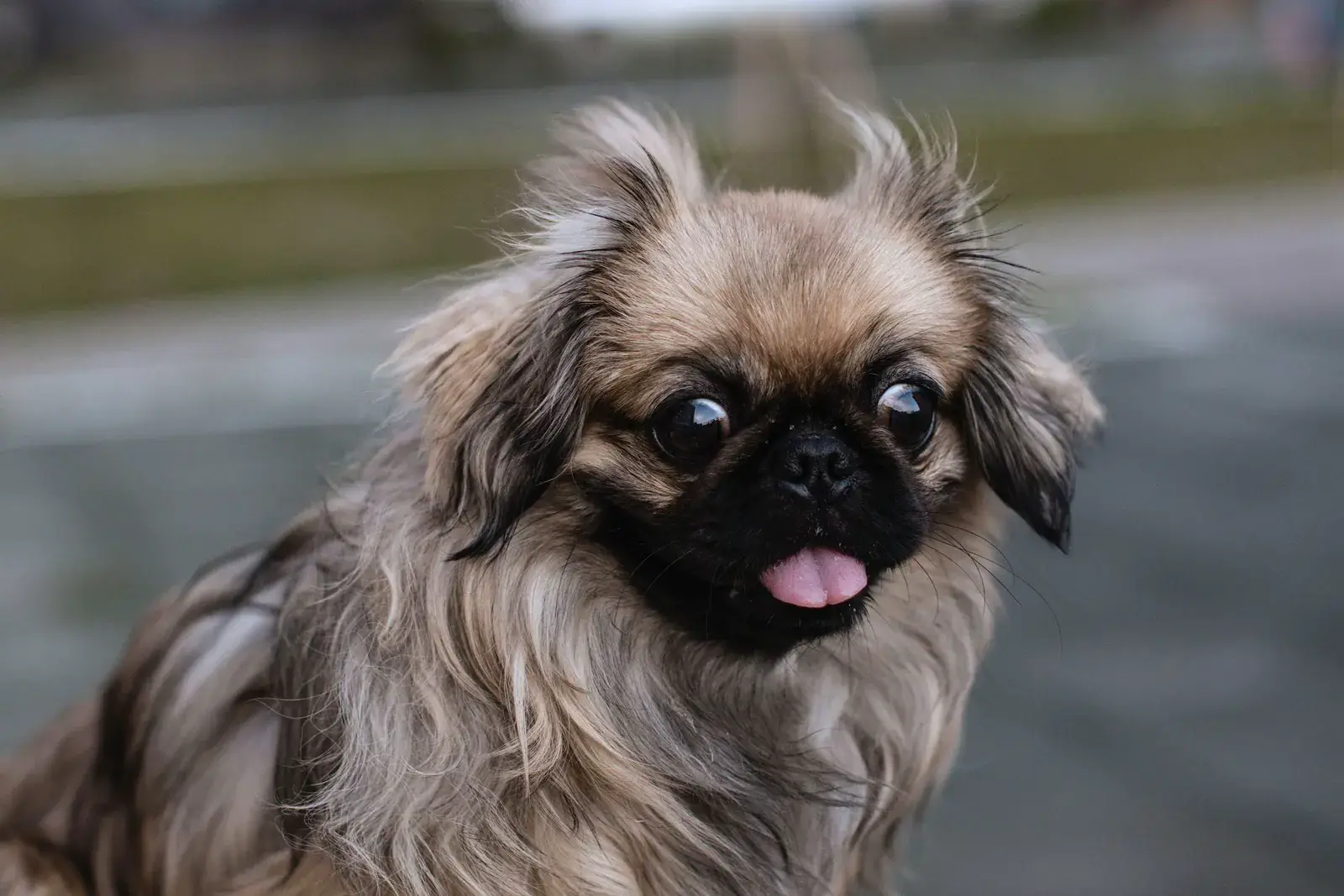
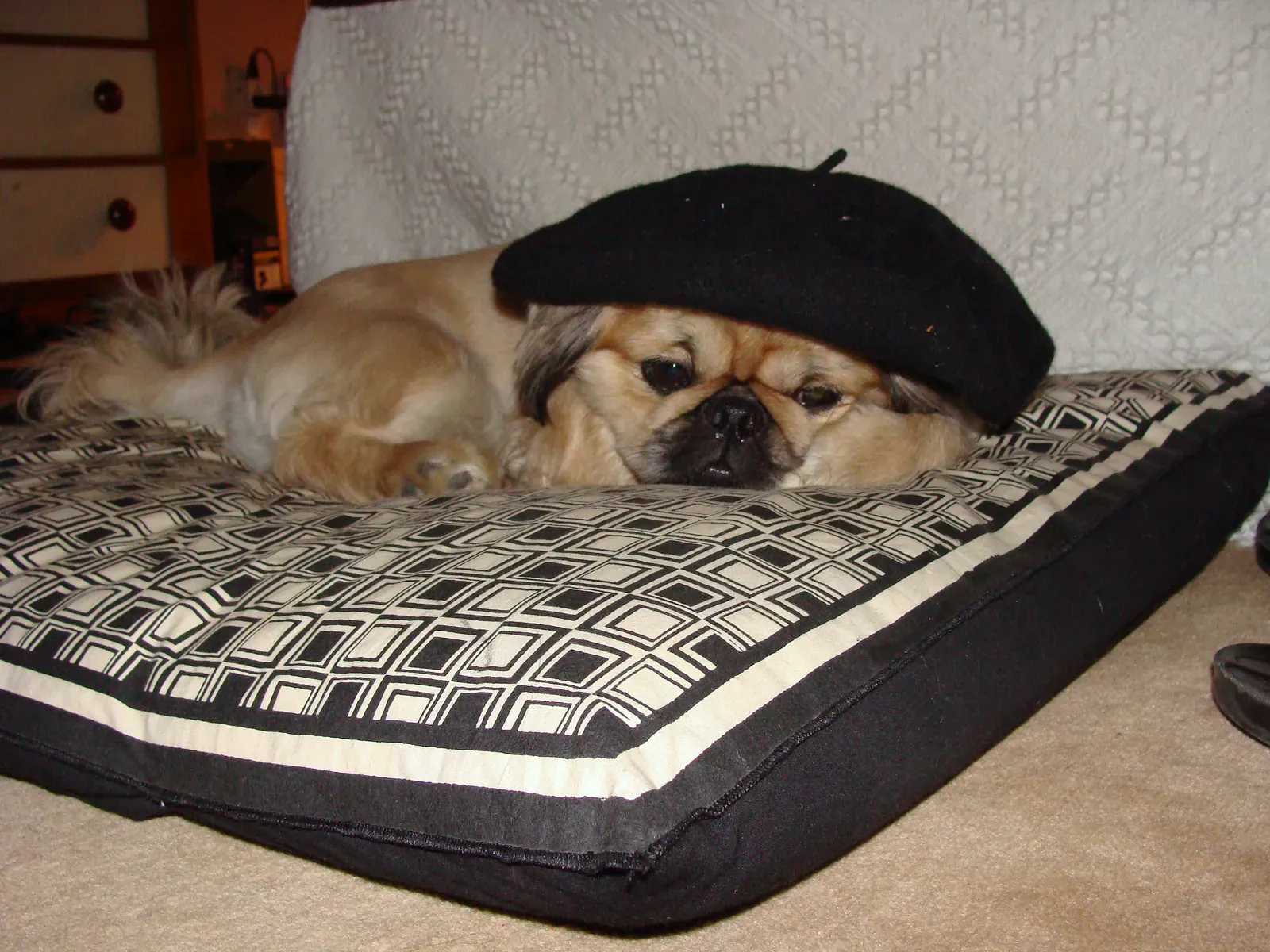
It was kept in the imperial court at Beijing (once called Peking), and it was linked to the lion that stands for strength and protection in Chinese and Buddhist art. Today it is a quiet, loyal companion for calm homes. It suits owners who want a small, dignified dog and who will take flat-faced breathing, eye care and hot weather seriously.
Pekingese quick facts
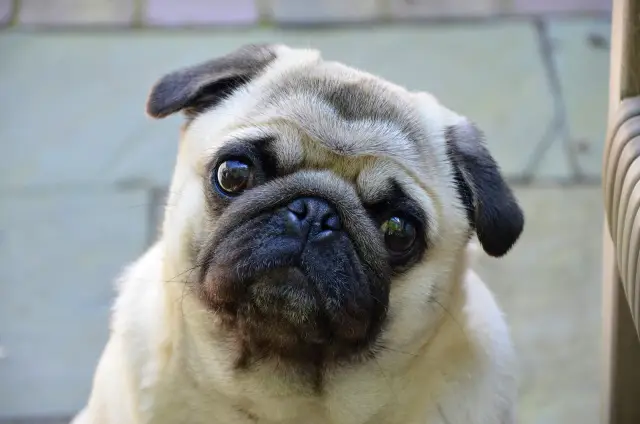 Related breedPug400 BCE to 1885 · ChinaAncient World
- Closest DNA relatives
- Shih Tzu (155.4 shared), Tibetan Spaniel (128.2 Mb), Lhasa Apso (110.6 Mb)
- Country of origin
- China (Beijing, the imperial court)
- Period of development
- Atlas data: about 700 CE to 1860 (medium confidence); the modern Western breed from the 1860s
- Original job
- Palace companion dog
- Type
- Companion and toy ( Group 9, standard no. 207; AKC Toy Group; UK Kennel Club Toy Group)
- Other names
- Peke, Lion Dog
- Weight
- UK Kennel Club: males not over 5 kg, females not over 5.4 kg. AKC: over 14 lb (about 6.4 kg) is a disqualification
- Coat
- Long, straight double coat with a mane
- Life span
- Atlas data: 12 to 14 years. No Pekingese-specific figure found
- Exercise
- Low; short walks in cool weather
- DNA family
- Asian Toy family (Parker et al. 2017)
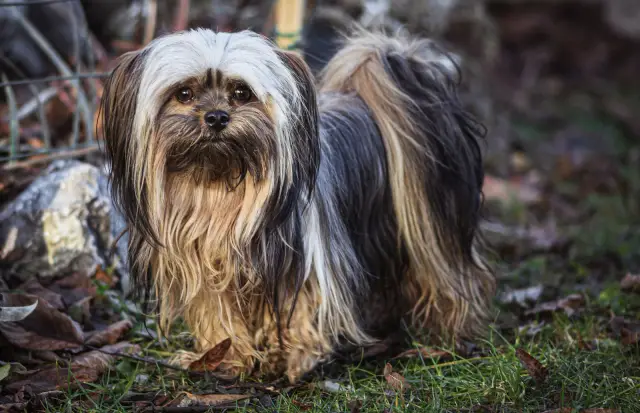
Where it sits in the tree
Early Middle Ages · 500 to 1199

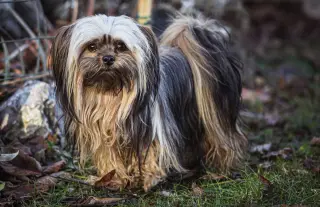

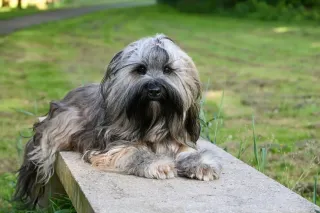
Name and origin
 Related breedXoloitzcuintle1000 BCE to 1956 · MexicoAncient World
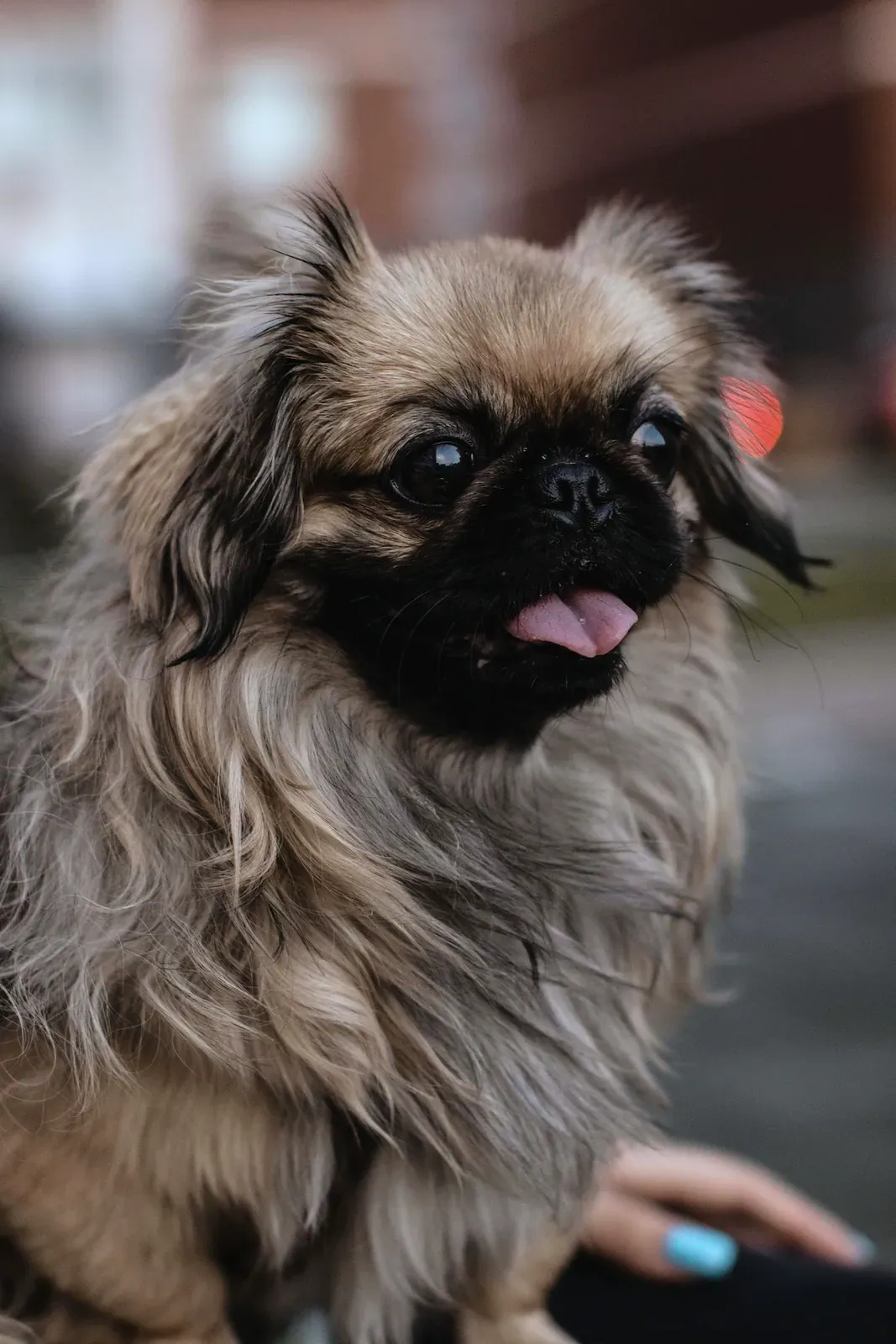
The breed is named for Peking, the old Western spelling of Beijing, the Chinese imperial capital where it was kept. The common names "Peke" and "Lion Dog" go with it. In Chinese tradition the small dogs were compared to the lion, a symbol of power and protection. Their wide mane-like ruff, flat face and rolling gait were all part of that comparison.
A palace dog. The Pekingese was kept in the imperial palaces in Beijing. In many accounts, ordinary people were not allowed to own the smallest dogs. A Globe and Mail report says the palace dogs were carried in the sleeves of the ruler's silk robes, and that commoners who kept them could face harsh punishment. That claim appears in popular and journalistic accounts and is hard to check in primary records, so treat it as a story. The Morgan Library notes that small dogs were coveted playthings of the Chinese elite from the Tang dynasty (618 to 907 CE), but that the custom of owning toy-sized dogs was neither constant nor exclusively imperial.
Where the breed's name comes from, and why that matters. The name tells where the Western dogs came from (the Beijing palaces looted in 1860), not how old the type is. Flat-faced small dogs were kept in China long before that date, and DNA backs this (see "Relatives and DNA").
 Save

History
 Same eraBloodhound1000 to 1100 · Belgium, FranceEarly Middle Ages
Lion dogs and Buddhist art
Pairs of stone lions guarded Chinese temple and palace gates, and the lion was treated as a protector in Buddhist teaching. Sources say that in the Tang dynasty Buddhist temples were protected by such lion statues. Writers in the 19th and 20th centuries linked the small dog to this lion, and a popular account says the dog was a miniature form of the lion that Buddha was said to ride or to keep at his side. That account is a tradition, not a record. For more on how dogs and lion figures appear in stories, see dogs in myth.
Small dogs also appear in Chinese court painting over many centuries, but it is not clear which of those were ancestors of the Pekingese and which were other flat-faced or long-coated toy dogs such as the Shih Tzu. The lion-dog idea, in other words, is certain as a symbol. The line from one named painted dog to today's breed is not documented.
Sleeve dogs and palace breeding
A "sleeve Pekingese" was a very small dog that could be carried in the wide sleeve of a court robe. One popular account says sleeve dogs were developed during the reign of the Daoguang emperor (the 1820s to 1850s). A different view is given by the American Kennel Club's history page, which cites Hubbard (1948) as thinking the sleeve-dog idea may have come from early Italian courts, not China. So the sleeve tradition is described differently by different sources and its origin is not settled.
Cixi and the sleeve dog (legend). The Empress Dowager Cixi (1835 to 1908) is the name most often tied to Pekingese stories. Two stories are repeated:
- Banning cruel shrinking. A story says that Cixi forbade methods used to keep dogs small, such as giving puppies rice wine, holding newborns tightly for hours or putting them in tight wire waistcoats. This is a legend from breed writing, and no primary record supports it.
- The flight from Beijing. A story says that when Cixi fled Beijing during the Boxer Rebellion (1900), she took some Pekingese by sedan chair and ordered others killed. A report that cites the Palace Museum repeats this, and it is also hard to confirm.
Both are widely told, so they are included here, but labelled as legend.
1860: the Summer Palace and Looty
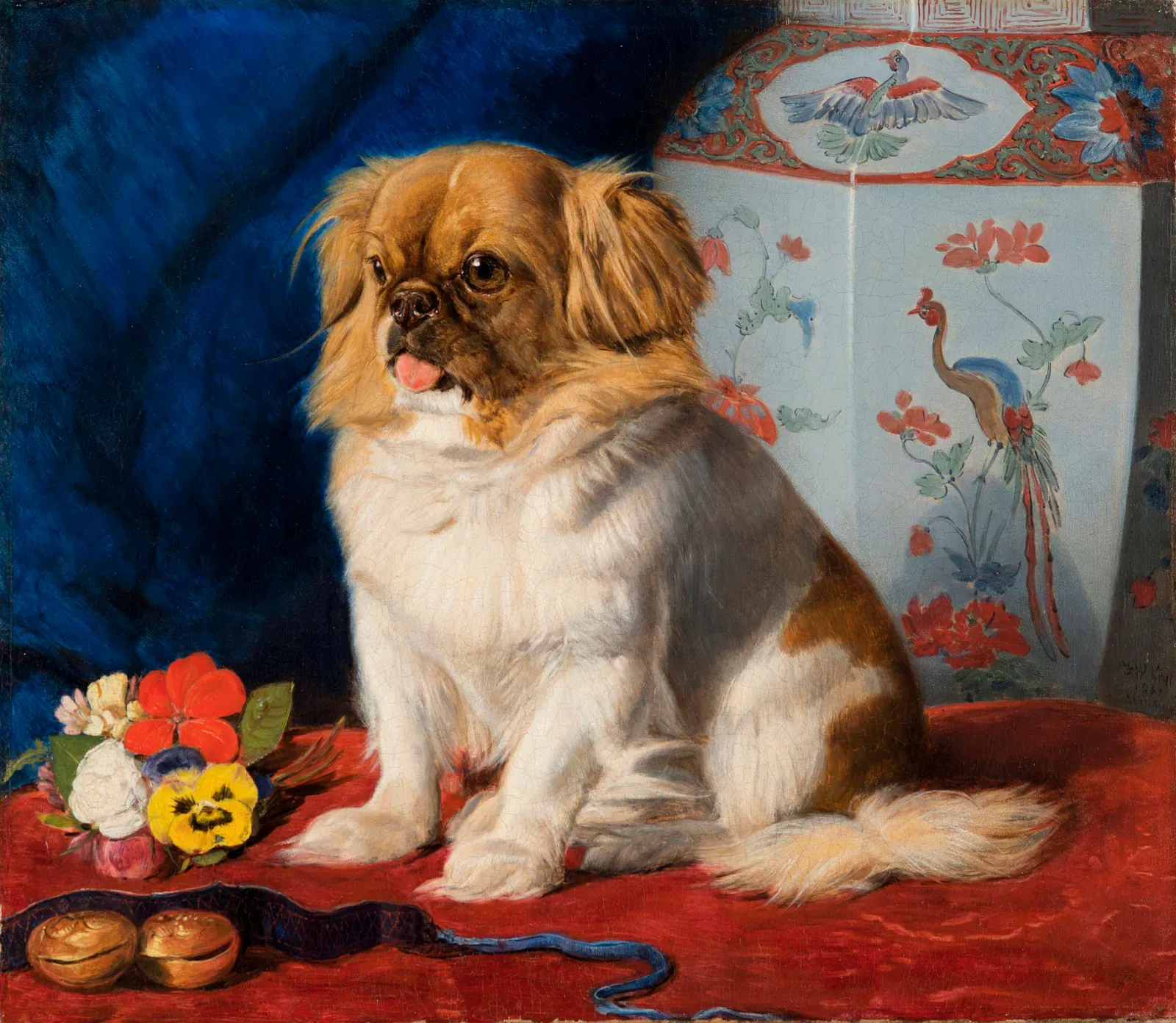
In October 1860, during the Second Opium War, British and French troops looted and burned the Summer Palace (Yuanmingyuan) near Beijing. Captain John Hart Dunne of the 99th Regiment found a small dog there. In his diary he described it as smaller than any King Charles, "a real Chinese sleeve dog", with silver bells around its neck, according to the Royal Collection Trust. He brought it home and presented it to Queen Victoria in April 1861. It was named Looty, an ironic reference to how it was acquired.
Details that differ between sources.
- The date of the looting. The Royal Collection Trust gives 8 October 1860. Dunne's own note gives 6 October.
- "Five dogs". Several accounts say five lapdogs were taken from the palace and shared out among British owners. One account in CNN notes that this origin story may be, at least in part, apocryphal. A version in which a palace aunt killed herself among her dogs is unconfirmed.
- Looty's sex. Some accounts call Looty female, others say there are conflicting reports.
- What is certain. A dog named Looty lived in the royal household, and was painted by William Bambridge and photographed. The painting was shown at the Royal Academy in 1862.
Queen Victoria's dog made the Pekingese fashionable, and demand grew among British fanciers. Importation and breeding in Britain followed from the 1860s, and the breed later reached the United States.
 Save
Clubs and recognition
The FCI lists the breed as no. 207, Group 9 (Companion and Toy Dogs), with China as the country of origin. The AKC places it in the Toy Group and the UK Kennel Club in the Toy Group.
Relatives and DNA
 Same familyCane Corso1000 to 1996 · ItalyEarly Middle Ages
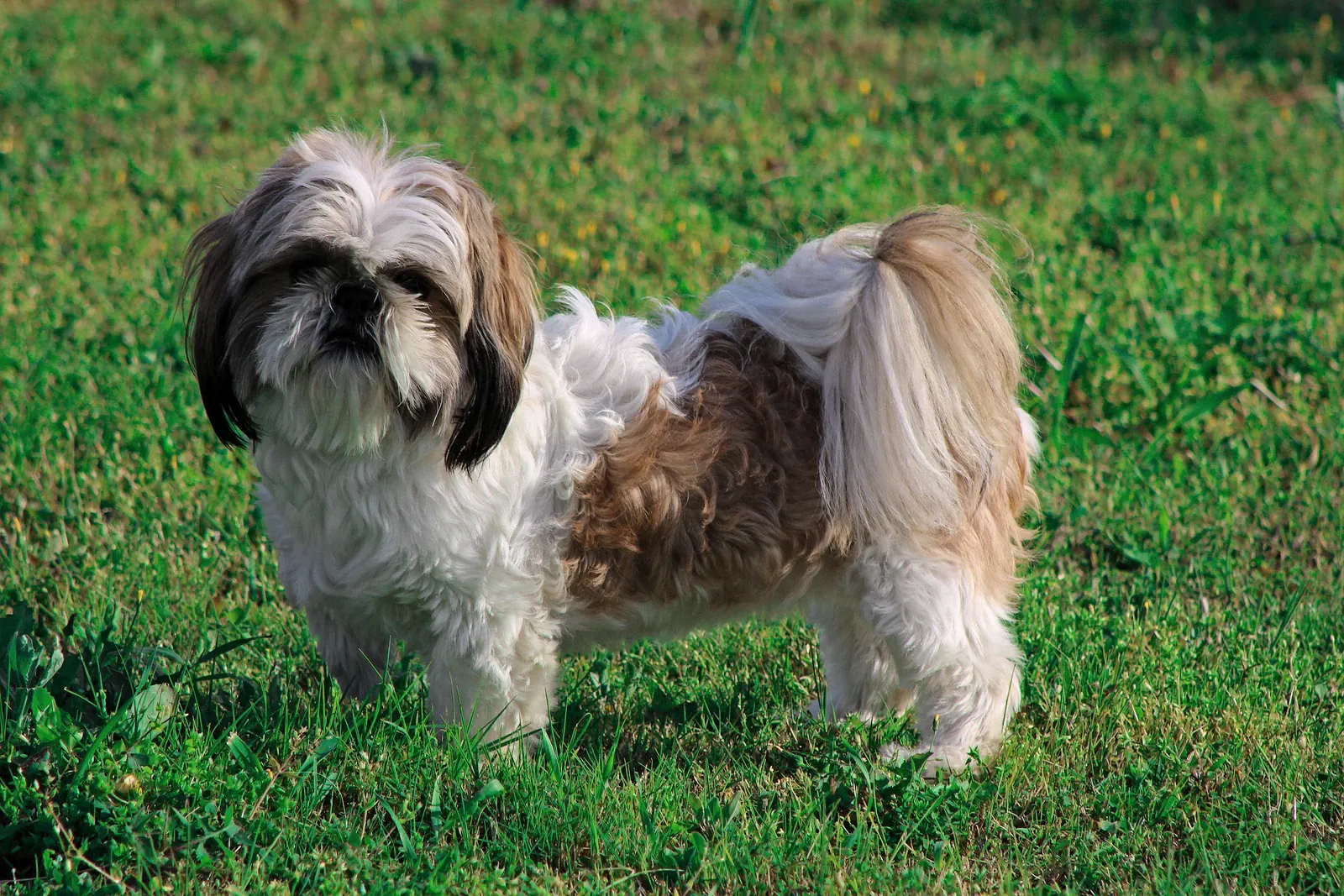
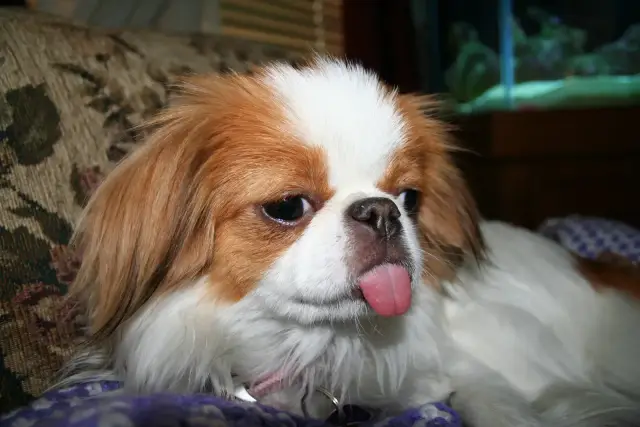
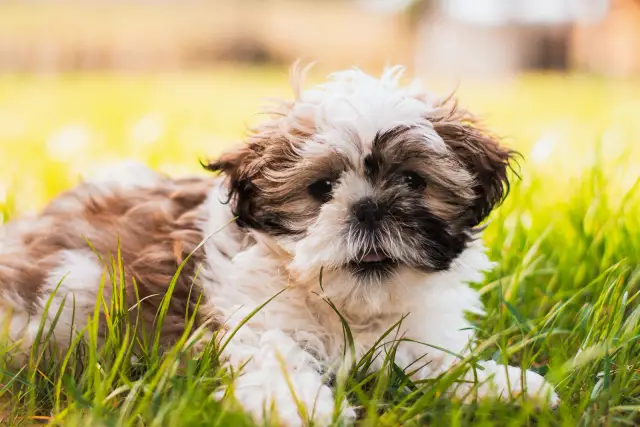
Parker et al. (2017) placed the Pekingese in the Asian Toy family. In the atlas shared-segment data from that paper, the Pekingese shares most DNA with the Shih Tzu (155.4 Mb), the Tibetan Spaniel (128.2 Mb) and the Lhasa Apso (110.6 Mb). Smaller shares are listed with the Japanese Chin (28.7 Mb) and the Pug (12.8 Mb).
An ancient or a mixed breed? Both. A study by Pickrell and Pritchard (2012) found that the Chinese toy breeds, including the Pekingese and Shih Tzu, are the product of between a population related to ancient East Asian breeds and a population related to modern breeds such as the Brussels Griffon and Pug. In that analysis, about 28% of their ancestry came from the East Asian . This fits what other writers say, that these breeds descend from small flat-faced dogs kept in China for a long time, but it also shows modern mixing. A UK expert told National Geographic that the Lhasa Apso, Shih Tzu and Pekingese derive from small, flat-faced companion dogs bred in China some 5,000 years ago. That is an expert estimate, not a DNA date.
 Save
 Save
Sister breeds · 1
- King Charles Spaniel1600 to 1903
Descend from it · 2
- Shih TzuChina
- BolonkaRussia
- Shih Tzu155.4 Mb 6.5%
- Tibetan Spaniel128.2 Mb 5.3%
- Lhasa Apso110.6 Mb 4.6%
- Japanese Chin28.7 Mb 1.2%
- Tibetan Terrier16.6 Mb 0.7%
- Chinese Crested Dog16.2 Mb 0.7%
- Pug12.8 Mb 0.5%
- Xoloitzcuintle10.4 Mb 0.4%
Source: Parker et al. 2017. Percent of the whole genome.
| Breed | Link to the Pekingese | Evidence |
|---|---|---|
| Shih Tzu | Closest DNA relative; the atlas data lists it as a descendant breed | Parker 2017 (155.4 Mb shared) |
| Tibetan Spaniel | Close DNA relative | Parker 2017 (128.2 Mb) |
| Lhasa Apso | Close DNA relative | Parker 2017 (110.6 Mb) |
| Japanese Chin | Another flat-faced Asian toy | Parker 2017 (28.7 Mb) |
| King Charles Spaniel | Possible shared ancestry | Breed literature; confidence low |
The breed standard
 Looks relatedGreyhound800 CE to 1850 · United KingdomEarly Middle Ages
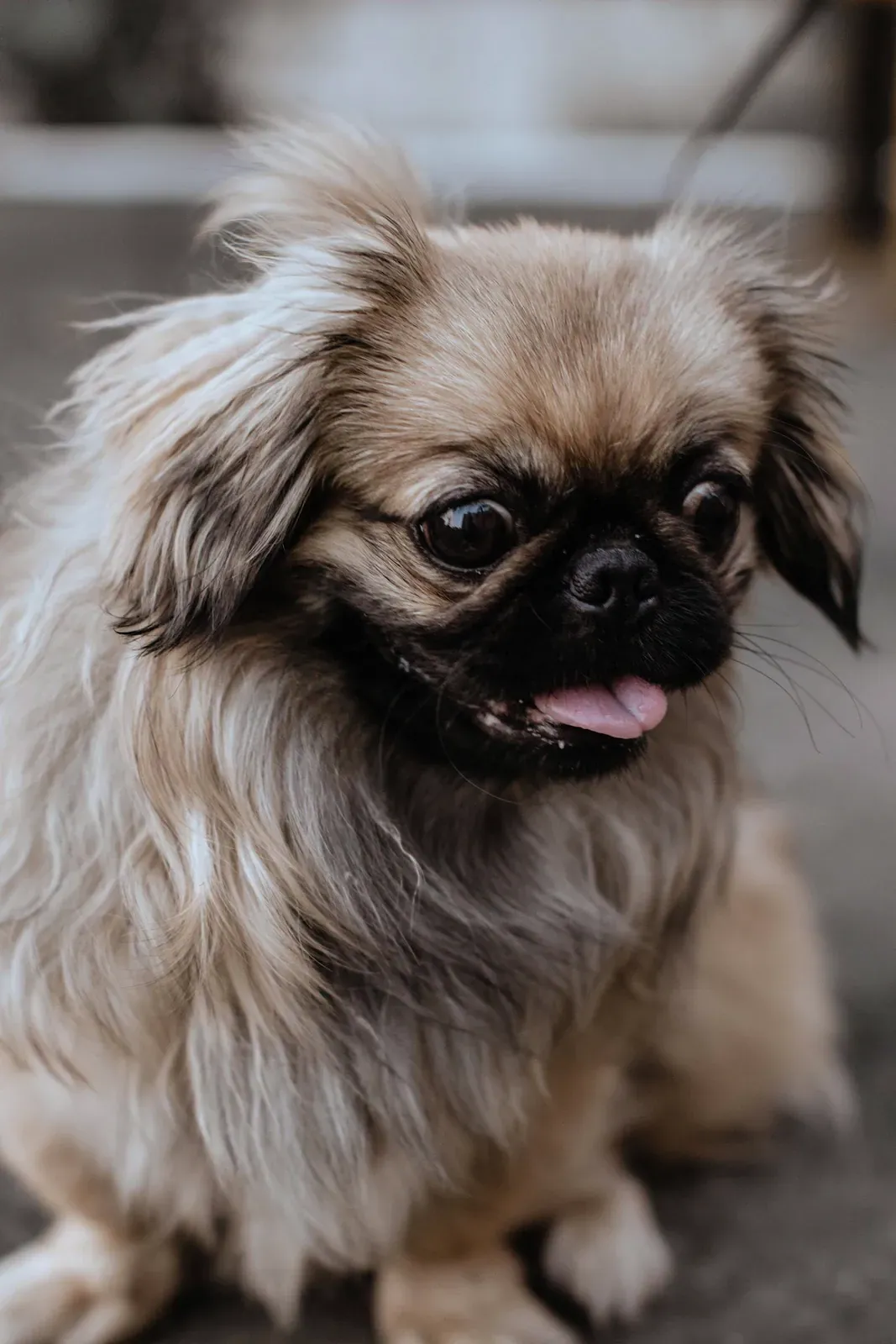
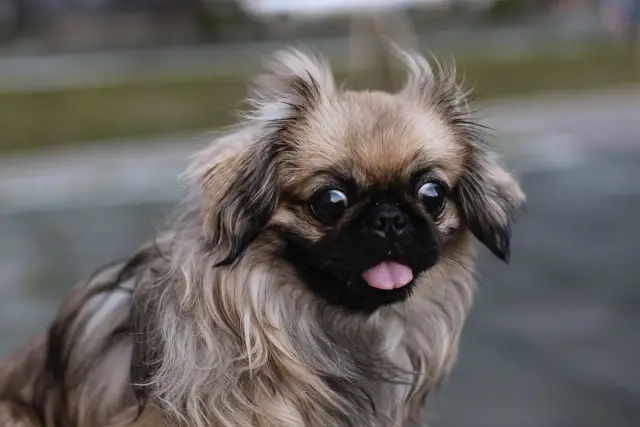
A is the written ideal a kennel club judges dogs against. The Pekingese standards describe a small dog that looks small but feels heavy when picked up, with heavy bone and a sturdy body.
| Trait | What the standards say |
|---|---|
| Weight | UK Kennel Club (as reprinted by the Kennel Union of Southern Africa): males not exceeding 5 kg, females not exceeding 5.4 kg. AKC: over 14 lb (about 6.4 kg) is a disqualification, the only one in the AKC standard; any weight up to 14 lb is correct |
| Feel | UK Kennel Club: looks small but feels heavy when lifted; heavy bone and a sturdy, well-built body are essential |
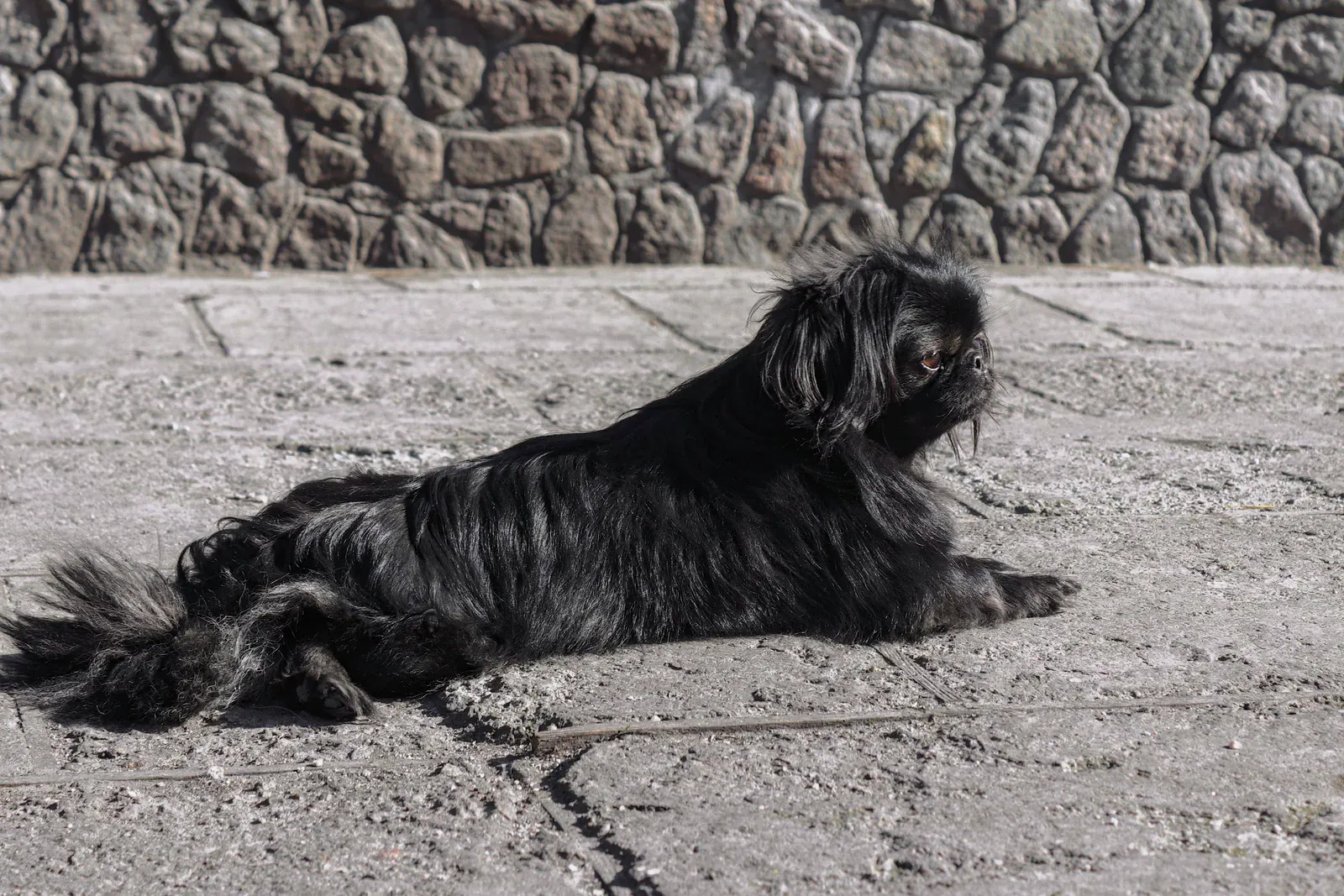
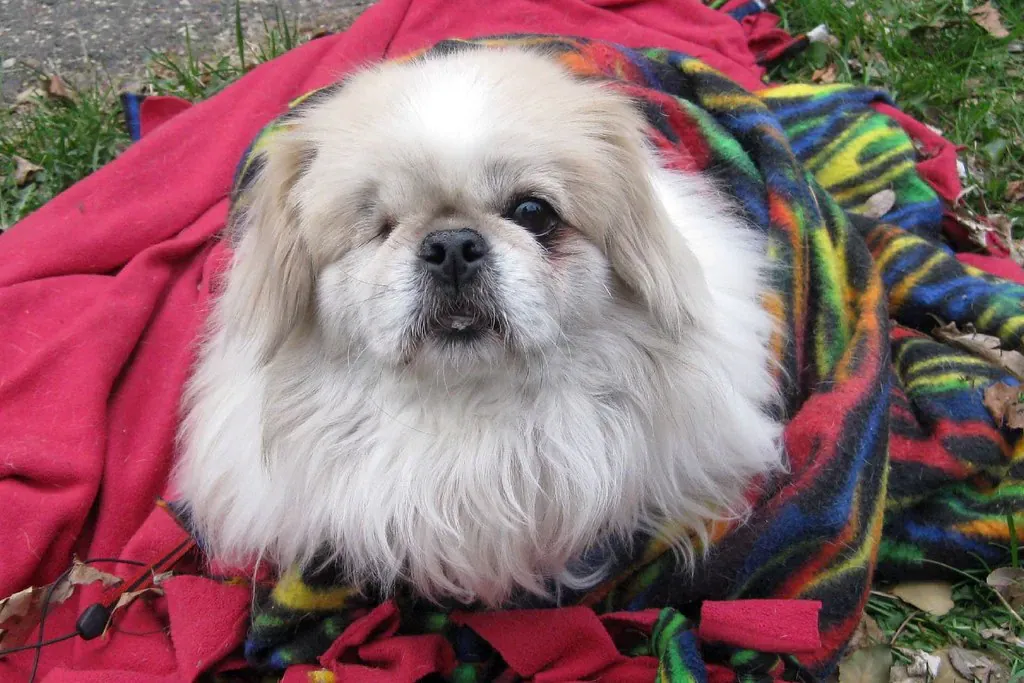
| Coat | Long, straight and thick, with a mane over the shoulders and an undercoat (general description in the standards) |
| Colour | Most colours and markings are accepted except albino and liver (wording differs by club) |
| Head | Broad, flat skull, short flat face, wide wrinkle over the nose |
| Gait | Rolling, deliberate walk |
The FCI height and weight figures are not shown. A secondary German source gives about 20 to 25 cm at the shoulder. Wikipedia gives typical sizes of about 15 to 23 cm and 3.2 to 6.4 kg, but those are typical sizes, not standard limits.
Welfare note on the standard. The head shape the standards describe, a very short flat face with a wide skull, is the same trait that causes breathing problems in the breed. In recent years, kennel clubs and vet groups have asked judges and breeders to prefer a slightly longer muzzle and open nostrils. If you read a standard, notice how much it asks for flatness, and ask a breeder how they select for a functional nose.
Temperament
 Related breedKangal Shepherd Dog1000 to 1989 · TurkeyEarly Middle Ages
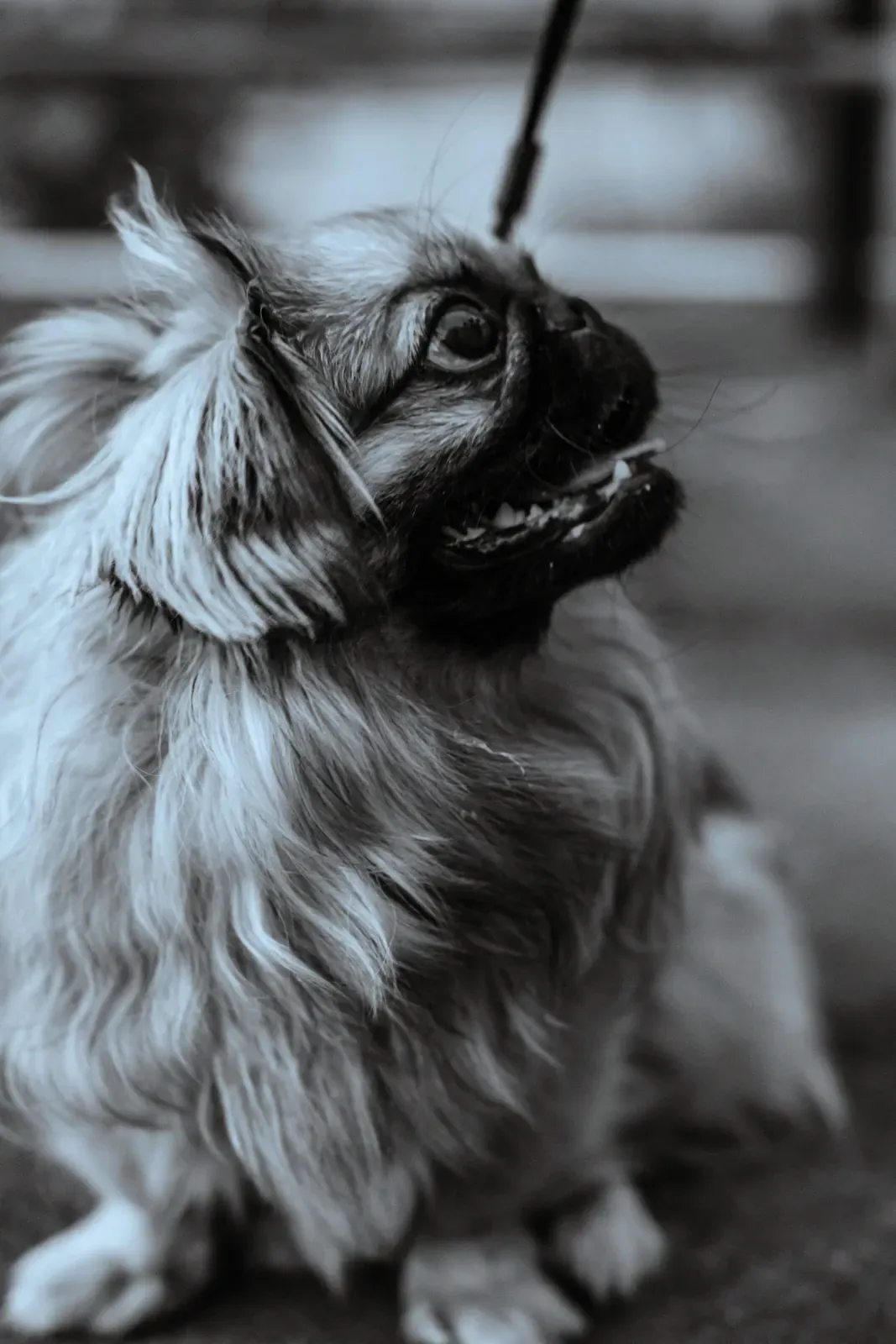
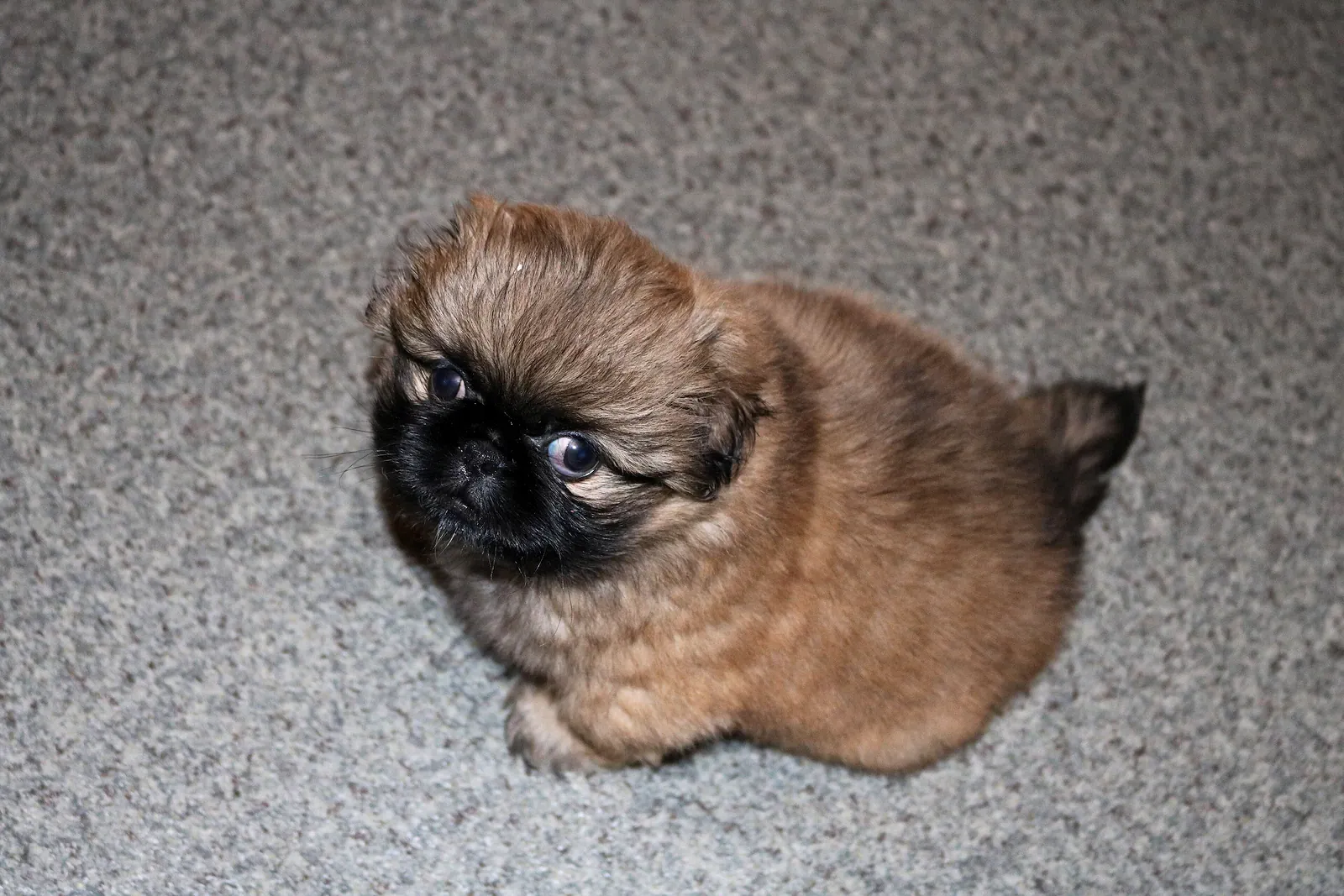
The Pekingese is known for dignity, loyalty and a strong will. In breed writing the character is often summed up as that of a small lion in the house: calm, confident, a little aloof with strangers, and deeply attached to its own people. Breed standards describe such traits, and owners usually agree, though no study here measures them.
With its family. Most Pekingese are affectionate and loyal to their owners and are happy to rest on a lap or a bed. They are often quiet. They do not usually need a great deal of attention but want to be near their people.
With strangers and visitors. Many are reserved with strangers. Some bark at the door. Early socialisation matters, because a dog that is not used to people may snap when handled or startled.
With children. A Pekingese is small, with a flat face and prominent eyes, which are easy to injure. A small child who grabs or drops the dog can hurt it, and a startled Pekingese may snap. They suit homes with older, gentle children who understand how to handle a toy dog. Supervision is needed.
With other dogs and pets. Pekingese can live well with other dogs, though some are bossy and unaware of their small size. Cats are usually not a problem for the breed, but this depends on the individual.
Training. Pekingese are intelligent but independent. They often ignore commands that do not interest them, and harsh methods do not work. Short, gentle and food-rewarded sessions are best. House-training can take longer than with some other breeds, and many owners find it needs patience.
Alone. Many are fine for a few hours but prefer company. Long hours alone are not ideal.

Health
 Related breedPembroke Welsh Corgi1100 to 1934 · United KingdomEarly Middle Ages
Most Pekingese live comfortable lives with sensible care. The breed's very short face, though, brings more breathing and eye problems than most breeds have. This section states them plainly, with numbers where a study gives them.
Life span. Breed sources give 12 to 14 years. No Pekingese-specific VetCompass median exists, and general breed sites that quote 12 to 15 years are not research estimates.
Breathing: BOAS
Brachycephalic obstructive airway syndrome (BOAS) means the short skull leaves too little room for the airway. Signs include noisy breathing, snoring or snorting when awake, getting out of breath on a short walk, and trouble in the heat.
A 2026 University of Cambridge study (Tomlinson, Liu, Sargan, Ladlow, PLOS One) assessed 898 dogs of 14 breeds. It found that the Pekingese was one of two breeds at high risk of BOAS: only 10.9% of the Pekingese assessed were graded free of the syndrome, so about 9 in 10 of those assessed had some degree of it. Japanese Chins were similar (17.4% unaffected). For comparison, the study reported 7% unaffected for Pugs, 10% for French Bulldogs and 10.9% for Bulldogs. Risk factors across breeds included a shorter face, narrowing of the nostrils and a higher body condition score. The dogs in such a study may include dogs that were seen because of breathing concerns, so the figures describe the dogs assessed, not every Pekingese.
Eyes
Pekingese have large, round, prominent eyes set in a flat face, and they often have a skin fold over the nose. This makes the surface of the eye easy to scratch or dry out. In the VetCompass England study of corneal ulcers (O'Neill et al., 2017, on 104,233 dogs), flat-faced dogs overall had 11.18 times the odds of corneal ulcers compared with crossbred dogs. That study's list of highest-risk breeds did not name the Pekingese, and no Pekingese-specific figure exists, so the number is for the flat-faced group, not this breed alone.
Other issues
| Condition | What it is | How common | What helps |
|---|---|---|---|
| BOAS | Narrow nostrils, long soft palate, narrow windpipe | Only 10.9% of Pekingese assessed were free of it (Tomlinson et al., 2026); about 9 in 10 had some degree | Choose a dog with open nostrils and a longer muzzle; keep lean; vet airway check; surgery when advised |
| Corneal ulcers and dry eye | Scratches or dryness on the eye surface | Flat-faced dogs as a group have about 11 times the odds of corneal ulcer (O'Neill et al., 2017); no Pekingese figure found | Check eyes daily; see a vet quickly for squinting, redness or discharge |
| Heat stroke | Dogs cool down by panting, which flat faces do poorly | Seen more often in flat-faced breeds; no Pekingese figure found | Keep cool, avoid midday walks, never leave in a car |
| Disc disease (IVDD) | Spinal discs bulge and press on the spinal cord | Seen more often in long-backed small breeds; no Pekingese figure found | Lean weight, a chest-strap lead, not a collar, avoid jumping from heights |
| Skin fold infection | Moisture trapped in the nose fold | Common in breeds with deep folds; no Pekingese figure found | Clean and dry the fold as the vet suggests |
| Dental crowding | Teeth crowded in a short jaw | Common in small flat-faced dogs; no Pekingese figure found | Brushing, regular dental checks |
What helps most. Weight control is the single most useful step, because extra weight makes breathing worse. Ask for a vet airway assessment and a Respiratory Function Grading Scheme result where available. Use a chest-strap lead, not a collar.
A calm welfare note. Many Pekingese live happily. But the breed's breathing difficulty is a known welfare issue, and veterinary and kennel club groups ask buyers to choose dogs with a visible muzzle, open nostrils and no noisy breathing at rest. Choosing a dog from parents without breathing trouble is one of the best things a new owner can do.

Living with a Pekingese
 Related breedSamoyed500 CE to 1912 · RussiaEarly Middle Ages
 Save
| Daily reality | Rating | Why |
|---|---|---|
| Exercise per day | Low | Short, gentle walks; breathing limits hard exercise |
| Training needs | Medium | Intelligent but stubborn; house-training takes patience |
| Grooming | High | Long double coat needs regular brushing; folds and eyes need daily checks |
| Shedding | Medium | Sheds, with seasonal coat blow |
| Barking | Medium | Often alert barkers at the door; varies |
| Time alone | Fair | Prefers company; a few hours is fine for many |
| Children | Fair | Small and easy to injure; best with older, gentle children |
| Other dogs | Fair | Varies; often bold |
| Cats and small pets | Good | Not strongly driven to chase; varies by dog |
| Flat living | Good | Small and quiet; needs cool air indoors |
| Heat tolerance | Poor | Flat face and thick coat; see BOAS above |
| Cold tolerance | Good | Thick double coat |
| First-time owner fit | Fair | Easy to live with, but health and heat care need attention |
A great fit if
- You want a small, quiet dog for lap time and short walks.
- You live somewhere that can be kept cool in summer.
- You will brush the coat and check the eyes daily.
- You are ready to pay for vet airway checks and to say no to hot-weather outings.
Think twice if
- You want a running or hiking partner.
- You live in a hot climate without cooling.
- You have a very young child who will grab the dog.
- You want a dog that is easy to train and eager to please.
Before you get one
- Health tests. Ask the breeder about airway health, such as the Respiratory Function Grading Scheme where available, and about eye health of the parents. Ask for the original certificates.
- Puppy or adult rescue. Pekingese rescues exist and place adult dogs whose breathing and temperament are already known. An adult may be a good first match.
- First year. Plan for weight control, a chest-strap lead, daily eye and fold checks, a cool room and a vet who knows flat-faced dogs.
Similar breeds to consider
- Shih Tzu. Closest DNA relative with a longer muzzle than the Pekingese, but it has a flat-faced risk too.
- Lhasa Apso. Another Asian toy with a longer muzzle and a similar coat.
- Tibetan Spaniel. A close relative with a slightly longer face and an active, alert nature.
- Japanese Chin. A small companion breed, flat-faced, with its own breathing risk (17.4% free of BOAS in the Cambridge study).

Pekingese fun facts
 Related breedSiberian Husky1000 to 1930 · RussiaEarly Middle Ages
- The word "Peke" and the name Pekingese come from Peking, the old Western name for Beijing.
- Queen Victoria's Looty, taken from the Summer Palace in 1860 and later painted by William Bambridge, helped start the Western fashion for the breed.
- Chinese tradition links the dog to the lion, a guardian figure at temple and palace gates.
- A Cambridge study in 2026 found only 10.9% of the Pekingese it assessed were graded free of BOAS.
Frequently asked questions
Where does the Pekingese come from?
China. It was kept at the imperial court in Beijing, and the Western breed dates from dogs taken from the Summer Palace in 1860.
What is the story of Looty?
Captain John Hart Dunne found a small dog at the looted Summer Palace in October 1860 and gave it to Queen Victoria in 1861. The date of the looting is given as 6 or 8 October depending on the source.
How big is a Pekingese?
The UK Kennel Club standard sets maximum weights of 5 kg for males and 5.4 kg for females. The disqualifies a dog over 14 lb (about 6.4 kg).
Do Pekingese have breathing problems?
Many do. In the 2026 Cambridge study, only 10.9% of the Pekingese assessed were free of brachycephalic airway syndrome.
Are Pekingese good with children?
They suit gentle older children best. The dog is small with prominent eyes and can be hurt or startled.
Is the Pekingese an ancient breed?
It descends from small flat-faced dogs kept in China for a very long time, but DNA also shows modern mixing. The breed in its current form is much younger than the type.
Read next
 Closest DNAShih Tzu155.4 Mb shared
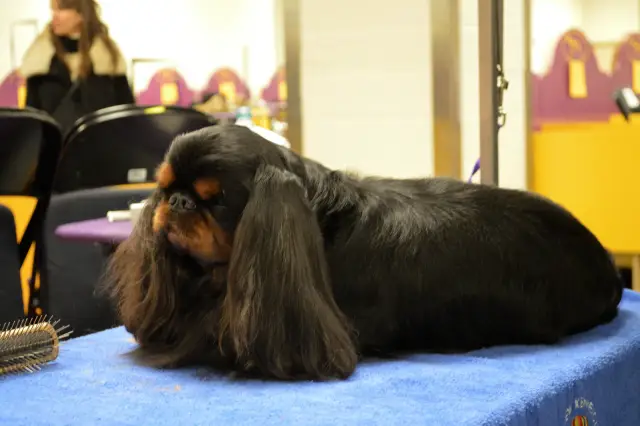 Sister breedKing Charles Spaniel1600 to 1903
 Adopt a dogDog Shelters in EuropeFind dog shelters in Europe, learn how shelters differ from country to country and why adopting a dog is a good option.
Sources (15)
- FCI standard no. 207, Pekingese.
- The Kennel Club (UK), Pekingese breed standard (as reprinted by the Kennel Union of Southern Africa).
- American Kennel Club, Pekingese breed standard.
- American Kennel Club, Pekingese history page (citing Hubbard, 1948).
- Royal Collection Trust, Looty the Pekingese (William Bambridge).
- Dunne JH, 1860 diary entry on the Summer Palace, as quoted by the Royal Collection Trust.
- CNN. Looty: How a dog stolen from China sparked a British luxury craze.
- Tomlinson, Liu, Sargan and Ladlow (2026). Conformational risk factors for BOAS in 14 breeds. PLOS One (University of Cambridge).
- O'Neill DG et al. (2017). Corneal ulcerative disease in dogs under primary veterinary care in England. Canine Genetics and Epidemiology (VetCompass).
- Parker HG et al. (2017). Genomic analyses reveal the influence of geographic origin, migration, and hybridization on modern dog breed development. Cell Reports 19: 697 to 708.
- Pickrell JK and Pritchard JK (2012). Inference of population splits and mixtures from genome-wide allele frequency data. PLoS Genetics.
- The Morgan Library and Museum. The Titan and the Lion Dog.
- National Geographic (2018). Dogs in China.
- The Globe and Mail. End of a dog dynasty.
- Dogs Atlas breed records, Pekingese record (FCI, Parker 2017).