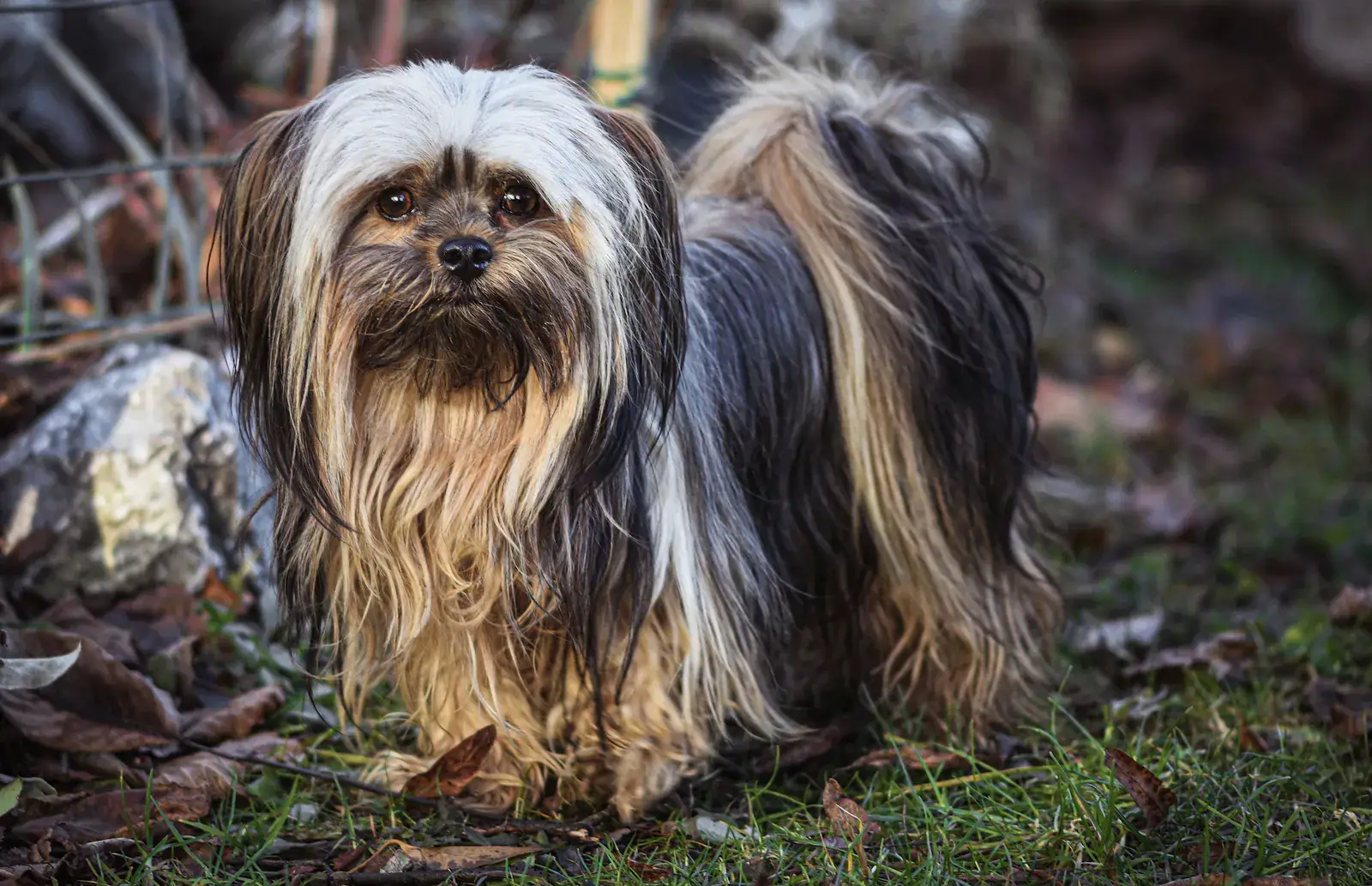
Tradition says it stood guard inside monasteries and palaces and that the Dalai Lama gave pairs as gifts. Genetic work places it among the oldest Asian dog lineages, though no record proves an unbroken line of dogs in Tibetan monasteries. The first American Lhasas arrived in 1933 as a gift from the 13th Dalai Lama to the traveller C. Suydam Cutting. The breed's coat needs regular grooming, and its best-documented health issues are eye conditions and an inherited kidney problem called renal dysplasia.
Lhasa Apso quick facts
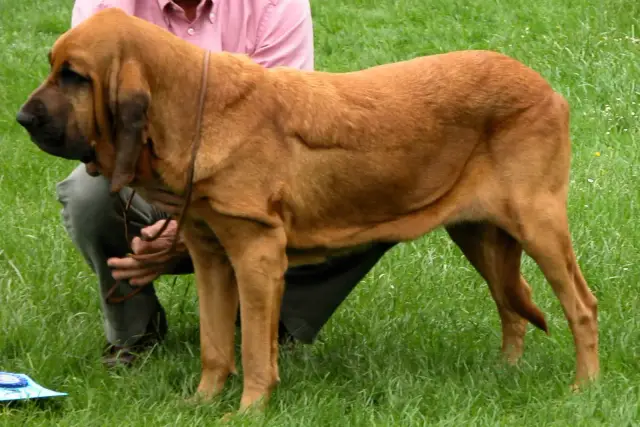 Related breedBloodhound1000 to 1100 · Belgium, FranceEarly Middle Ages
- Country of origin
- Tibet ( lists "Tibet (China)")
- Period of development
- 800 CE to 1934 (atlas data, low confidence)
- Original job
- Indoor sentinel and companion in monasteries and noble houses (tradition)
- Type
- Companion. FCI: Group 9, Companion and Toy Dogs, standard no. 227. : Non-Sporting Group. The Kennel Club (UK): recognised
- Other names
- Apso, Abso Seng Kye; early British name "Lhasa Terrier" for mixed Tibetan dogs
- Height
- About 25 cm for dogs, bitches slightly smaller (Kennel Club standard wording)
- Life span
- 12 to 15 years. A 2004 Kennel Club survey reported a median of 14 years 4 months
- DNA family
- Asian Toy (Parker et al. 2017, strong support)
Drawn to scale in real centimetres. Its back reaches about 25 cm, your shin; its head about 32 cm, your shin.
Where it sits in the tree
Early Middle Ages · 500 to 1199



Name and origin
 Related breedCane Corso1000 to 1996 · ItalyEarly Middle Ages
 Save
The breed is named after Lhasa, the Tibetan capital. "Apso" is thought to come from the Tibetan word "rapso", meaning "goat-like", for the long, hanging coat. Another name, "Abso Seng Kye", is often translated as "bearded lion sentinel dog". That translation comes from breed writing, not from a Tibetan source.
Tradition describes the Lhasa as a dog kept indoors in monasteries and houses of the nobility, where it gave an alarm at the sight of a stranger while larger Tibetan mastiffs guarded the gates. This is the story told by breed clubs. No contemporary record of it was found, so it is labelled a tradition.

History
 Same eraGreyhound800 CE to 1850 · United KingdomEarly Middle Ages
Legends of Tibet
Stories say the Lhasa is more than a thousand years old and that lamas believed the souls of dead teachers could be reborn in the breed. These are legends. Our atlas data marks the claim "bred in Tibetan monasteries for over 1,000 years" as partly true: DNA shows old Asian ancestry, but no written or genetic record proves an unbroken monastery line, and the breed in its modern form was standardised only in the 1930s.
Gifts from the Dalai Lama
Breed histories say the Dalai Lamas gave Lhasa dogs as gifts and that the dogs were not sold. The AKC says the Dalai Lama gave Lhasa Apsos to the emperor of China centuries ago, and calls this the predominant theory for how the Shih Tzu arose. One site dates the first gifts to the Chinese court to 1583 and ends them around 1908. Those dates are not documented elsewhere.
The best-documented gift is a modern one. In 1933 the 13th Dalai Lama, Thubten Gyatso, gave a pair of dogs to C. Suydam Cutting, an American traveller and naturalist, and they arrived in the United States that year. Accounts of what the Cuttings sent back differ: some say Dalmatians, another says dachshunds.
Arrival in Britain
The British story is muddled, and sources disagree.
- Early 1900s. Some breed pages say Mrs A. McLaren Morrison brought the breed in 1901 and that it was registered in 1902. That text appears on low-authority sites.
- Early 1920s. The Kennel Club's own says the first Apsos arrived in Britain in the early 1920s and were soon being shown in London.
- Mixed dogs. Wikipedia says military men returning from the Indian subcontinent brought Tibetan dogs of mixed types, called Lhasa Terriers, some like the later Lhasa Apso and some like the Tibetan Terrier.
- 1933. The Kennel Club says a breed club for the Lhasa Apso was set up in Britain in 1933.
The safest reading is that Tibetan dogs reached Britain in the early twentieth century under the label "Lhasa Terrier", and that the Lhasa Apso was separated from the Tibetan Terrier and other shaggy Asian dogs in the following decades. No source gives an exact separation year.
Arrival and recognition in the United States
After the 1933 gift, American breeders built the breed from the Cutting dogs and later imports. A breed summary says the AKC recognised the Lhasa Apso in 1935, in the Terrier Group, and moved it to the Non-Sporting Group in 1959. The atlas data lists the AKC group as Non-Sporting today. Dates differ between sources.
Lhasa Apso vs Shih Tzu
 Related breedKangal Shepherd Dog1000 to 1989 · TurkeyEarly Middle Ages
The Shih Tzu is the Lhasa Apso's closest relative in our data, and the two are often confused. Both are small, long-coated companion dogs with Tibetan and Chinese ties.
| Point | Lhasa Apso | Shih Tzu |
|---|---|---|
| Origin | Tibet | China (palace dog, with Tibetan links) |
| 142.1 Mb (Parker 2017) | 142.1 Mb | |
| Muzzle | Longer, more defined | Short and broad |
| Eyes | Medium, deep set | Large, round |
| Coat | Long, heavy, straight, hard | Long and flowing, softer |
| Temperament | Alert, independent, watchful | Outgoing, friendly |
The muzzle, eye and temperament rows summarise common breed descriptions and the Shih Tzu's flat-faced build, not a single standard I retrieved. Our atlas data lists the Shih Tzu as a descendant of the Lhasa Apso, a relationship taken from encyclopedia sources, not from DNA. Parker et al. (2017) shows only that the two breeds share a large stretch of DNA.
Relatives and DNA
 Same familyPembroke Welsh Corgi1100 to 1934 · United KingdomEarly Middle Ages
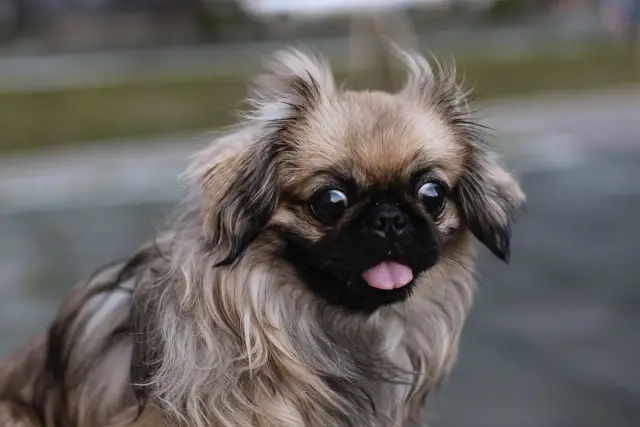
The atlas data puts the Lhasa Apso in the Asian Toy family, the Parker et al. (2017) DNA group of old Asian companion and toy breeds, with strong support. In that study it shares the most DNA with the Shih Tzu, then the Pekingese, then the Tibetan Spaniel. The Japanese Chin, Tibetan Terrier and Pug share much less.
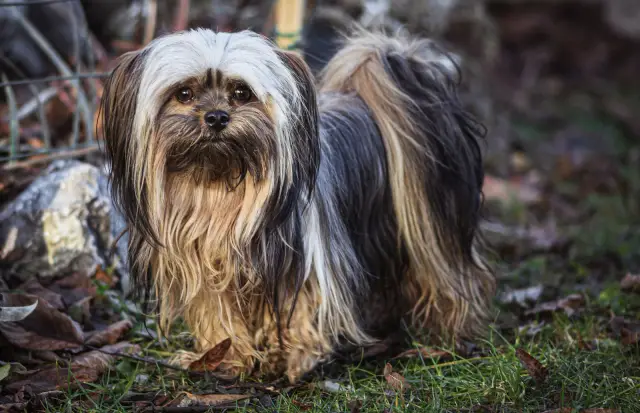

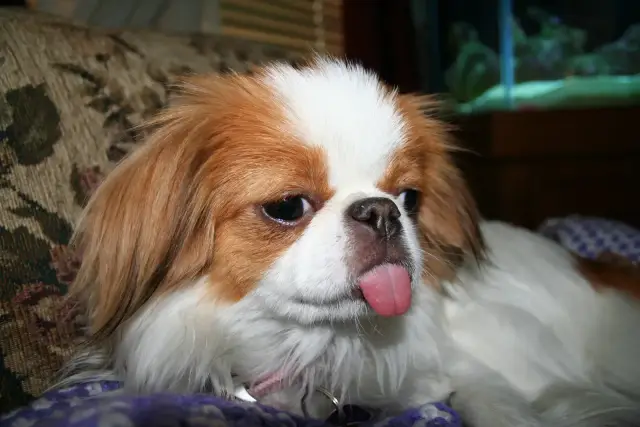
- Lhasa Apso and Shih Tzu
- Lhasa Apso and Pekingese
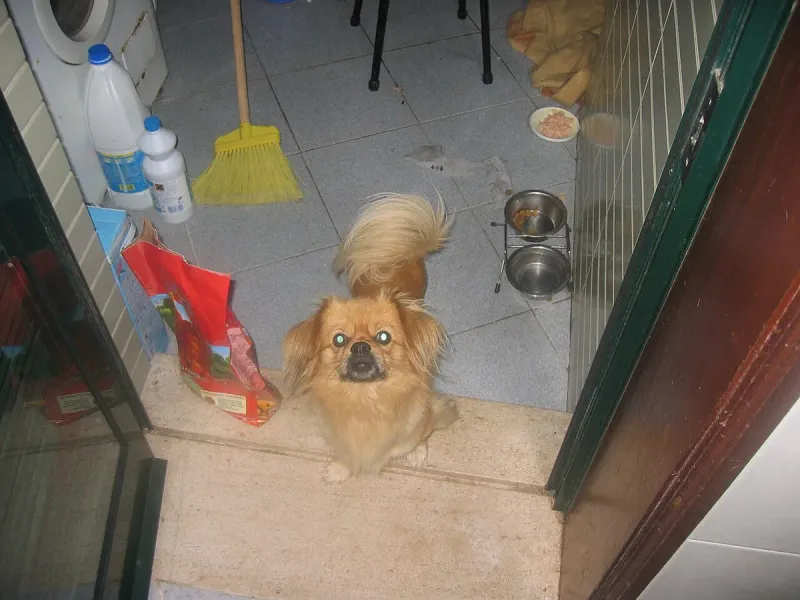 Lhasa Apso and Tibetan Spaniel
- Lhasa Apso and Japanese Chin
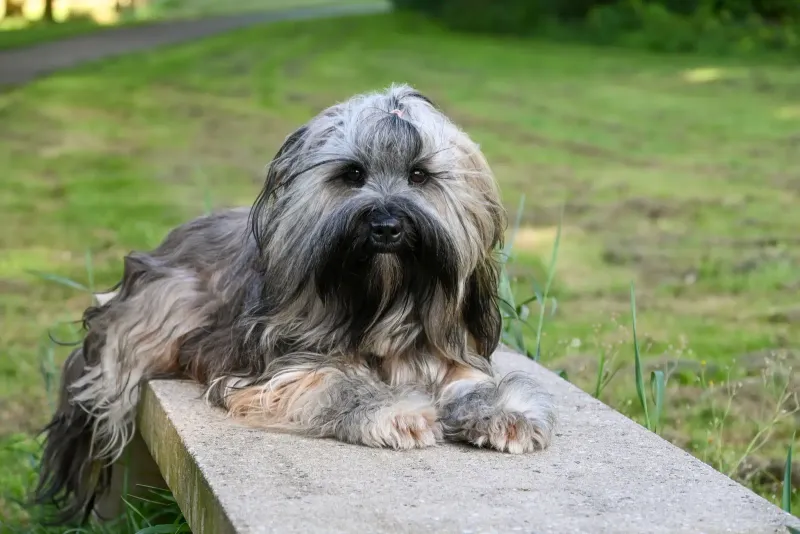 Lhasa Apso and Tibetan Terrier
The breed's age is the subject of the "ancient breed" finding. In the DNA studies behind Larson et al. (2012) and Parker et al. (2017), Asian breeds such as the Lhasa Apso, Shih Tzu and Pekingese sit close to the base of the dog family tree, which shows old Asian ancestry. It does not show that the modern Lhasa descends in a straight line from monastery dogs, which is why our data rates the monastery claim "partly true".
Shih Tzuatlas data lists it as a descendant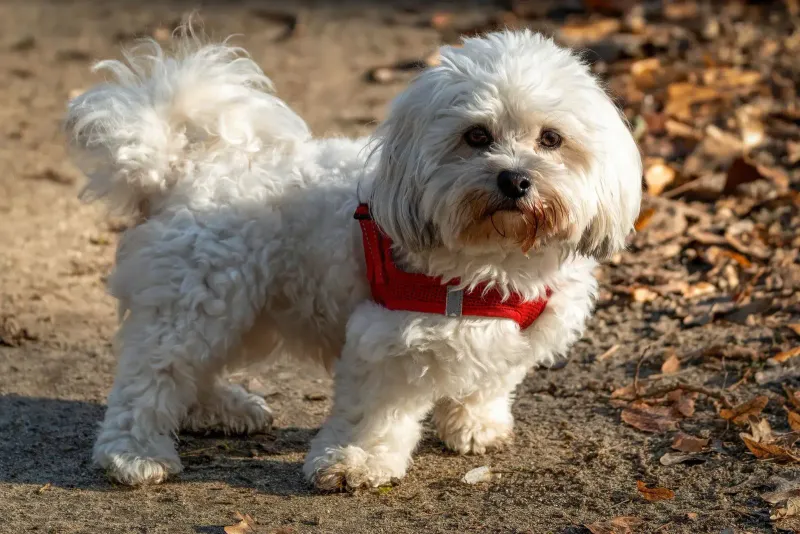 Bolonkaatlas data lists it as a descendantShih Tzuatlas data lists it as a descendantBolonkaatlas data lists it as a descendant
Descend from it · 1
- Shih TzuChina
- Shih Tzu142.1 Mb 5.9%
- Pekingese110.6 Mb 4.6%
- Tibetan Spaniel55.1 Mb 2.3%
- Japanese Chin21.2 Mb 0.9%
- Tibetan Terrier17.3 Mb 0.7%
- Pug9.9 Mb 0.4%
Source: Parker et al. 2017. Percent of the whole genome.
The breed standard
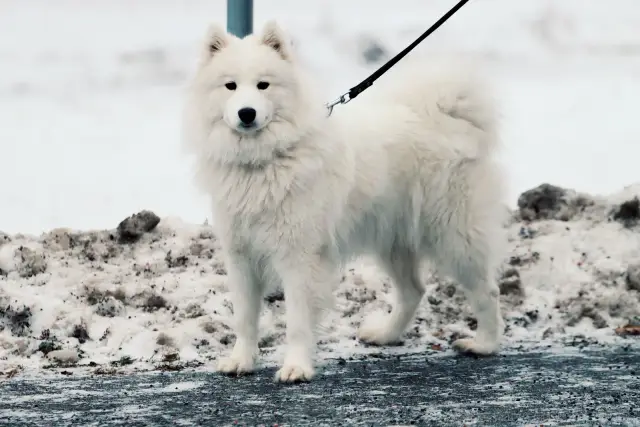 Looks relatedSamoyed500 CE to 1912 · RussiaEarly Middle Ages
 Save
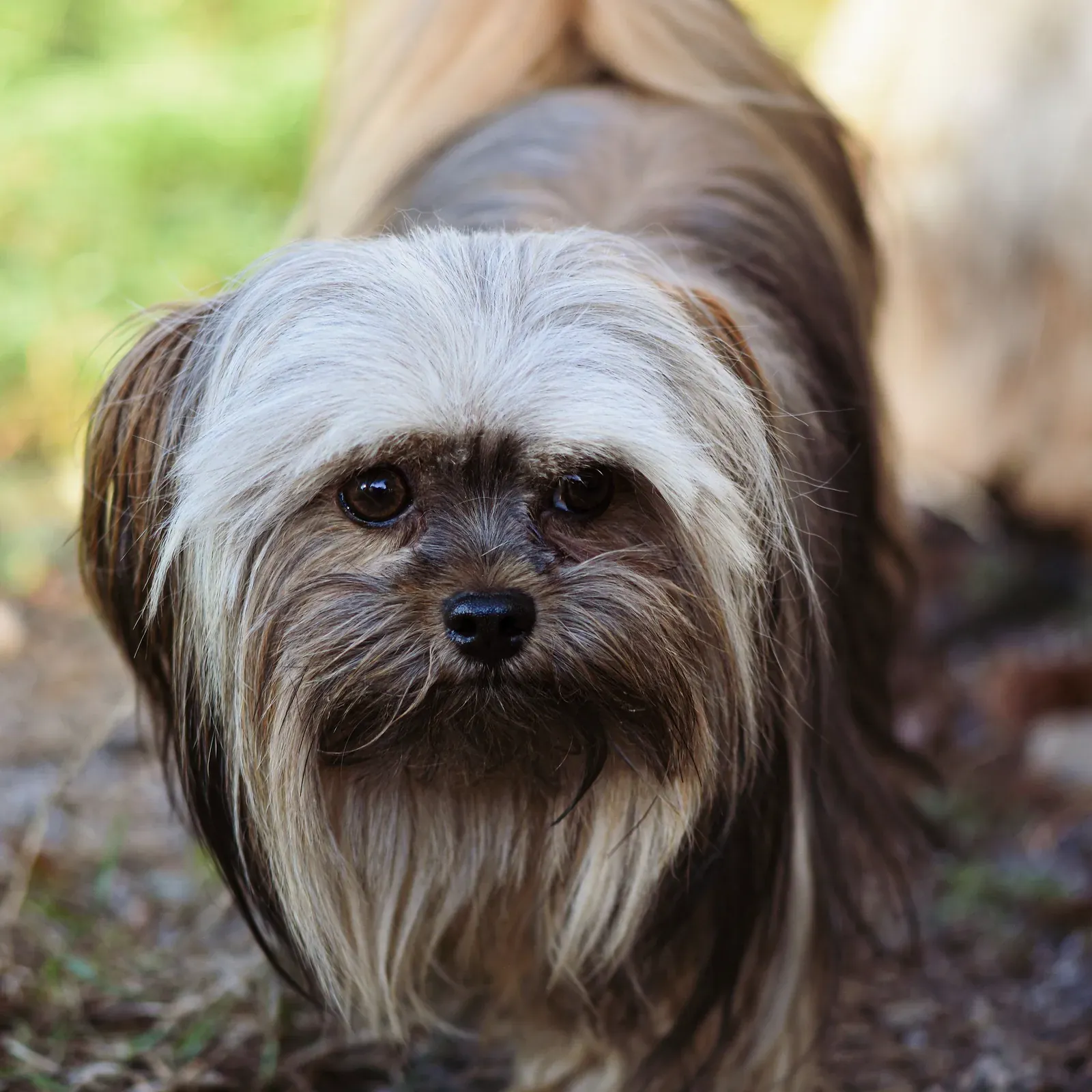
A breed standard is the written ideal a kennel club judges dogs against. The Lhasa Apso standard asks for a small, sturdy dog with a long, straight, heavy coat that falls over the face and a watchful bearing.
| Trait | What the standards say |
|---|---|
| Group | FCI: Group 9, Companion and Toy Dogs, standard no. 227 (definitive). AKC: Non-Sporting. The Kennel Club (UK): recognised |
| Height | Kennel Club standard: ideal 25 cm for dogs, bitches slightly smaller |
| Weight | Not found in the standards I retrieved |
| Coat | Long, heavy, straight and hard, a dense coat with a good undercoat; a fall over the eyes |
| Colours, FCI | Black, red, dark grizzle, golden, honey, parti-colour, sandy, slate, smoke or white |
| Colours, Kennel Club and UKC | All colours equally acceptable |

Temperament
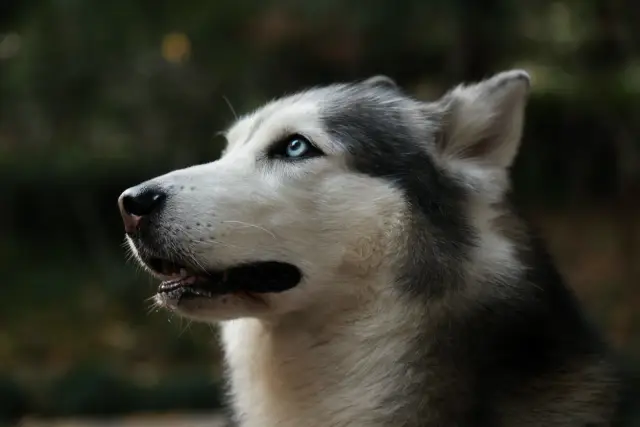 Related breedSiberian Husky1000 to 1930 · RussiaEarly Middle Ages
Breed descriptions call the Lhasa Apso alert, confident and self-assured, with the wariness of strangers that goes with a sentinel dog. It is bright, a little stubborn and attached to its family. This comes from breed descriptions and the heritage story, not from a behaviour study.
With the family. Lhasas bond closely with their people. They tend to be gentle with older, calm children and less tolerant of rough handling.
With strangers and other dogs. A sentinel dog will bark at visitors. Early, calm socialisation helps. No study of dog-to-dog behaviour was found.
Training. They learn well but decide for themselves whether an order is worth following. Short, patient, reward-based sessions work better than repetition.

Coat and grooming
The long coat is the breed's most visible feature, and it takes time. A coat left alone mats and tangles, and the hair over the eyes can irritate them. Owners choose between two routes.
- Full coat. Daily or near-daily brushing, regular bathing and trims for the feet, face and hygiene areas. This is the show look.
- Pet clip. A short "puppy cut" every month or two, with weekly brushing between visits. Many pet owners choose this.
Shedding is low, because loose hair stays in the coat until brushed out, which is why untended coats mat. For methods and tools, see dog grooming.
Health
 Save
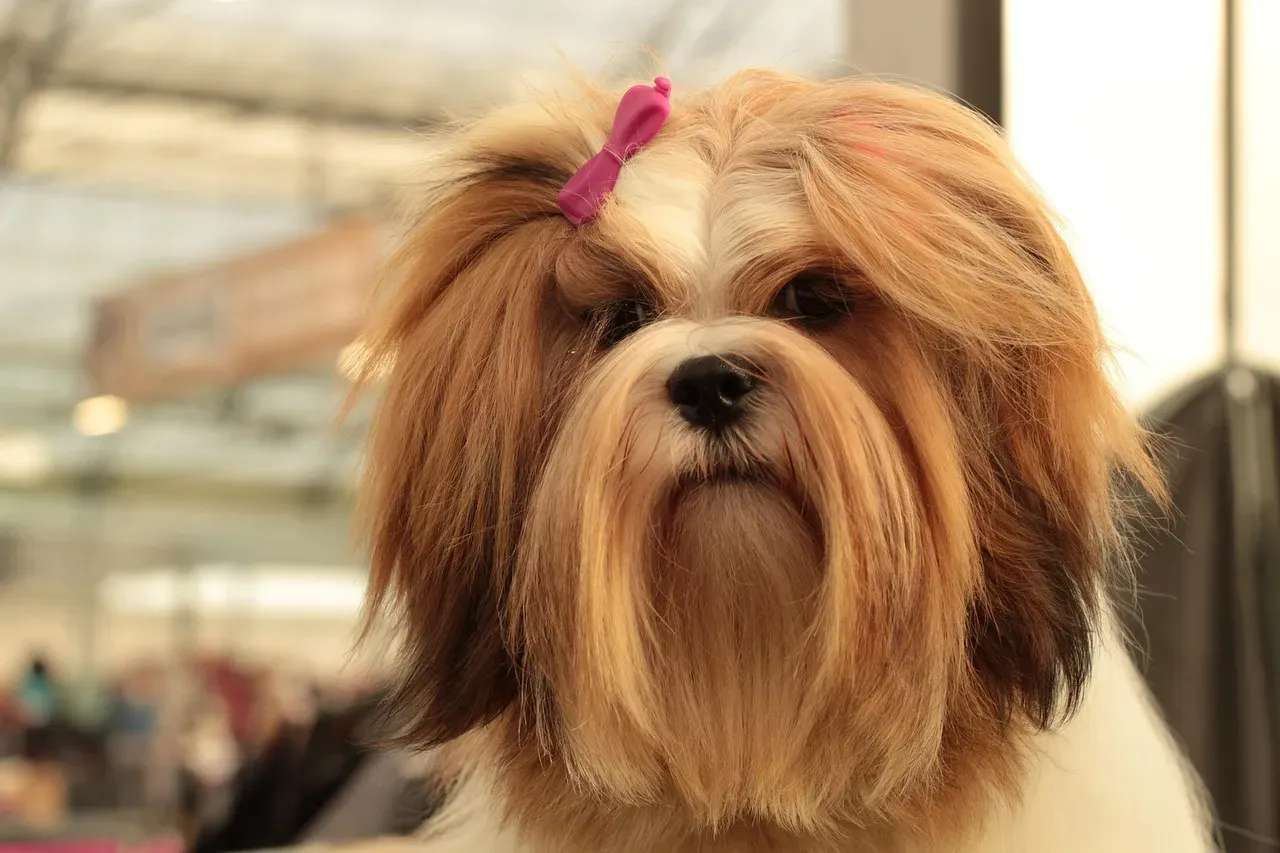
Most Lhasa Apsos live long lives. The Kennel Club's 2004 survey gave a median of 14 years 4 months, and UK veterinary clinic data put the median at 13 years. This section lists the problems that breed guides and studies mention. No paper on the Lhasa Apso exists, so the table gives prevalence figures only where a named study supplied one, and none did.
| Condition | What it is | How common | What helps |
|---|---|---|---|
| Renal dysplasia (juvenile kidney disease) | The kidneys do not develop normally, so they cannot clean the blood well | Seen more often than in many breeds; no prevalence figure found | Vet blood and urine tests in young dogs that drink and urinate a lot, and breeding choices based on family history |
| Eye conditions | Dry eye, cherry eye, progressive retinal atrophy and glaucoma are listed in breed guides | Listed by breed guides; no figure found | Eye exams of breeding dogs, keeping the hair away from the eyes, quick vet visits for red or cloudy eyes |
| Dental disease | Tartar and gum problems, common in small breeds | No breed figure found | Tooth brushing and vet dental checks |
| Skin and ear problems | Matting under a long coat can hide irritation and infection | No figure found | Regular grooming and ear checks |
| Kneecap luxation | The kneecap slips out of place, common in small dogs | No breed figure found | Vet exam, keeping weight lean |
Kidney disease in detail. The AKC Canine Health Foundation funded a project (grant 1858) on the genetics of renal dysplasia in the Shih Tzu, Lhasa Apso and Soft Coated Wheaten Terrier. The grant page lists no publications.
None of this means a Lhasa will have a kidney or eye problem. It means choosing a breeder who tests breeding dogs' eyes and knows the family's kidney history, and taking any dog that drinks and urinates much more than usual to a vet.

Living with a Lhasa Apso
| Daily reality | Rating | Why |
|---|---|---|
| Exercise per day | Low to Medium | Small dog; a daily walk or two and play is enough |
| Training needs | Medium | Clever but independent; patience required |
| Grooming | High | Long coat needs brushing most days, or a regular pet clip |
| Shedding | Low | Hair stays in the coat until brushed out |
| Barking | Medium to High | A sentinel dog that alerts at sounds and visitors |
| Time alone | Fair | Bonds closely; long days alone tend to bring barking |
| Children | Fair | Better with calm, older children; may snap at rough handling |
| Other dogs | Fair | Varies; early socialisation helps |
| Cats and small pets | Fair | Evidence is thin; varies by dog |
| Flat living | Good | Small and mostly indoor, but barking can be heard by neighbours |
| Heat tolerance | Fair | Long coat; a summer clip helps. Not a flat-faced breed, but avoid heat |
| Cold tolerance | Good | Tibetan origin and a heavy coat |
| First-time owner fit | Fair | Easy to house, harder to groom and train |
A great fit if
- You enjoy grooming or will budget for regular clips.
- You want a small, watchful companion that rewards patience.
- You are home much of the day.
- Your children are older and calm.
Think twice if
- You want a dog that welcomes every guest.
- You live in a block with thin walls and a barking-averse neighbour.
- You have no time for brushing or for a groomer.
- You have toddlers who grab and pull.
Before you get one
- Health tests to ask a breeder for: eye examination results for both parents, and the family's kidney history. Ask whether any relatives had juvenile kidney disease.
- Puppy or adult rescue: Lhasa Apso rescues exist, and adults are often already house trained.
- First year: expect puppy socialisation, grooming practice from week one and vet checks.
Similar breeds to consider

Lhasa Apso fun facts
- The first American Lhasas, a pair, were a gift from the 13th Dalai Lama to C. Suydam Cutting in 1933.
- Early British importers labelled all shaggy Tibetan dogs "Lhasa Terriers", though they were not terriers.
- The AKC moved the Lhasa Apso from the Terrier Group to the Non-Sporting Group in 1959, according to a breed summary.
- A 2004 Kennel Club survey reported a median life span of 14 years 4 months, and a breed champion is reported to have lived to 29, a claim that is not documented.
Frequently asked questions
Where does the Lhasa Apso come from?
Tibet, named after the capital Lhasa. Tradition says it guarded monasteries and palaces. DNA shows old Asian ancestry but no proof of an unbroken monastery line.
What is the difference between a Lhasa Apso and a Shih Tzu?
The Lhasa has a longer muzzle, a harder coat and a more watchful nature. The Shih Tzu is flat-faced and friendlier. They share 142.1 of DNA in Parker 2017.
How big is a Lhasa Apso?
About 25 cm tall for dogs, bitches slightly smaller. Standards give no weight.
How long do Lhasa Apsos live?
The atlas data gives 12 to 15 years. A 2004 Kennel Club survey found a median of 14 years 4 months.
Do Lhasa Apsos shed?
Little, because loose hair stays in the coat. The coat needs brushing to prevent mats.
What health problems do Lhasa Apsos have?
Eye conditions and an inherited kidney problem called renal dysplasia are the best-documented. Ask a breeder for eye test results.
Read next
Closest DNAShih Tzu142.1 Mb sharedFamilyAsian ToyThe whole family Adopt a dogDog Shelters in EuropeFind dog shelters in Europe, learn how shelters differ from country to country and why adopting a dog is a good option.
Sources (11)
- Fédération Cynologique Internationale, standard no. 227, Lhasa Apso (group, colours; reproduced by the Kennel Union of Southern Africa).
- The Kennel Club (UK), Lhasa Apso breed standard and breed history (height, colours, arrival in Britain, breed club 1933, 2004 survey).
- United Kennel Club, Lhasa Apso standard (colours).
- American Kennel Club, "Lhasa Apso history" and breed pages (Dalai Lama gifts, 1933 Cutting dogs, Shih Tzu theory).
- Wikipedia, "Lhasa Apso" (secondary: "Lhasa Terrier" label, Britain, AKC dates).
- VCA Hospitals breed page, Lhasa Apso (early British arrival).
- Parker H.G. et al., "Genomic analyses reveal the influence of geographic origin, migration and hybridization on modern dog breed development", Cell Reports, 2017.
- Larson G. et al., "Rethinking dog domestication by integrating genetics, archeology, and biogeography", PNAS, 2012 (atlas data source for the monastery claim).
- AKC Canine Health Foundation, grant 1858, "Identifying the genetic causes of renal dysplasia in Shih Tzu, Lhasa Apso and Soft Coated Wheaten Terriers".
- Purdue University Animal Disease Diagnostic Laboratory, case report on renal dysplasia in a Lhasa Apso, 2005 newsletter.
- Atlas data, Lhasa Apso knowledge record (etymology, claim verdict, DNA links, lineage).