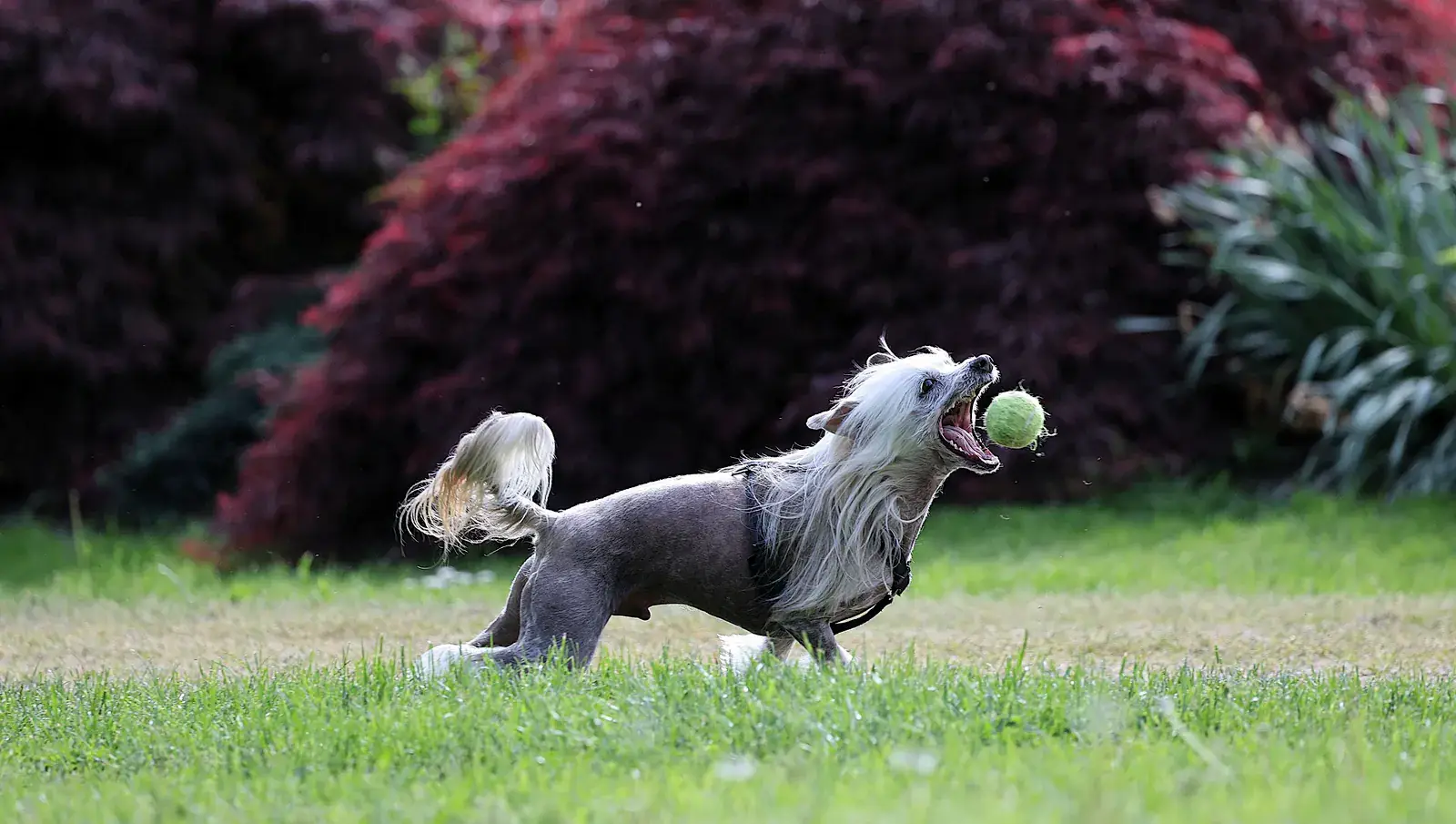
Both can be born in the same litter. Adults stand about 23 to 33 cm tall and weigh roughly 4.5 to 6 kg. The breed is affectionate, playful and sensitive, and it lives a long time, often 13 years or more. It suits owners who want a lap-and-play companion and will look after skin, teeth and eyes.
Chinese Crested Dog quick facts
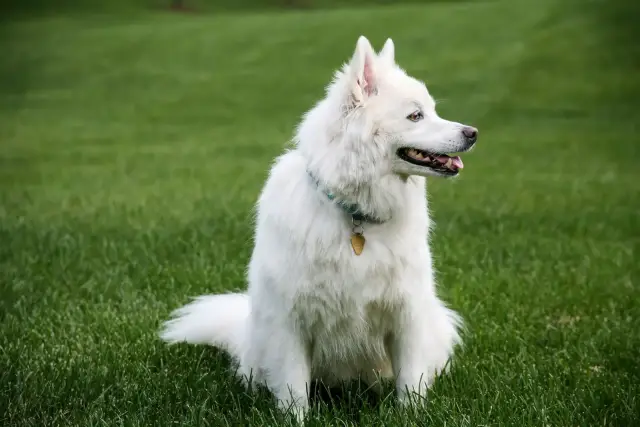 Related breedAmerican Eskimo Dog1900 to 1917 · United StatesVictorian Breed Boom
- Closest DNA relatives
- Chihuahua, Pekingese, Xoloitzcuintle
- Country of origin
- China, according to the FCI. The true origin is debated (see below)
- Other names
- Chinese Crested, Powderpuff (for the coated variety)
- Type
- Companion dog; FCI Group 9 (Companion and Toy Dogs), standard no. 288; AKC Toy Group; UK Kennel Club Toy Group
- Height
- FCI: males 28 to 33 cm, females 23 to 30 cm. AKC: ideally 11 to 13 inches (28 to 33 cm)
- Weight
- No weight in the FCI or AKC standards
- Coat
- Hairless: bare skin with crest, socks and plume. Powderpuff: long, soft double coat
- Colours
- Any colour or combination (UK Kennel Club standard)
- Life span
- Atlas data: 13 to 18 years
- Exercise
- Moderate; daily walks and play
- DNA group
- "American Toy" clade (Parker et al. 2017)
Drawn to scale in real centimetres. Its back reaches about 28 cm, your shin; its head about 36 cm, just below your knee.

Where it sits in the tree
Age of Exploration · 1500 to 1599



Name and origin: why is it called "Crested"?
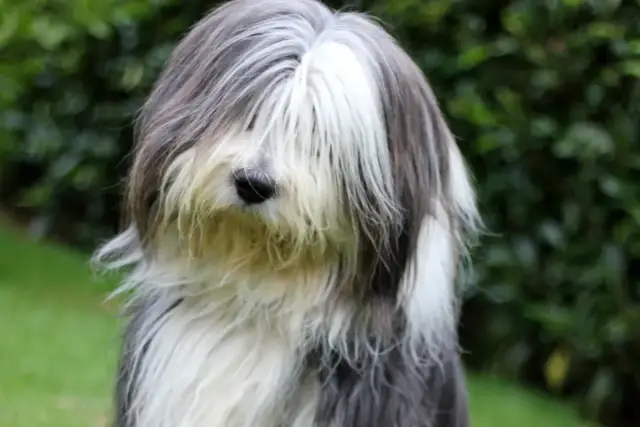 Related breedBearded Collie1500 to 1944 · United KingdomAge of Exploration
The name describes the long, flowing tuft of hair on the head, the "crest". The hairless variety also has "socks" of hair on its feet and a "plume" on the tail. The word Chinese in the name reflects the FCI's choice of China as the country of origin, but the evidence for that is thin.
The most useful clue comes from genetics. The Chinese Crested shares its hairless gene variant with the Xoloitzcuintle and the Peruvian Hairless Dog (see Relatives and DNA below). That points to one old hairless mutation that spread to dogs in several parts of the world, and it makes a Chinese-only origin unlikely. Some accounts place the breed's roots in Mexico or Africa instead. Other stories say Chinese sailors kept small hairless dogs as ship's ratters and carried them around the world. That is a popular legend with no firm documentation, so treat it as a story and not a fact.

History of the Chinese Crested Dog
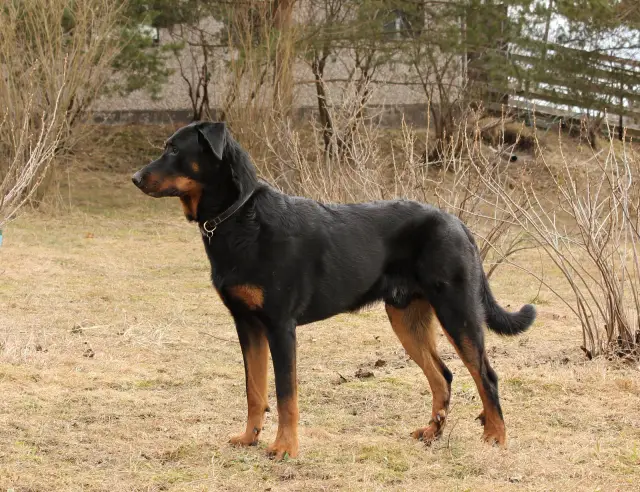 Same eraBeauceron1500 to 1896 · FranceAge of Exploration
Hairless dogs around the world
Hairless dogs appear in many places. Spanish explorers are said to have met hairless dogs in Mexico and Central and South America from the 1500s, and British, French and Portuguese travellers reported small hairless dogs in parts of Africa and Asia in the 1700s and 1800s. These accounts are second-hand and the dogs are not proven to be ancestors of the modern breed.
Crest Haven and the American breeders
The modern Chinese Crested is mostly an American creation, built from a very small number of kennels. In the 1950s Debora Wood founded the Crest Haven kennel and began keeping careful records of her dogs' pedigrees. The burlesque dancer Gypsy Rose Lee also bred Cresteds, and after her death her dogs were folded into Crest Haven. Those two lines are said to underlie every Chinese Crested alive today. Wood founded the American Hairless Dog Club in 1959. It became the American Chinese Crested Club in 1978.
Recognition timeline
| Year | Event |
|---|---|
| 1950s | Crest Haven kennel begins recording Chinese Crested pedigrees |
| 1959 | American Hairless Dog Club founded |
| 1978 | Club becomes the American Chinese Crested Club |
| 1987 | FCI recognition |
| 1991 | AKC recognition |
The FCI lists the breed as standard no. 288, in Group 9, with China as country of origin. The AKC places it in the Toy Group.
A famous face
A hairless Chinese Crested named Sam won the World's Ugliest Dog Contest three years in a row, from 2003 to 2005. The contest made the breed more widely known, though breeders and owners often point out that the Crested's look is simply the look of a hairless dog, and that many owners find it elegant.
Relatives and DNA
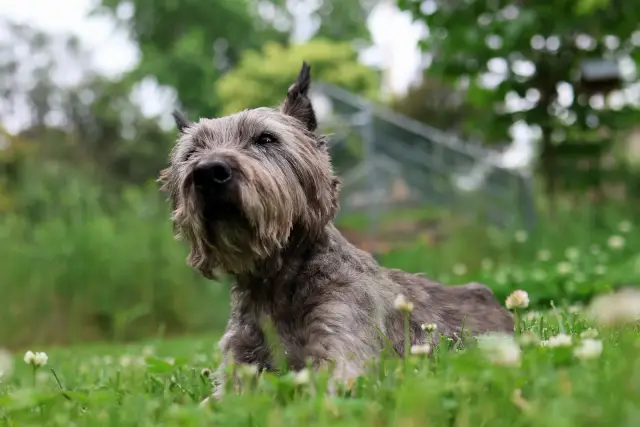 Same familyCairn Terrier1500 to 1910 · United KingdomAge of Exploration
The atlas data lists no parent breeds for the Chinese Crested. It lists one sister breed and several DNA relatives.
Sister breed
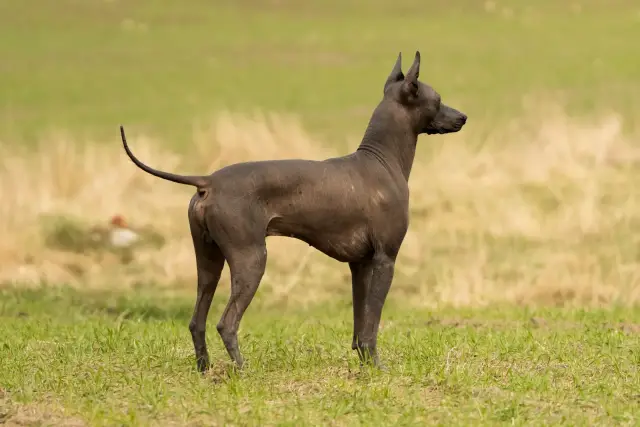
- Xoloitzcuintle. The Mexican hairless dog. A shared hairlessness mutation supports the idea of a shared origin. Confidence in the link as a family tie is low, because the same mutation can travel between populations.
What does DNA say?
A 2017 study by Parker and colleagues (Cell Reports) analysed 1,346 dogs from 161 breeds. It placed the Chinese Crested in the American Toy clade, close to the Chihuahua. For the family story see American Toy breeds. The shared stretches of DNA in the atlas data are:
A clade is a group of breeds that share a recent common branch in the DNA tree. It is not the same as a kennel club group. The Chinese Crested sits in a kennel club Toy group, while its DNA clade places it beside the Chihuahua, a breed from Mexico.
The hairless gene
In 2008 Drogemuller and colleagues (Science) found that hairlessness in the Chinese Crested, Xoloitzcuintle and Peruvian Hairless Dog comes from a mutation in the gene FOXI3, which is active in the development of skin, hair and teeth. The hairless trait is dominant, and a puppy that inherits two copies does not survive before birth. This is why every living Hairless Chinese Crested has one copy of the variant and one normal copy. Powderpuffs carry two normal copies. A hairless parent bred to another hairless parent produces hairless and powderpuff puppies, and some embryos are lost before birth. The same gene change is linked to the missing teeth often seen in Hairless Cresteds (Kupczik and colleagues, Scientific Reports, 2017).
Sister breeds · 1
- Xoloitzcuintle1000 BCE to 1956
- Chihuahua23.7 Mb 1.0%
- Pekingese16.2 Mb 0.7%
- Xoloitzcuintle13.1 Mb 0.5%
- Pug12.0 Mb 0.5%
- American Eskimo Dog10.7 Mb 0.4%
- Toy Manchester Terrier10.3 Mb 0.4%
Source: Parker et al. 2017. Percent of the whole genome.
| Breed | () |
|---|---|
| Chihuahua | 23.7 |
| Pekingese | 16.2 |
| Xoloitzcuintle | 13.1 |
| Pug | 12.0 |
| American Eskimo Dog | 10.7 |
| Toy Manchester Terrier | 10.3 |
Source: Parker et al. 2017, Cell Reports, shared haplotypes between 161 breeds (1,346 dogs).
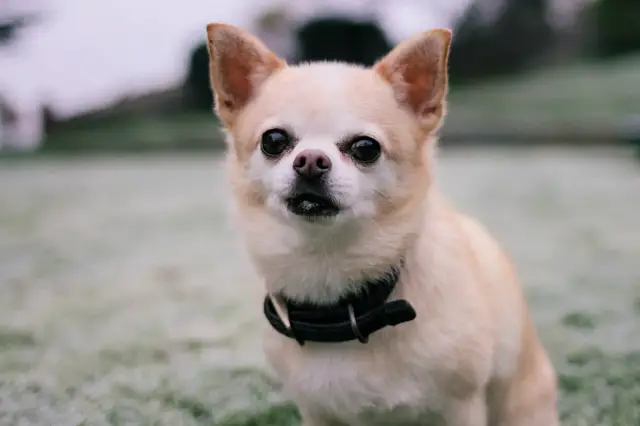
The Chinese Crested breed standard
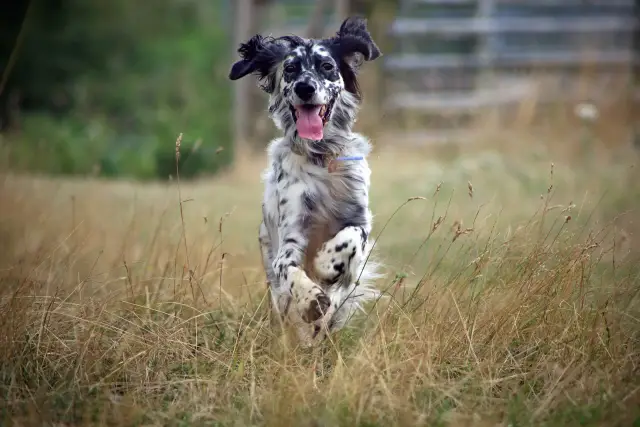 Looks relatedEnglish Setter1500 to 1850 · United KingdomAge of Exploration
| Trait | What the standards say |
|---|---|
| Height (FCI) | Males 28 to 33 cm; females 23 to 30 cm at the withers (AKC: ideally 11 to 13 inches) |
| Weight | Not given in the FCI or AKC standards |
| Build | Small, fine-boned, graceful and active; light on its feet; "hare" foot with long toes |
| Hairless variety | Smooth skin; crest on head, "socks" on feet, plume on tail |
| Powderpuff variety | Long, soft, straight double coat over the whole body |
| Colour | Any colour or combination (UK Kennel Club) |
| Teeth | Missing premolars in Hairless dogs are not considered a fault |
| Temperament | Playful, alert and affectionate (breed standards, summarised) |
Both varieties are shown in the same ring, and a litter may hold either.

Chinese Crested temperament
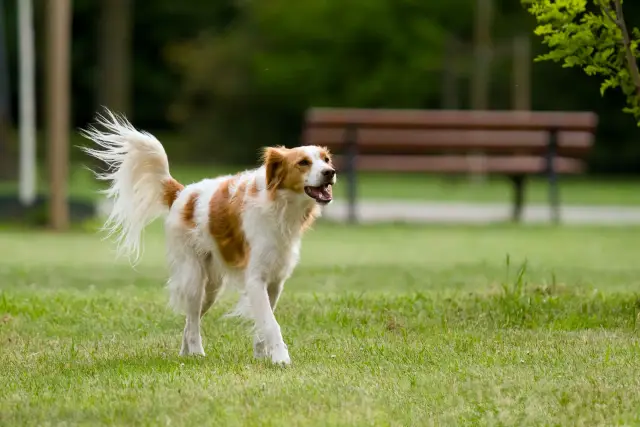 Related breedKooikerhondje1500 to 1966 · NetherlandsAge of Exploration
Chinese Cresteds are affectionate, lively and attached to their people. They like to follow their owner from room to room, sit on laps and join in games. They are alert and will usually announce visitors, but they are companions, not guard dogs. They can be reserved with strangers until they have decided someone is safe.
The breed is sensitive. Shouting and rough handling tend to make a Crested shut down or avoid its owner, while gentle, consistent, reward-based training works well. They are clever and enjoy tricks, and the Powderpuff in particular learns them quickly. Many Cresteds do well in agility and obedience sports.
Cresteds are often quite attached to one person and can struggle if left alone for long hours. Early socialisation helps them stay confident around people and other dogs. Because they are small, they should be protected from larger dogs and from over-excited young children.

Chinese Crested health, skin and lifespan
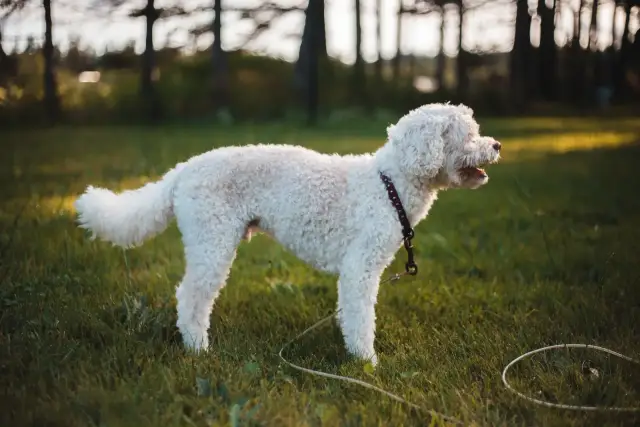 Related breedLagotto Romagnolo1500 to 1991 · ItalyAge of Exploration
The breed is long-lived for its size. The atlas data gives 13 to 18 years. For comparison, a UK study of companion dogs (McMillan and colleagues, Scientific Reports, 2024) found a median longevity of 12.7 years for purebred dogs overall and 12 years for crossbreeds.
Most of the health concerns come from the hairless gene, from small size and from a few inherited eye diseases. A vet knows your own dog, so the table below is general information.
| Condition | What it is | How common | What helps |
|---|---|---|---|
| Dental problems | Missing, crowded or early-decaying teeth; mostly in Hairless dogs | Often seen in the Hairless variety; no published rate | Tooth brushing, regular dental checks |
| Primary lens luxation (PLL) | The lens of the eye slips out of place, causing pain and sight loss; autosomal ADAMTS17 variant (Gould et al. 2011) | The Chinese Crested is one of the breeds where affected dogs have been found (OMIA); no breed rate | DNA test of breeding dogs; yearly eye exams |
| Progressive retinal atrophy (PRA) | Gradual loss of the retina, ending in blindness; at least two forms | No published figure | DNA test for the form that has a test; eye exams by a veterinary eye specialist |
| Dry eye (KCS) | Too few tears, leading to sore, cloudy eyes | No published figure | Vet-prescribed eye drops |
| Patellar luxation | Kneecap pops out of its groove, causing skipping or lameness | Common in toy breeds in general; no breed figure | Knee checks of breeding dogs; healthy weight |
| Canine multiple system degeneration | Rare movement disorder starting at 10 to 14 weeks with unsteadiness | Rare; no published rate | Breeder health testing; vet diagnosis |
| Skin problems | Sunburn, acne, dryness and contact allergies (for example to lanolin) in Hairless dogs | Common in Hairless dogs, rare in Powderpuffs | Sun protection, gentle skin care (see below) |
Eye tests matter in this breed. A DNA test exists for PLL and for one form of PRA, but a clear test does not rule out the other form of PRA, so breeders still use regular eye exams.
Caring for hairless skin
A Hairless Crested has skin that behaves like human skin. It can burn, dry out and break out in spots. Owners commonly:
- keep the dog out of strong midday sun, or use a dog-safe sun cream or clothing;
- moisturise with a plain, oil-free product every few days, and after baths;
- avoid lanolin products if the dog reacts to them;
- add a sweater or coat in cold or wet weather, because there is no coat to keep it warm.
Hairless dogs can also be shaved on the body to remove stray hair if the owner prefers a smoother look.
Caring for a Powderpuff coat
A Powderpuff has a long, soft double coat that grows long but sheds very little. It mats if left alone. Plan for brushing several times a week and a bath about weekly. Many owners keep it in a "pony cut" with a trimmed body and a full head, legs and tail. Mist the coat lightly with water before brushing and avoid brushing it dry or dirty.
Nails and feet
The Crested has a long "hare" foot, and the quick in the nail runs deep. Trim small amounts at a time to avoid pain and bleeding.

Is the Chinese Crested hypoallergenic?
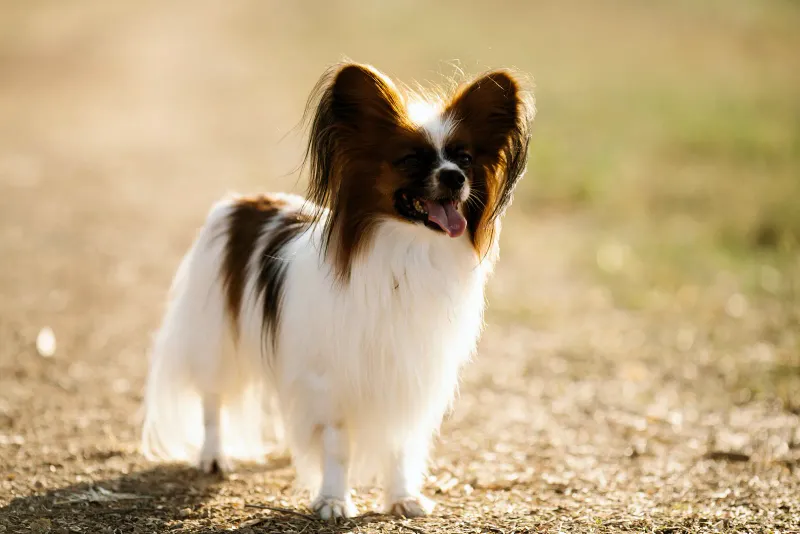 Related breedPapillon1500 to 1935 · France, BelgiumAge of Exploration
No breed is guaranteed hypoallergenic, and no published study gives allergy outcomes for Chinese Cresteds. The Powderpuff sheds very little and the Hairless has little hair to shed, which is why many allergic people try the breed. Dander and saliva still cause allergies, so spend time with the dog before you commit.
Living with a Chinese Crested
 Related breedPresa Canario1500 to 1990 · SpainAge of Exploration
| Daily reality | Rating | Why |
|---|---|---|
| Exercise | Low to medium | Daily walks and play; not a high-energy breed |
| Training needs | Medium | Clever but sensitive; needs gentle, steady training |
| Grooming | Medium | Hairless: skin care. Powderpuff: regular brushing |
| Shedding | Very low | Little to no shedding |
| Barking | Medium | Alert, will announce visitors |
| Time alone | Poor | Companion breed that bonds closely |
| Children | Fair | Fragile; needs calm older children and supervision |
| Other dogs | Good | Usually friendly with other small dogs |
| Cats and small pets | Good | Generally relaxed; introduce with care |
| Flat living | Good | Small and fairly quiet |
| Heat tolerance | Fair | Hairless skin burns easily in strong sun |
| Cold tolerance | Poor | Needs a coat in cold weather, especially the Hairless |
| First-time owner | Good | Easy to manage in size, if gentle with training |
A great fit if you...
- want a small, affectionate shadow of a dog;
- are home for much of the day;
- are happy to spend a few minutes a week on skin or coat care;
- like a dog that does not shed much.
Think twice if you...
- are away at work all day;
- have very young children who may be rough;
- live somewhere with hot, sunny summers and cannot manage sun protection;
- do not want to look after teeth and eyes.

Chinese Crested fun facts
 Related breedSpanish Water Dog1500 to 1980 · SpainAge of Exploration
- Hairless and Powderpuff puppies can be born in the same litter.
- The hairless gene copy is lethal before birth in dogs with two copies, so every Hairless Crested has one.
- The same gene change causes hairlessness in the Xoloitzcuintle and the Peruvian Hairless Dog.
- Sam, a Hairless Crested, won the World's Ugliest Dog Contest from 2003 to 2005.
- Burlesque dancer Gypsy Rose Lee bred Chinese Cresteds, and her dogs went into the Crest Haven lines.
Frequently asked questions
Is the Chinese Crested hairless?
One variety is. The Hairless has bare skin with a crest, socks and a plume. The Powderpuff has a full coat. Both can appear in one litter.
How big is a Chinese Crested?
The gives males 28 to 33 cm and females 23 to 30 cm at the withers. The FCI and standards give no weight.
How long do Chinese Cresteds live?
Atlas data gives 13 to 18 years, longer than the 12.7-year median for purebred dogs overall in a UK study.
Do Chinese Cresteds shed?
Very little. The Powderpuff needs regular brushing to prevent mats.
Are Chinese Cresteds good family dogs?
Yes for calm homes. They are small and sensitive, so they need supervision around young children.
Do Chinese Cresteds need sunscreen?
Hairless dogs often do. Their skin can burn in strong sun, especially if pale.
Is the Chinese Crested related to the Chihuahua?
Yes, in the 2017 Parker DNA study the two sit in the same American Toy .
Read next
 Closest DNAChihuahua23.7 Mb shared
 Sister breedXoloitzcuintle1000 BCE to 1956
 Adopt a dogDog Shelters in EuropeFind dog shelters in Europe, learn how shelters differ from country to country and why adopting a dog is a good option.
Sources (12)
- Fédération Cynologique Internationale, Chinese Crested Dog, standard no. 288.
- Fédération Cynologique Internationale, FCI-Standard No. 288, Chinese Crested Dog.
- American Kennel Club, Chinese Crested breed page.
- The Kennel Club (UK), Chinese Crested breed standard.
- Wikipedia, "Chinese Crested Dog" and "Gypsy Rose Lee" (used for dates and summaries, checked against the other sources listed).
- Drogemuller C. et al., "A mutation in hairless dogs implicates FOXI3 in ectodermal development", Science, 2008.
- Kupczik K. et al., "The dental phenotype of hairless dogs with FOXI3 haploinsufficiency", Scientific Reports, 2017.
- Gould D. et al., "ADAMTS17 mutation associated with primary lens luxation is widespread among breeds", Veterinary Ophthalmology, 2011.
- Online Mendelian Inheritance in Animals, lens luxation in the dog.
- McMillan K.M. et al., "Longevity of companion dog breeds: those at risk from early death", Scientific Reports, 2024.
- Parker H.G. et al., "Genomic analyses reveal the influence of geographic origin, migration, and hybridization on modern dog breed development", Cell Reports, 2017.
- Atlas data, breed records and Parker 2017 shared-haplotype table (this site).