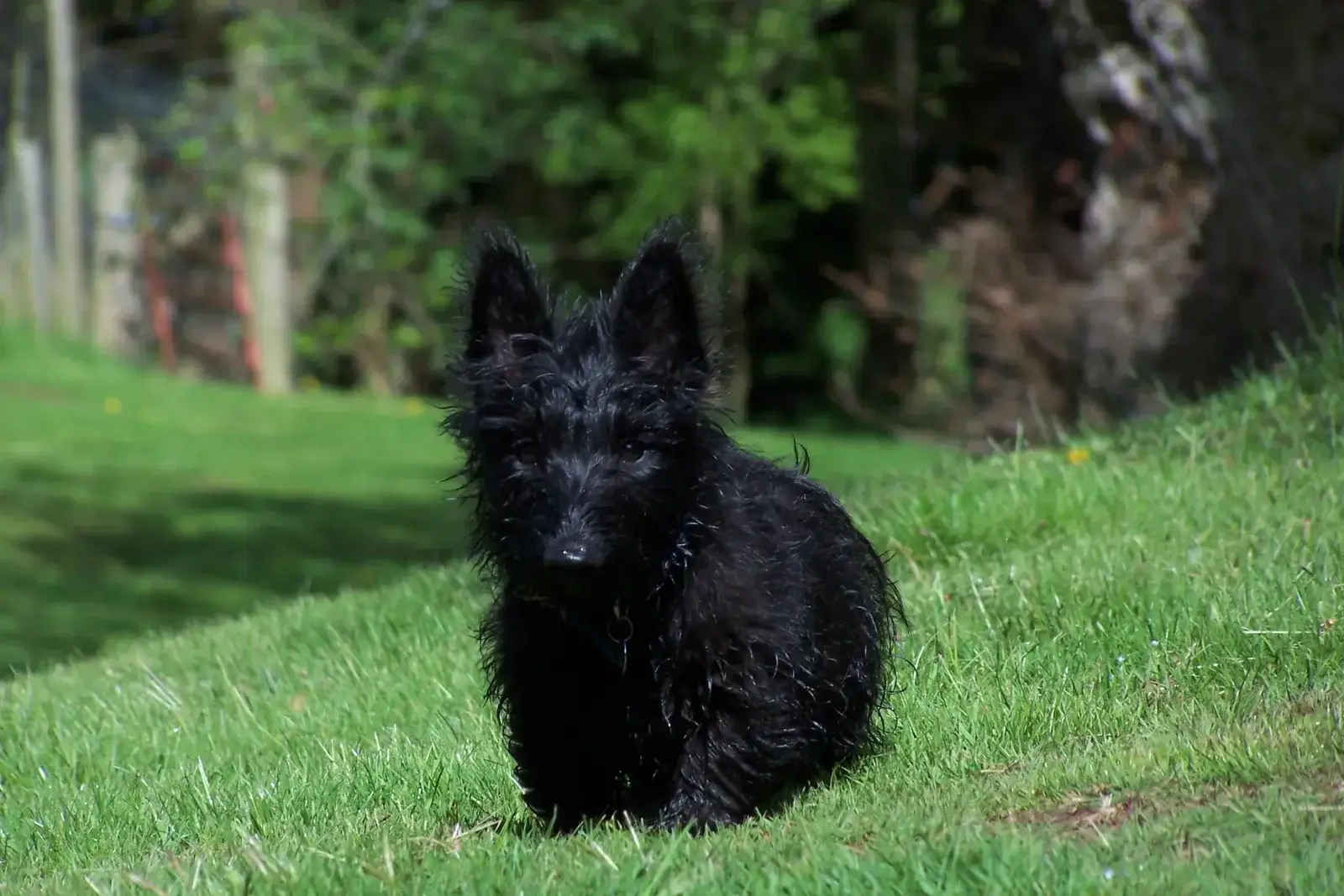
It was a vermin and burrow dog that was shaped into one breed in the late 1800s, after Highland terriers had been grouped under the loose name "Skye Terrier". It is independent, loyal and brave, and it suits owners who like a dog with strong opinions and a dry sense of humour. It needs regular hand-stripping or trimming and a firm, patient trainer. The atlas data gives a life span of 11 to 13 years.
Scottish Terrier quick facts
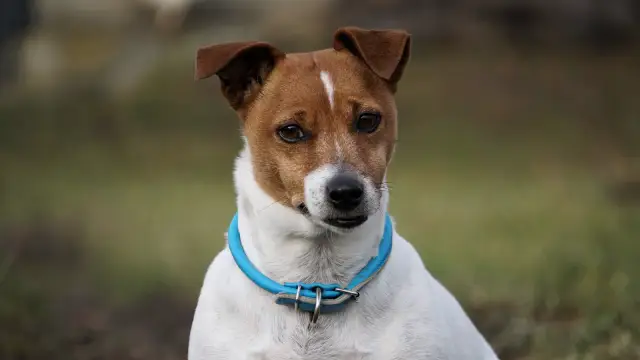 Related breedJack Russell Terrier1819 to 1976 · United KingdomIndustrial Revolution
- Country of origin
- Scotland, United Kingdom
- Period of development
- About 1700 to 1882 (atlas data)
- Original job
- Hunting fox, badger and vermin below ground; later a show dog and companion
- Type
- Terrier (FCI Group 3, Terriers, small-sized terriers; FCI standard no. 73; Terrier Group; UK Kennel Club Terrier Group)
- Height
- About 25 to 28 cm (Kennel Club and FCI); the AKC gives about 10 in
- Weight
- About 8.6 to 10.4 kg (FCI); Kennel Club about 8.5 to 10.5 kg; AKC about 8 to 10 kg (18 to 22 lb)
- Coat
- Hard, wiry, dense topcoat over a soft undercoat
- Colour
- Black, wheaten or brindle
- Life span
- 11 to 13 years (atlas data)
- Other names
- Scottie, Aberdeen Terrier
- DNA family
- Terrier family (Parker et al. 2017)
- Closest DNA relative
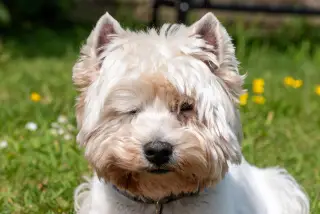
- West Highland White Terrier (134.6 shared)
- Related breeds
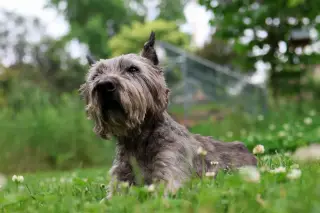
- Skye Terrier, West Highland White Terrier, Cairn Terrier
Drawn to scale in real centimetres. Its back reaches about 27 cm, your shin; its head about 34 cm, your shin.
Where it sits in the tree
Early Modern Era · 1600 to 1799
Name and origin
 Related breedSoft-coated Wheaten Terrier1700 to 1937 · IrelandEarly Modern Era
The name is geographic. "Scottish" gives the country and "terrier" comes from the Old French chien terrier, "earth dog", a dog that goes to ground. The breed has also been called the Aberdeen Terrier, after the north-east city whose fanciers showed the type early, and the nickname Scottie is the form most owners use.
There are three questions about the origin worth separating.
- Where it began. Scotland. The FCI lists Great Britain as the country of origin, and the atlas data places the breed in the Scottish Highlands, with a development window from about 1700 to 1882.
- What it came from. The atlas data links it to the Skye Terrier, which in the 1800s was a general name for Highland terriers. Dogs we now separate into the Skye, Cairn, Dandie Dinmont, West Highland White and Scottish Terrier were once sold under it. The atlas data rates this link at medium confidence.
- Who set the type. Hugh Dalziel's British Dogs (1888) and club histories describe an English army officer, Captain W. W. Mackie, who toured the Highlands and brought what he called Scottish Terriers to England in the late 1870s. Show breeders then argued over the correct type for years, until a standard was set.

History
 Same eraYorkshire Terrier1850 to 1874 · United KingdomVictorian Breed Boom
Highland earth dogs
For centuries small, hard terriers worked in the glens and on the farms of Scotland, digging out foxes, badgers and otters from rock and cairn. They were bred for courage and for a coat that shrugged off weather, not for looks, and local types differed from glen to glen. Their names reflected where they lived. By the early 1800s many of these were gathered in writing under a single heading, the Skye Terrier.
Setting the type
The Scottish Terrier took shape as a show breed in the 1870s and early 1880s. Sources agree that the first dogs called Scottish Terriers appeared on English show benches around 1879, and that Captain Mackie was among the first exhibitors. The sources differ on later dates. The Scottish Terrier Club of England is variously given as founded in 1881, 1882 or 1883, and the club in Scotland followed in 1888. Judges and breeders fought over whether the breed should have a long, low body or a shorter, more upright one, and the winning type is the low, long-headed dog of today.
The breed abroad
The Scottie reached the United States in the late 1800s and became fashionable in the early 1900s, when it was a popular show dog and household pet. The Scottish Terrier Club of America and the American Kennel Club maintain the US standard. The best-known Scottie owner is probably US President Franklin D. Roosevelt, whose dog Fala travelled with him and appears in the records of the Franklin D. Roosevelt Presidential Library.
Clubs and recognition
The breed is recognised by the FCI (standard no. 73, definitive), the AKC and the UK Kennel Club, all in the Terrier group. Dogs Australia places the breed in a different group in its own system, a reminder that group labels belong to each club.
Relatives and DNA
 Same familyAkita1600 to 1931 · JapanEarly Modern Era
The Scottish Terrier belongs to the Terrier family in the Parker 2017 DNA study, which grouped 161 breeds into 23 clades by shared stretches of DNA. The atlas data lists the Skye Terrier as its parent line and names several descendants and siblings.
Parent line (atlas data)
- Skye Terrier. In the 1800s a general name for several Highland terriers. The Scottie emerged from this group.
Descendant and sibling breeds (atlas data)
- West Highland White Terrier. Recorded both as a descendant and a sibling, with forefathers from the same Perthshire region.
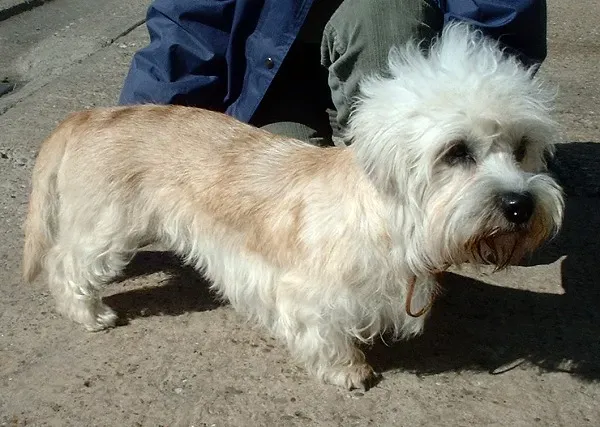
- Dandie Dinmont Terrier. Listed among the offshoots in the atlas data.
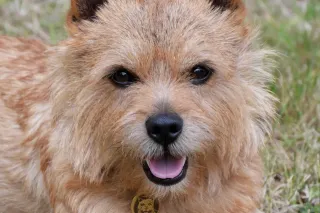
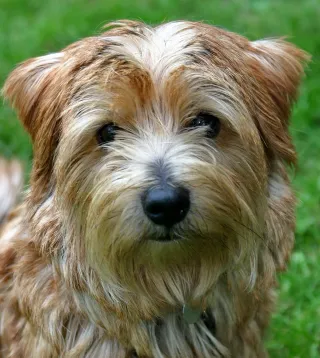
- Norwich Terrier. A small English terrier; the atlas data lists it among the Scottie's descendants.
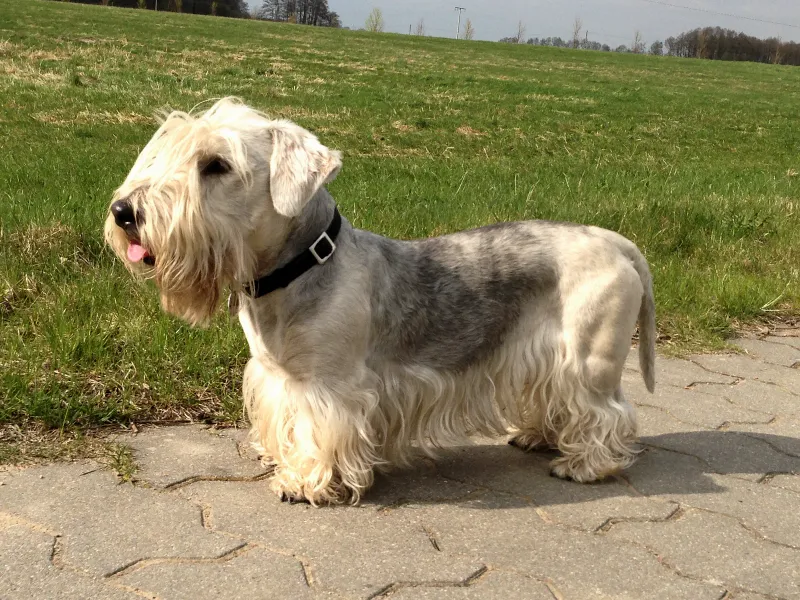
- Cesky Terrier. A Czech breed developed by crossing the Scottish Terrier with the Sealyham Terrier.
What does DNA say?
Shared show which breeds share long stretches of identical DNA through common ancestors or crossing. A higher number of shared (Mb) means a more recent link. The study cannot say which breed gave genes to which.
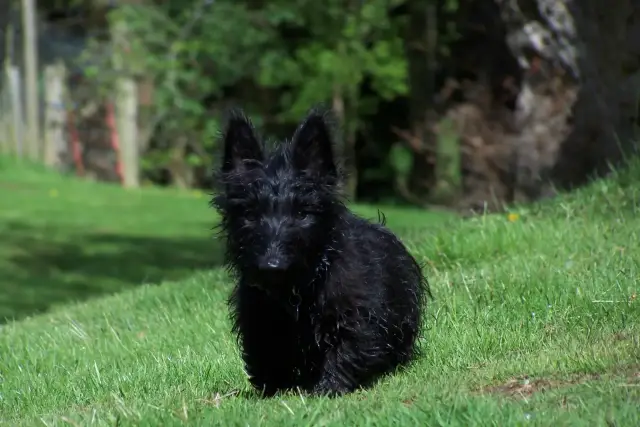
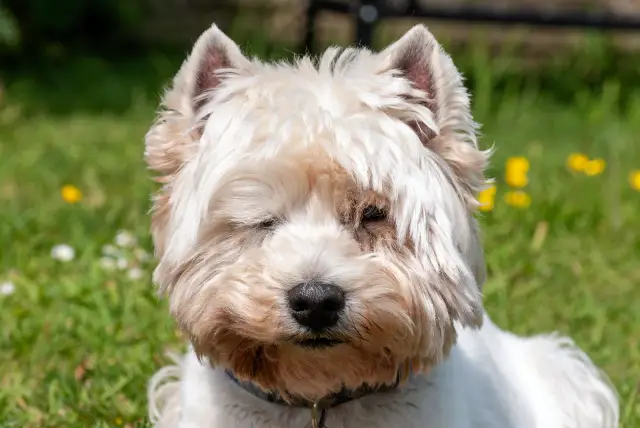
- Scottish Terrier and West Highland White Terrier
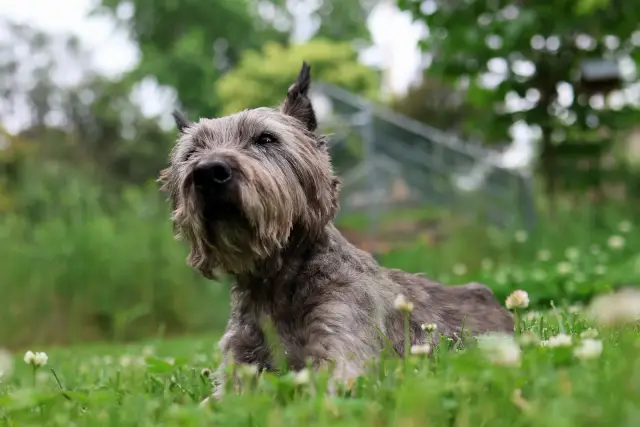
- Scottish Terrier and Cairn Terrier
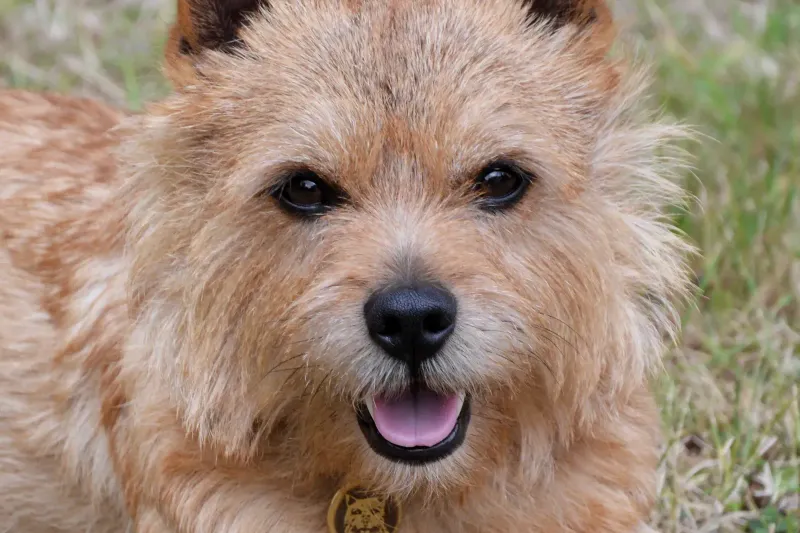 Scottish Terrier and Norwich Terrier
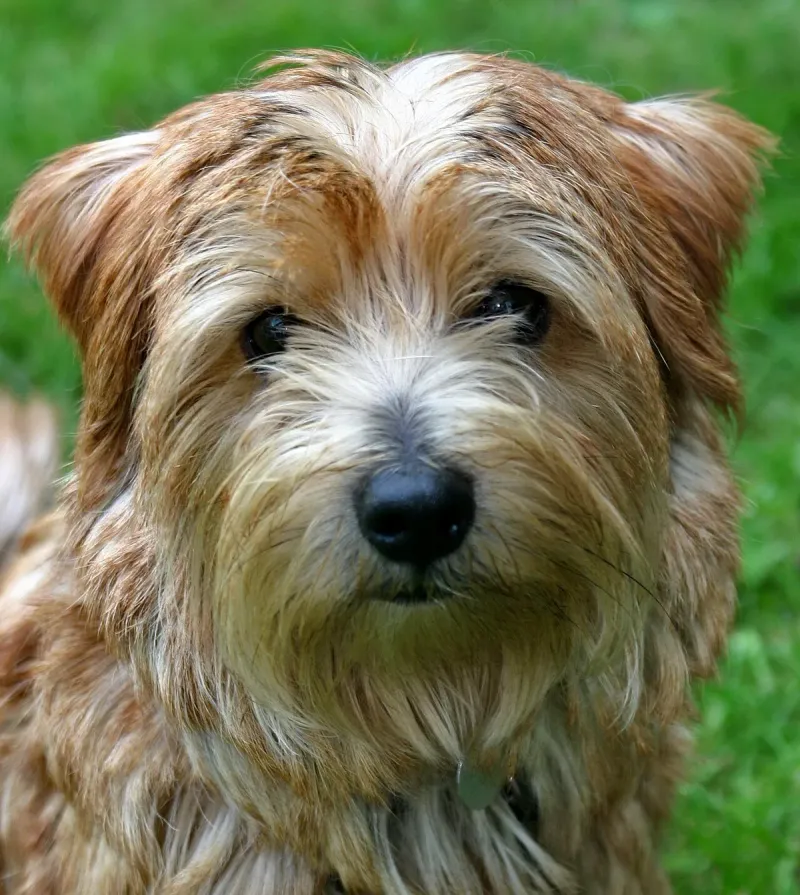 Scottish Terrier and Norfolk Terrier
The pattern fits the history. The Westie and Cairn are the other Highland terriers that were once lumped together under the Skye name, so they share the most DNA. The Norwich and Norfolk Terriers, from England, share less, which fits a smaller Scottish contribution. The Cairn Terrier and Westie are the nearest cousins if you like the look of the Scottie but want a different coat or temperament.
Sister breeds · 2
- West Highland White Terrier1800 to 1904
- Paisley Terrier1850 to 1880
Descend from it · 4
- Dandie Dinmont TerrierUnited Kingdom
- West Highland White TerrierUnited Kingdom
- Norwich TerrierUnited Kingdom
- Cesky TerrierCzech Republic
- West Highland White Terrier134.6 Mb 5.6%
- Cairn Terrier87.0 Mb 3.6%
- Norwich Terrier46.6 Mb 1.9%
- Norfolk Terrier25.6 Mb 1.1%
Source: Parker et al. 2017. Percent of the whole genome.
The breed standard
 Looks relatedAmerican Bulldog1700 to 1980 · United StatesEarly Modern Era
A is the written ideal for a breed that kennel clubs judge dogs against. The FCI, AKC and UK Kennel Club standards for the Scottish Terrier describe the same dog: low, long-headed, heavy-boned for its size, with a hard coat. They differ mostly in how they phrase size.
| Trait | FCI (no. 73) | AKC | UK Kennel Club |
|---|---|---|---|
| Height | About 25.4 to 28 cm at the withers | About 10 in (25 cm) | About 25 to 28 cm |
| Weight | About 8.6 to 10.4 kg | About 18 to 22 lb (8 to 10 kg), males slightly heavier | About 8.5 to 10.5 kg |
| Coat | Hard, wiry outer coat over a short, dense, soft undercoat | Hard, wiry outer coat with a dense undercoat | Same pattern |
| Colour | Black, wheaten or brindle of any colour | Black, wheaten or brindle | Black, wheaten or brindle |
| Head | Long, in proportion to the body, with a firm muzzle | Long, with a slightly domed skull | Same pattern |
| Ears | Small, pointed, erect | Small, prick, set well up | Same pattern |
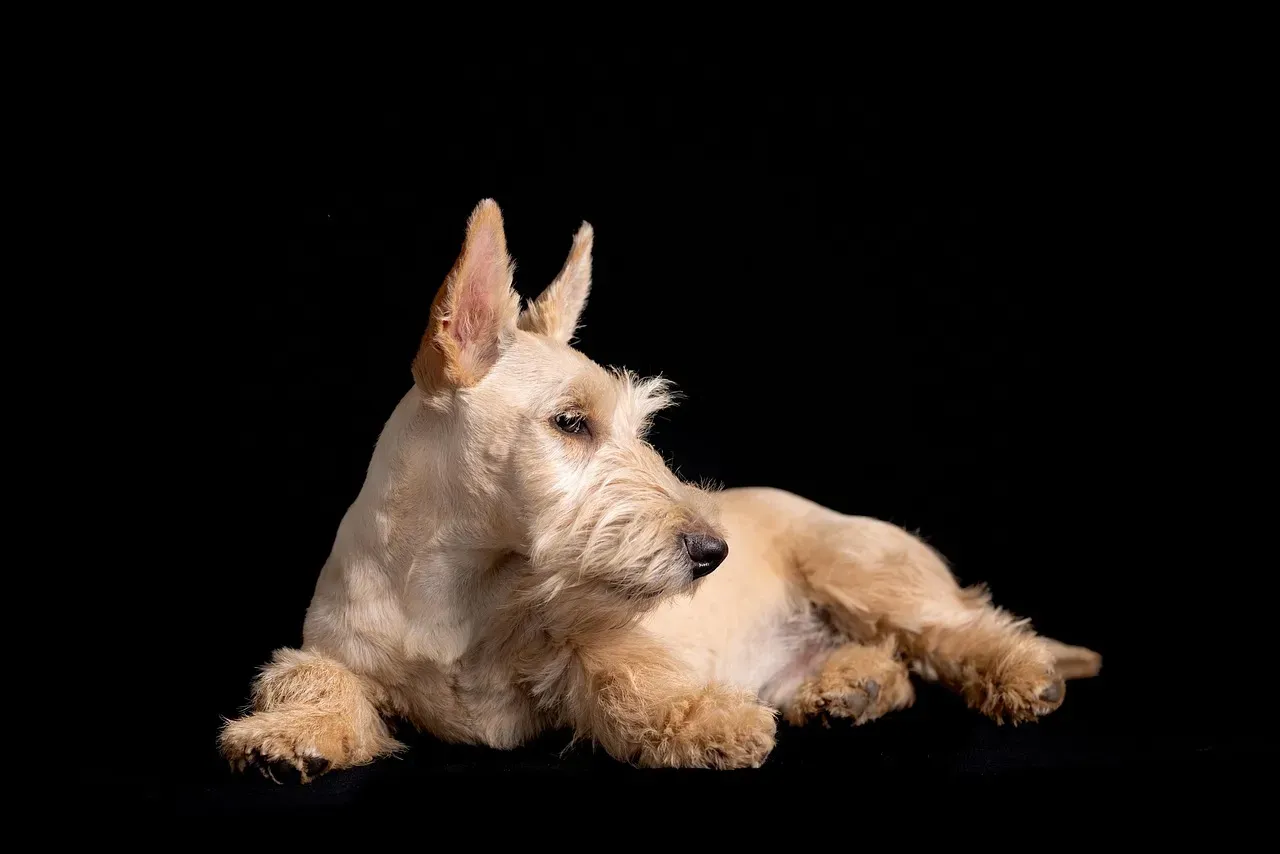
The standards describe a compact, short-legged dog with a deep chest, a level back, a short tail carried upright and a strong, bearded muzzle. Size is a guide. The Kennel Club says its figures describe the ideal, and an individual dog may be larger or smaller.
Colour. Black is the best known. Wheaten ranges from pale cream to golden, and brindle is a mix of dark and light hairs. Sources describe the standard as accepting these three, with white not accepted in the AKC wording.
Coat care. The show coat is shaped by hand-stripping, which removes dead outer hair, while pet owners often choose clipping. Clipping softens the coat and changes its colour and texture over time, which is a reason show owners prefer stripping.
 Save
Temperament
 Related breedBlack Mouth Cur1700 to 1900 · United StatesEarly Modern Era
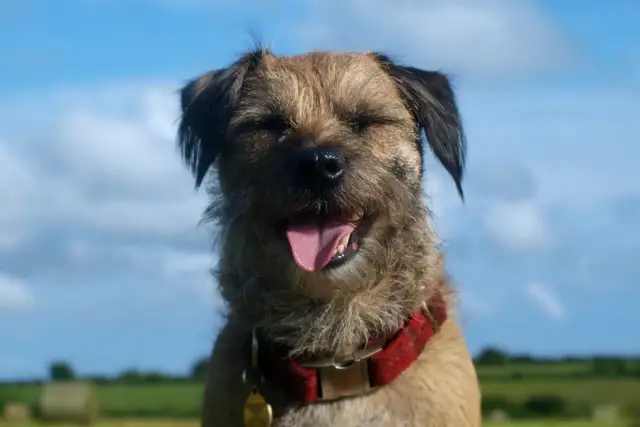
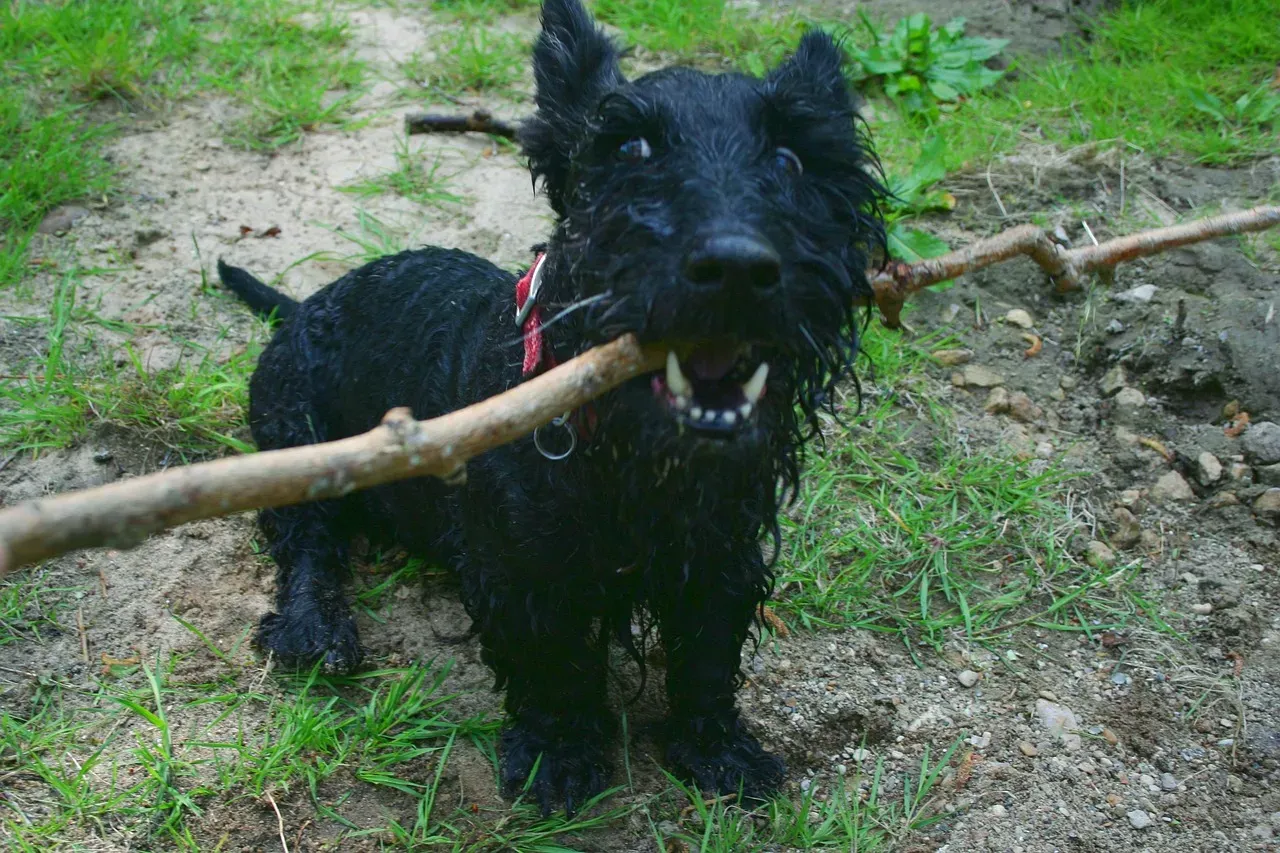
The clubs describe a dog that is dignified, determined and loyal, with strong opinions and a streak of independence. A Scottie bonds closely with its family, often to one or two people, and it can be reserved with strangers. It does not fawn. This is a terrier that was built to work alone below ground, so it thinks for itself.
 Save
Training and exercise
- Strong-willed. A Scottie will test the rules. Calm, consistent and reward-based training works; harsh methods lead to stubbornness.
- Moderate exercise. Daily walks and play are enough. It does not need athletic outlets, though it enjoys a good walk and a sniff.
- Digging and chasing. Terrier instincts mean digging and chasing small animals. Fence the garden and keep it on lead near wildlife.
- Barking. Alert and willing to bark at visitors. Teach a quiet cue early.
With children and other pets
Scotties can live well with older, considerate children, but they are not known for putting up with rough play, and they are often described as better for families with older children. They may be wary of other dogs, especially same-sex dogs, so early socialisation matters. Cats and small pets are a risk because of the hunting drive.

Health
 Related breedBluetick Coonhound1700 to 1945 · United StatesEarly Modern Era
Most Scottish Terriers live healthy lives, and the atlas data gives 11 to 13 years. This section lists what breeders screen for and what owners can watch for. Figures are given only where a named study supplies one. Information here is general. Talk to a vet about your own dog.
Life span. The atlas data gives 11 to 13 years. The Scottish Terrier Club of America keeps a longevity registry of dogs that reached at least 11 years. A UK primary-care study of life tables (Teng, O'Neill et al., 2022) found a life expectancy at birth of about 12 years for the terrier group, and no breed-level figure for the Scottish Terrier is quoted here.
| Condition | What it is | How common | What helps |
|---|---|---|---|
| Bladder cancer (transitional cell carcinoma, TCC) | A cancer of the lining of the urinary bladder | Scottish Terriers are reported to have about 18 to 20 times the risk of other breeds (Purdue University, Knapp). Most Scotties never develop it, and no study gives a lifetime figure | Regular vet checks, urine tests where advised, early signs such as blood in the urine or straining to pass urine seen by a vet quickly. Research programmes screen symptom-free Scotties |
| Von Willebrand disease | An inherited bleeding disorder where blood clots slowly | Once common in the breed; breed sources say it is now uncommon in litters | DNA test of breeding dogs; tell the vet before any surgery |
| Scottie cramp | Episodes of stiffness and an odd gait that last minutes, often after excitement or exercise | Seen in the breed; no published study gives a figure | Vet check to rule out other causes; calm routine; avoiding breeding affected dogs |
| Craniomandibular osteopathy (CMO) | A growth-related bone disorder of the jaw in young dogs | Rare in the breed; a 2024 CT study of 20 dogs found Scottish Terriers overrepresented (65 percent of cases) but gives no breed prevalence | DNA test where available; vet exam of a puppy that has pain on eating or a swollen jaw |
| Skin allergies and itchy skin | Inflammation and scratching, often with a wiry-coated terrier | Seen often by vets in terriers; no published figure | Vet-guided allergy work, regular coat care |
| Overweight and obesity | Excess body fat that loads joints | Common in many small breeds; no published figure | Measured meals, regular walks, body condition checks with a vet |
Bladder cancer. A 2004 case-control study by Glickman and colleagues (Journal of the American Veterinary Medical Association) compared 83 Scottish Terriers with bladder cancer and 83 without. Dogs living where lawns or gardens were treated with herbicides had a higher risk, roughly four to seven times depending on how the data was grouped. Raghavan and colleagues (JAVMA, 2005) later found that Scotties eating vegetables at least three times a week had a lower risk. The practical message is to keep lawn chemicals away from the dog, feed a varied diet and take any change in urine to the vet early. Purdue University's bladder cancer team (Knapp) continues to study the breed.
Von Willebrand disease. A DNA test lets breeders avoid mating . Ask the breeder for the result.

Living with a Scottish Terrier
 Related breedBoerboel1650 to 1983 · South AfricaEarly Modern Era
 Save
| Daily reality | Rating | Why |
|---|---|---|
| Exercise per day | Medium | Daily walks and play; about an hour is common advice |
| Training needs | High | Independent terrier; needs a calm, consistent trainer |
| Grooming | High | Hand-stripping or clipping several times a year plus regular brushing and beard care |
| Shedding | Low | Wiry coat sheds little; stripping or clipping removes dead hair |
| Barking | Varies | Alert and willing to bark; depends on training and the individual |
| Time alone | Fair | Loyal to its people; can cope with some time alone if trained |
| Children | Fair | Better with older, considerate children than with rough play |
| Other dogs | Fair | Can be wary of other dogs; early socialisation helps |
| Cats and small pets | Poor | Hunting drive; small pets are at risk |
| Flat living | Good | Small and moderately active; may bark at noises |
| Heat tolerance | Fair | Dense coat; avoid hard exercise in hot weather |
| Cold tolerance | Good | Weatherproof double coat |
| First-time owner fit | Fair | Rewarding but strong-willed; first-timers need patience and a trainer |
A great fit if
- You like a dignified, independent dog with a strong personality.
- You can groom the coat, or pay a groomer who knows how to strip it, several times a year.
- You prefer moderate daily walks to hard sporting exercise.
- You have time for consistent, calm training from puppyhood.
Think twice if
- You want a dog that is eager to please and friendly with every person and animal.
- You keep rabbits, rodents or other small pets.
- You have young children who play roughly.
- You do not wish to groom the coat or accept the cost of professional grooming.
Before you get one
- Health tests. Ask the breeder for a von Willebrand DNA result for both parents, and ask about any family history of bladder cancer and cramp. Ask for the original certificates.
- Puppy or adult rescue. Breed rescues exist and often place adults whose temperament is already known.
- First year. Plan puppy classes, early socialisation with other dogs, grooming habits from the start, and a lean body weight.
Similar breeds to consider
- West Highland White Terrier. A white Highland cousin with a similar build and a somewhat friendlier manner.
- Cairn Terrier. A shaggier, scruffier Highland terrier that is often more outgoing.
- Dandie Dinmont Terrier. A long-bodied, low-slung Border country terrier with a soft topknot and a calmer manner.
- Norfolk Terrier. A small, sturdy terrier with a wiry coat and a sociable nature.

Scottish Terrier fun facts
 Related breedCatahoula Leopard Dog1700 to 1979 · United StatesEarly Modern Era
- The first dogs called Scottish Terriers appeared on English show benches around 1879, after Captain W. W. Mackie brought Highland dogs south.
- The breed has also been called the Aberdeen Terrier.
- President Franklin D. Roosevelt's Scottie, Fala, became famous in the 1940s, and the Roosevelt Library keeps records of him.
- The Scottie shares 134.6 Mb of DNA with the West Highland White Terrier in the Parker 2017 study, far more than with any other breed on the list.
Frequently asked questions
Are Scottish Terriers good family dogs?
They can be, especially with older children and calm homes. They are loyal and funny but independent, and they do not enjoy rough handling.
How big is a Scottish Terrier?
They stand about 25 to 28 cm at the withers and weigh about 8.5 to 10.5 kg, according to the Kennel Club and standards.
How long do Scottish Terriers live?
The atlas data gives 11 to 13 years.
Do Scottish Terriers get bladder cancer?
They are at higher risk than most breeds, reported at about 18 to 20 times that of other dogs, but most Scotties never develop it. Early vet checks for urine changes matter.
Do Scottish Terriers shed?
Very little, but the wiry coat needs hand-stripping or clipping to stay tidy and healthy.
Is a Scottish Terrier the same as a West Highland White Terrier?
No. They are close relatives from the same region with a similar build, but the Westie is white and has its own standard.
Read next
Closest DNAWest Highland White Terrier134.6 Mb shared FamilyTerrierThe whole family
 Adopt a dogDog Shelters in EuropeFind dog shelters in Europe, learn how shelters differ from country to country and why adopting a dog is a good option.
Sources (14)
- American Kennel Club, Scottish Terrier breed standard.
- Dalziel H., British Dogs: Their Varieties, History, Characteristics, Breeding, Management and Exhibition, 1888.
- Fédération Cynologique Internationale, Scottish Terrier, standard no. 73.
- Fogle B., The Encyclopedia of the Dog, 2009.
- Franklin D. Roosevelt Presidential Library and Museum, records on Fala.
- Frontiers in Veterinary Science, 2024, retrospective CT study of craniomandibular osteopathy in dogs.
- Glickman L.T. et al., "Herbicide exposure and the risk of transitional cell carcinoma of the urinary bladder in Scottish Terriers", Journal of the American Veterinary Medical Association, 2004.
- Parker H.G. et al., "Genomic analyses reveal the influence of geographic origin, migration, and hybridization on modern dog breed development", Cell Reports, 2017.
- Purdue University College of Veterinary Medicine, canine urinary bladder cancer research (Knapp).
- Raghavan M. et al., "Evaluation of the effect of dietary vegetable consumption on reducing risk of transitional cell carcinoma of the urinary bladder in Scottish Terriers", Journal of the American Veterinary Medical Association, 2005.
- Scottish Terrier Club of America, breed history, genetic issues and longevity registry.
- Teng K.T. et al., life tables of UK dog breeds from VetCompass data, Scientific Reports, 2022.
- The Kennel Club (UK), Scottish Terrier breed standard.
- Dogs Atlas breed records and Parker 2017 shared-haplotype table (this site).