
It was built in the United States from English terriers and other farm dogs, and in the 20th century it was just as likely to be called a feist or a farm terrier as a Rat Terrier. The United Kennel Club recognised it in 1999 and the American Kennel Club followed in the early 2010s. It is quick, athletic, bright and people-loving, and it comes in two sizes. It suits active owners who want a clever small dog that will play, run and learn tricks. The atlas data gives a life span of 14 to 18 years.
Rat Terrier quick facts
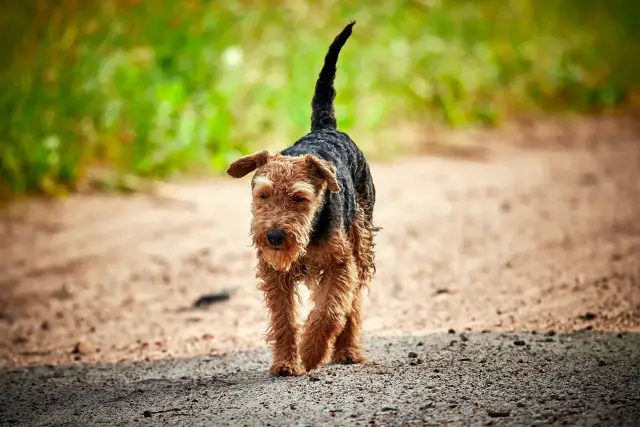 Related breedAiredale Terrier1850 to 1880 · United KingdomVictorian Breed Boom
- Country of origin
- United States
- Period of development
- About 1890 to 1999 (atlas data)
- Original job
- Farm ratter, vermin control, small-game hunting and companion
- Type
- Terrier ( Terrier Group; not recognised by the )
- Height
- Miniature: under 13 in (about 33 cm). Standard: over 13 up to 18 in (about 33 to 46 cm)
- Weight
- The standards give height limits, not a weight range. Adults commonly weigh about 4.5 to 11 kg
- Coat
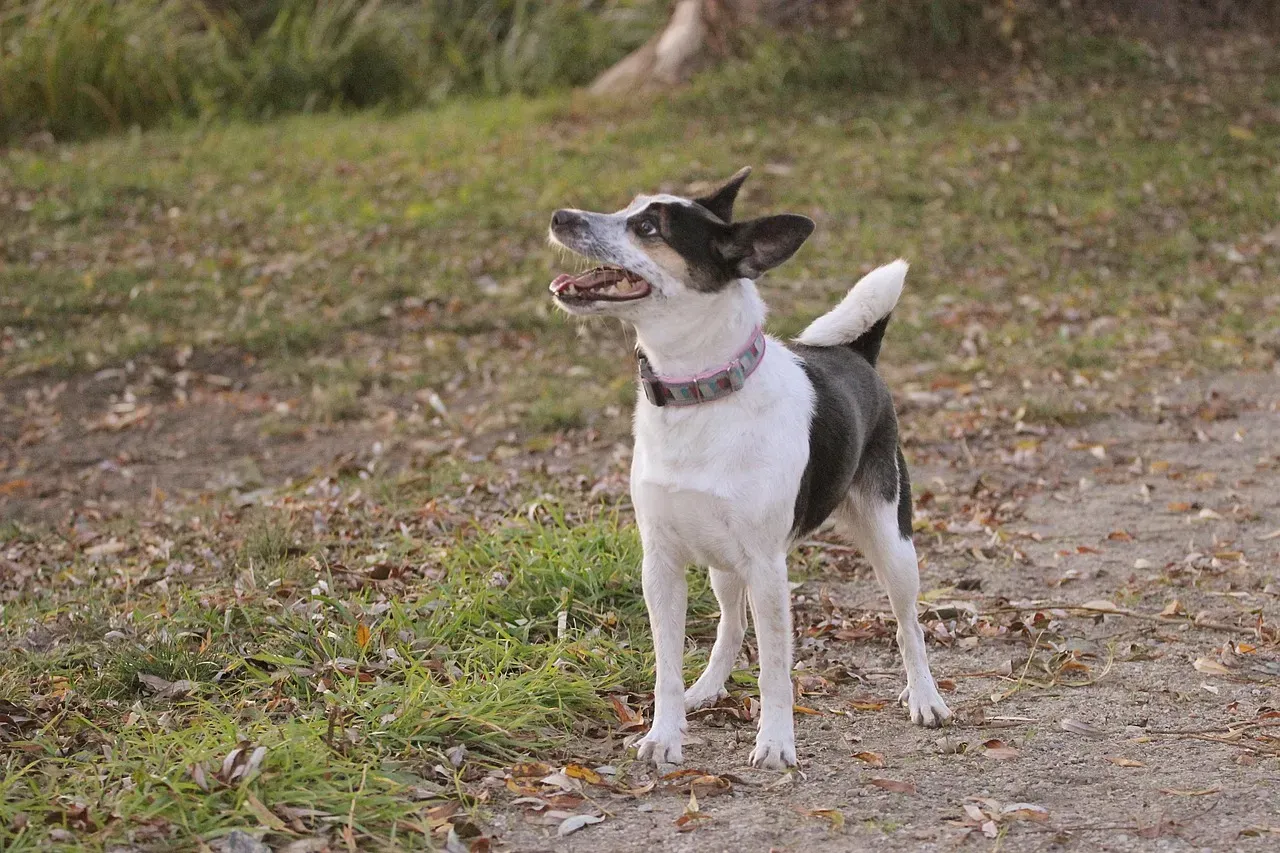
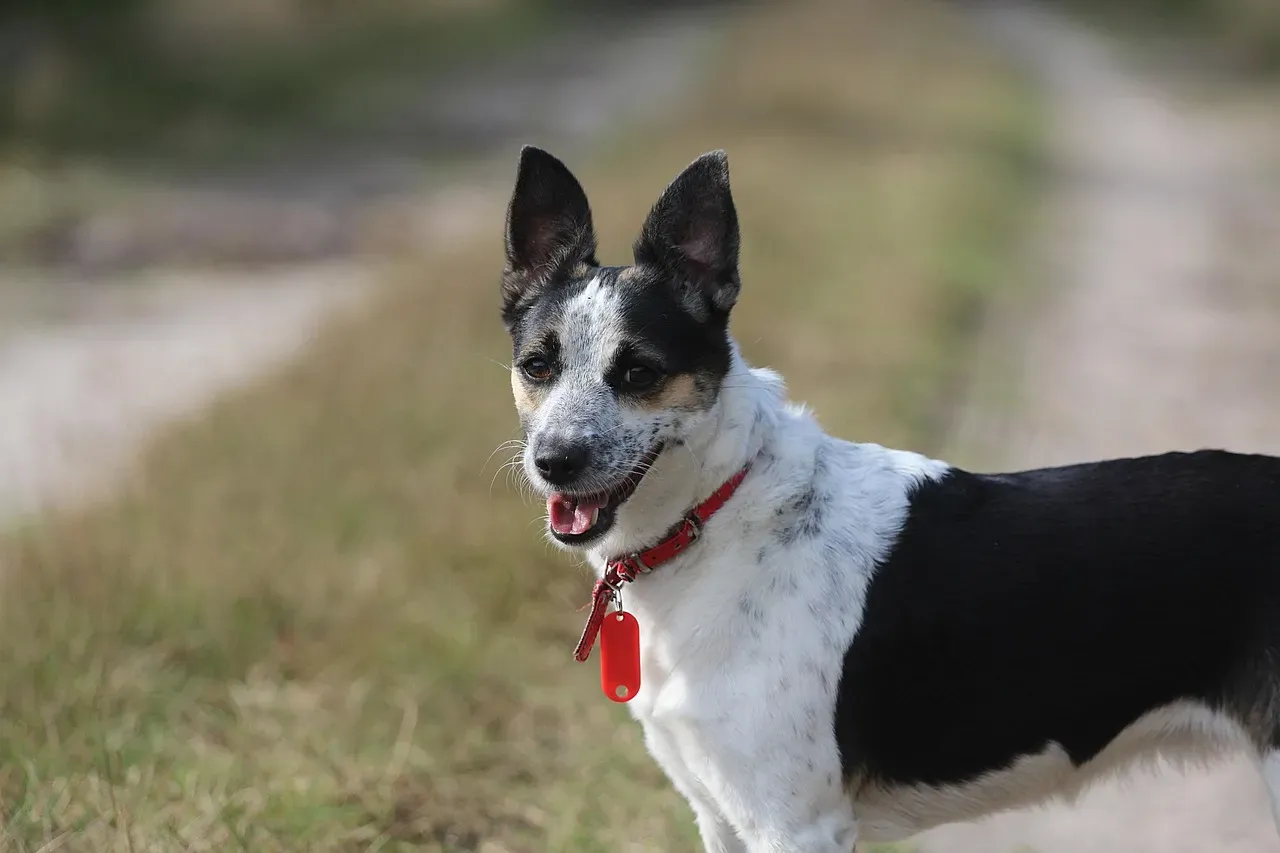
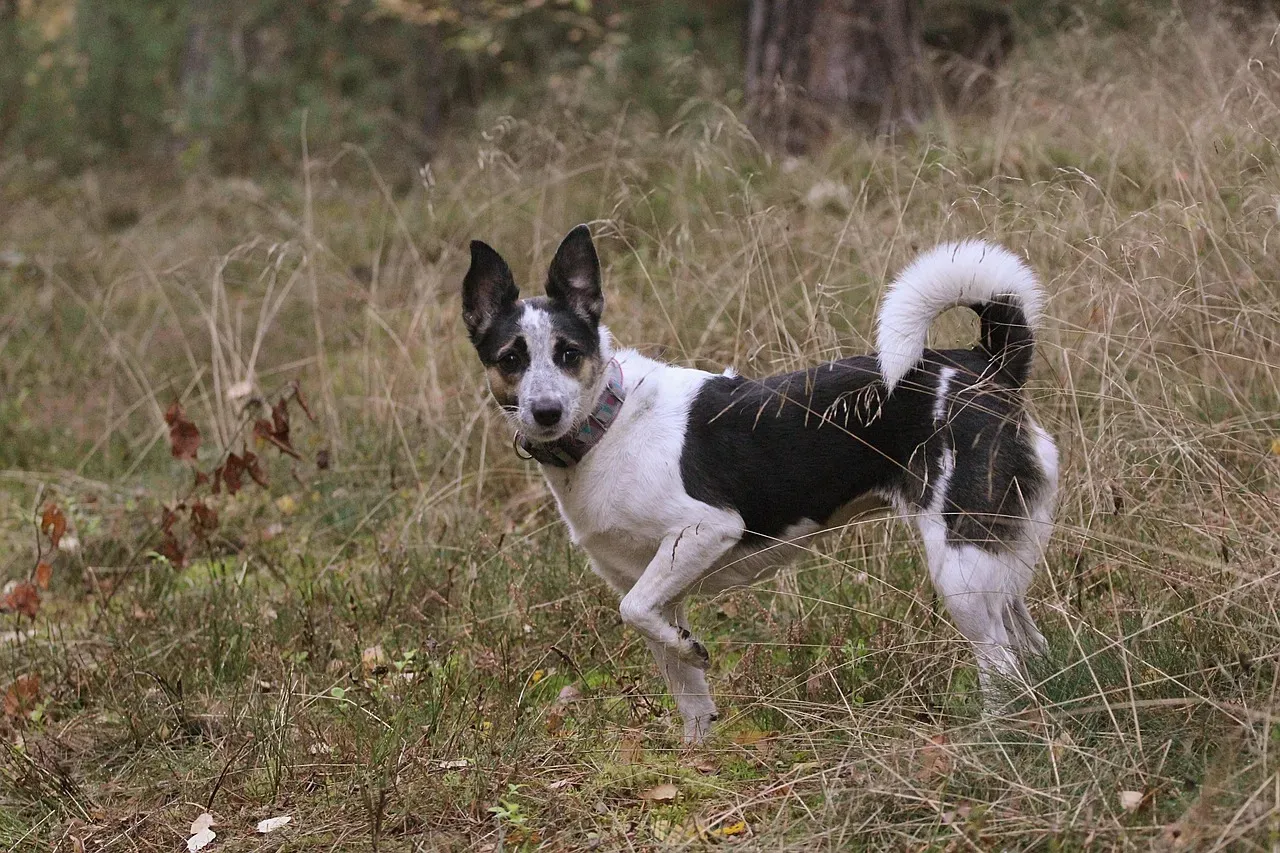
- Short, close-lying, smooth and shiny
- Colour
- Pied: white with patches of colour (black, chocolate, red, apricot, blue, fawn, tan or lemon)
- Life span
- 14 to 18 years (atlas data)
- Other names
- American Rat Terrier
- DNA family
- American Terrier family (Parker et al. 2017)
- Closest DNA relative
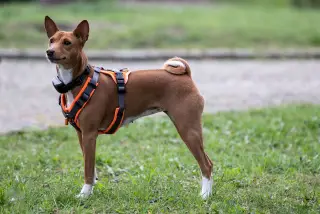
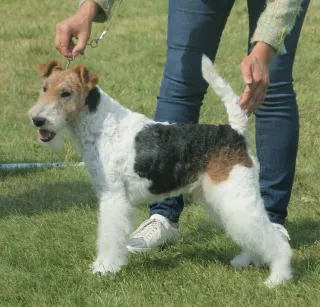
- Basenji (24.6 shared), then the Wire Fox Terrier (21.1 Mb)
- Related breeds
- Teddy Roosevelt Terrier, American Hairless Terrier, Decker strain
Drawn to scale in real centimetres. Its back reaches about 36 cm, just below your knee; its head about 45 cm, just below your knee.

Where it sits in the tree
Victorian Breed Boom · 1850 to 1913

Name and origin
 Related breedAmerican Eskimo Dog1900 to 1917 · United StatesVictorian Breed Boom
The name is a job description. "Rat" says what the dog was kept to catch, and "terrier" comes from the Old French for "earth dog". On American farms around the turn of the 20th century these dogs were also called feists, a general word for small, quick, hunting dogs of mixed breeding. The Rat Terrier is the line that was later brought into a registry and a written standard.
There are three questions about the origin worth separating.
- Where it began. The United States. The atlas data places development between about 1890 and 1999, a span that runs from farm dogs to full recognition.
- What went in. Breed histories say English terriers were brought over by immigrants and crossed with local dogs. The atlas data names the Smooth Fox Terrier and the Manchester Terrier as parent lines, with medium confidence, citing the AKC breed history. Accounts also mention Beagle, Whippet and Italian Greyhound blood to add nose and speed. These additions come from breeder tradition, not studbooks.
- The Roosevelt story. A popular legend says the name arose when Theodore Roosevelt called his terriers "Rat Terriers" after they cleared rats from the White House. Reference works do not support the idea that he owned the breed or shaped it, so treat it as a legend. The shorter-legged variant now sold as the Teddy Roosevelt Terrier took its name from the same tale.

History
 Same eraAmerican Pit Bull Terrier1850 to 1898 · United StatesVictorian Breed Boom
Farm dogs and feists
The Rat Terrier was a working farm dog before it was a show dog. Farmers wanted a dog that could kill rats in the barn, flush rabbits and squirrels from brush, and live in the house. Small terriers from Britain, brought by settlers in the 1800s, supplied the vermin-killing drive. Local dogs and feist-type stock supplied the hunting nose and the lighter, longer-legged frame. Fogle's Encyclopedia of the Dog (2009) lists the breed as American in origin.
Decline and clubs
When poisons, grain silos and cheaper farm methods reduced the need for ratters in the mid-1900s, the breed's numbers fell. Registered stock was kept alive by a small group of owners. The Rat Terrier Club of America (RTCA) says on its about page that the idea of a club arose around 1990 and took form in 1993. A written came out of that work.
Recognition
The United Kennel Club adopted the RTCA's ideals and format as its Rat Terrier standard in January 1999. The American Kennel Club recognised the breed in the terrier group some years later. Sources disagree on the year: 2013 is the date most often given, and 2010 and 2012 also appear in print. Check the AKC's own record if the exact year matters. The FCI does not recognise the breed.
Offshoots
Several lines grew out of the breed, and the clubs treat them differently.
- Teddy Roosevelt Terrier. Shorter-legged, stockier stock first called Type B Rat Terriers. The UKC accepted it as a separate breed in 1999.
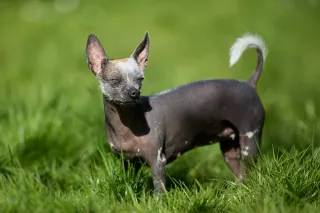
- American Hairless Terrier. Descends from a hairless puppy born in a Rat Terrier litter in the 1970s. The UKC recognised it as a separate breed in 2004.
- Decker or Decker Giant. A taller line developed from the dogs of Milton Decker in the 1970s. Neither the UKC nor the AKC recognises it as a separate breed; it falls within the Standard size.
Relatives and DNA
 Same familyAmerican Staffordshire Terrier1850 to 1936 · United StatesVictorian Breed Boom
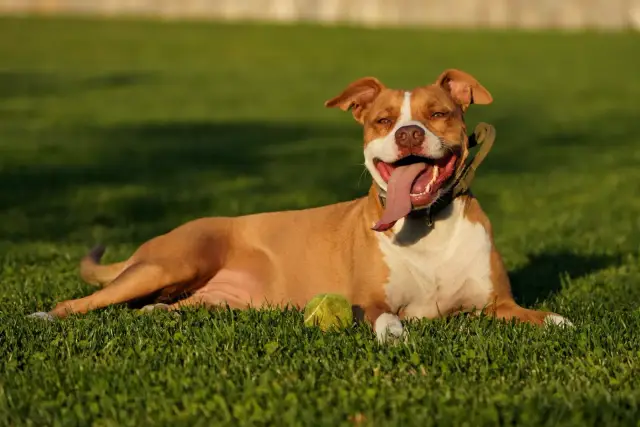
The Rat Terrier sits in the American Terrier of the Parker 2017 DNA study. That study grouped 161 breeds into 23 clades by shared stretches of DNA. The atlas data records two parent lines and two descendant breeds.
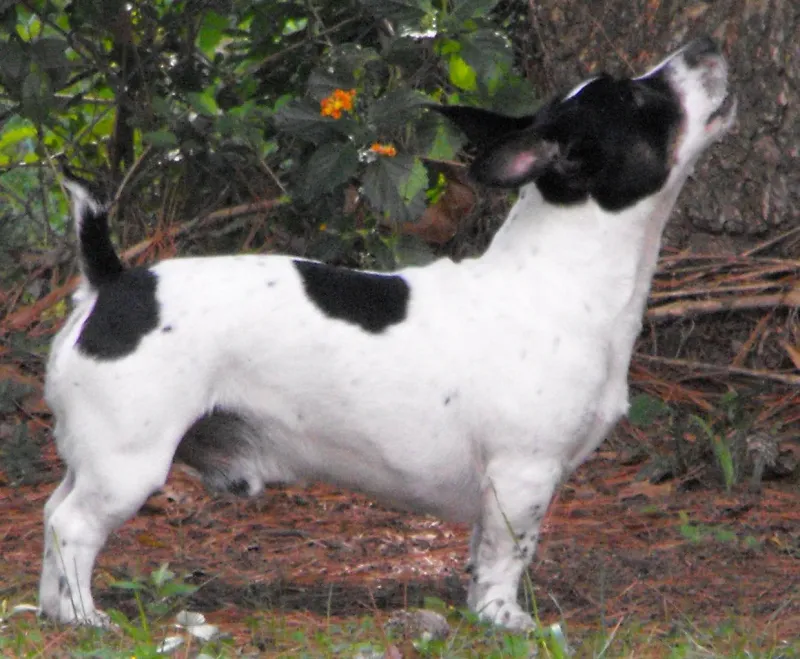 Teddy Roosevelt Terrier
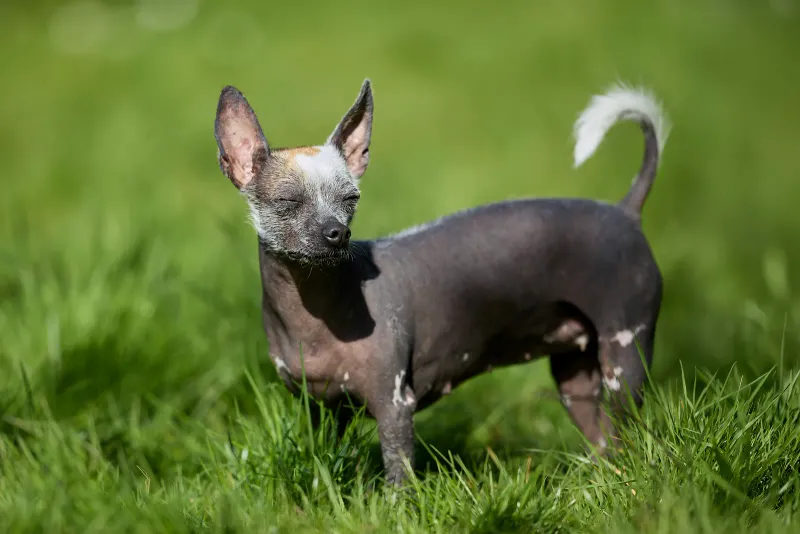 American Hairless TerrierTeddy Roosevelt TerrierAmerican Hairless Terrier
Parent lines (atlas data)
- Smooth Fox Terrier. An English terrier brought to America and used for rat and fox work.
- Manchester Terrier. The black and tan rat-killing terrier of northern England, long used for ratting in pits and homes.
Descendant breeds (atlas data)
- Teddy Roosevelt Terrier. The short-legged line, now treated as its own breed by the UKC.
- American Hairless Terrier. Began as a hairless mutation in a Rat Terrier litter.
What does DNA say?
Shared show which breeds share long stretches of identical DNA through common ancestors or crossing. A higher number of shared (Mb) means a more recent link. The study cannot say which breed gave genes to which.

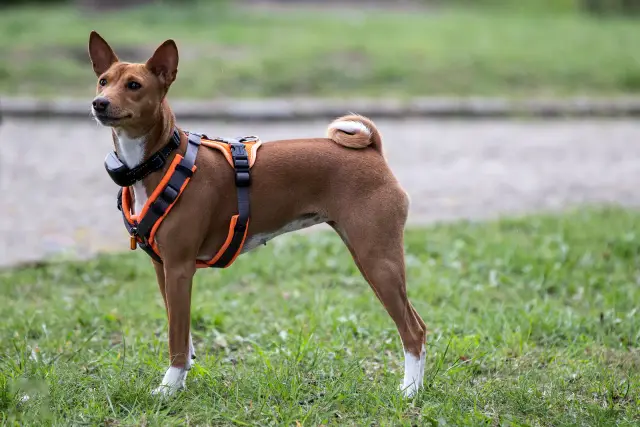
- Rat Terrier and Basenji
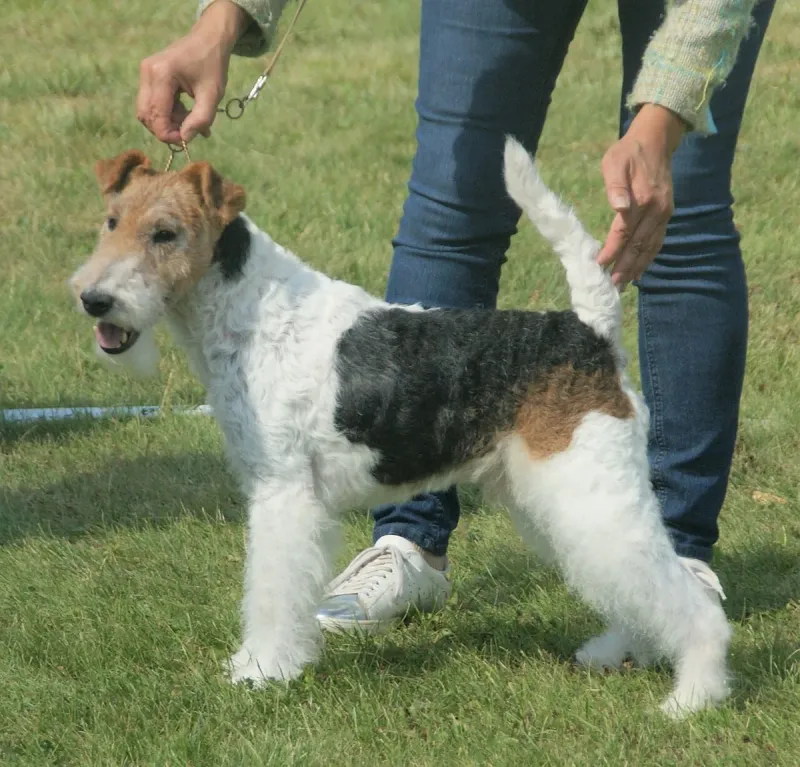 Rat Terrier and Wire Fox Terrier
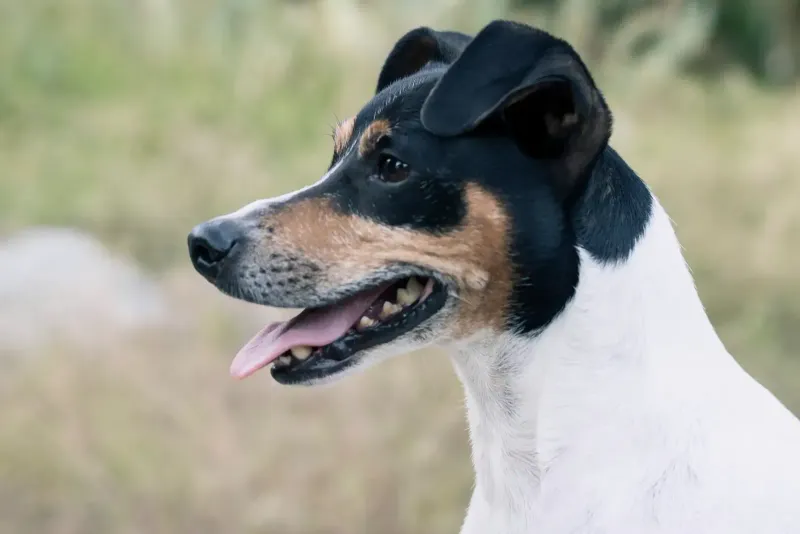 Rat Terrier and Toy Fox Terrier
- Rat Terrier and American Hairless Terrier
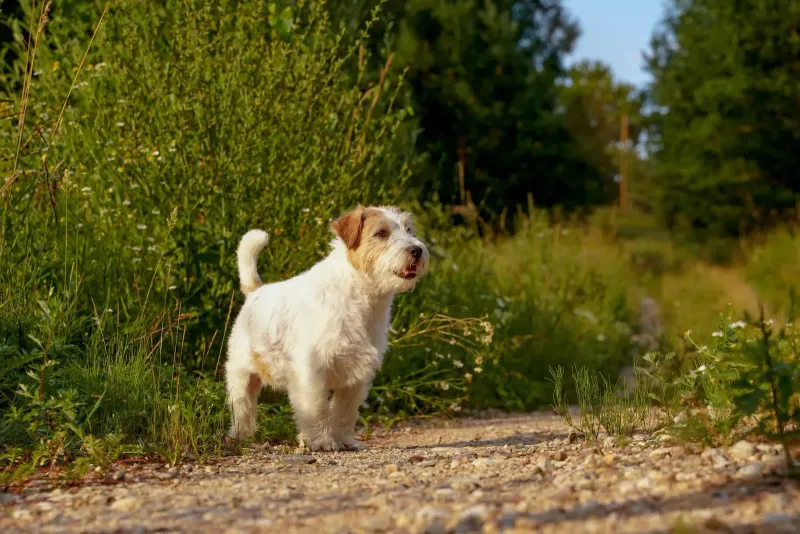 Rat Terrier and Parson Russell Terrier
The pattern fits the history in part. The Wire Fox Terrier and Toy Fox Terrier are other fox-terrier relatives, and the American Hairless Terrier is the Rat Terrier's own offshoot. The Basenji at the top is a surprise that no breed history explains, so read it as a statistical overlap in the study and not as proof of a Basenji ancestor. The Parson Russell Terrier (13.2 Mb) and Jack Russell Terrier (12.5 Mb) are the nearest working-terrier cousins in size and role.
Descend from it · 2
- Teddy Roosevelt TerrierUnited States
- American Hairless TerrierUnited States
- Basenji24.6 Mb 1.0%
- Wire Fox Terrier21.1 Mb 0.9%
- Toy Fox Terrier20.5 Mb 0.9%
- American Hairless Terrier14.2 Mb 0.6%
- Parson Russell Terrier13.2 Mb 0.5%
- Jack Russell Terrier12.5 Mb 0.5%
- American Cocker Spaniel11.5 Mb 0.5%
- Pug10.4 Mb 0.4%
Source: Parker et al. 2017. Percent of the whole genome.
The breed standard
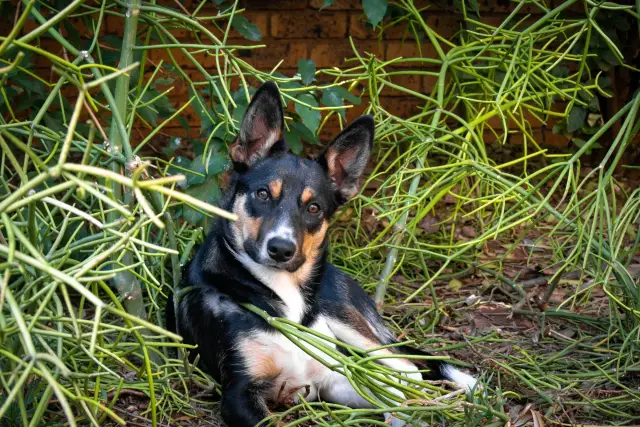 Looks relatedAustralian Kelpie1870 to 1902 · AustraliaVictorian Breed Boom
A breed standard is the written ideal for a breed that kennel clubs judge dogs against. The Rat Terrier has no FCI standard. The table compares the UKC and the AKC, which agree on size varieties, coat and colour pattern.
| Trait | UKC | AKC |
|---|---|---|
| Height, Miniature | Up to 13 in (about 33 cm) at the withers | 10 in up to 13 in (about 25 to 33 cm) |
| Height, Standard | Over 13 in and up to 18 in (about 33 to 46 cm) | Over 13 in and up to and including 18 in (about 33 to 46 cm) |
| Coat | Short, smooth and shiny | Short, close-lying, smooth and shiny; total genetic hairlessness is a disqualification |
| Colour | Pied: white with patches of colour | Pied: white with patches of colour |
| Disqualifying colour | , brindle, no white | Merle, brindle, no white |
| Build | Muscular, athletic, slightly longer than tall | Same idea |
The AKC standard also disqualifies a dog of six months or older under 10 in, or any dog over 18 in. The standards describe a compact, muscular terrier with a wedge-shaped head, a tapering muzzle and a strong, deep chest. Tail docking is practised in some show lines in the United States; it is banned or restricted in much of Europe, so ask a breeder what to expect.
Two sizes, one breed. The Miniature and the Standard are varieties of the same breed. Breeders do not treat them as separate breeds, and puppies of both sizes can appear in one litter. Owners who want a very small dog should ask a breeder what size the parents are, not rely on a label.
Colour. All colour is laid on white. A solid dog with no white is a fault under both standards, and merle and brindle are disqualified. This keeps the Rat Terrier visually apart from other terriers.

Temperament
 Related breedBasset Hound1860 to 1885 · United KingdomVictorian Breed Boom
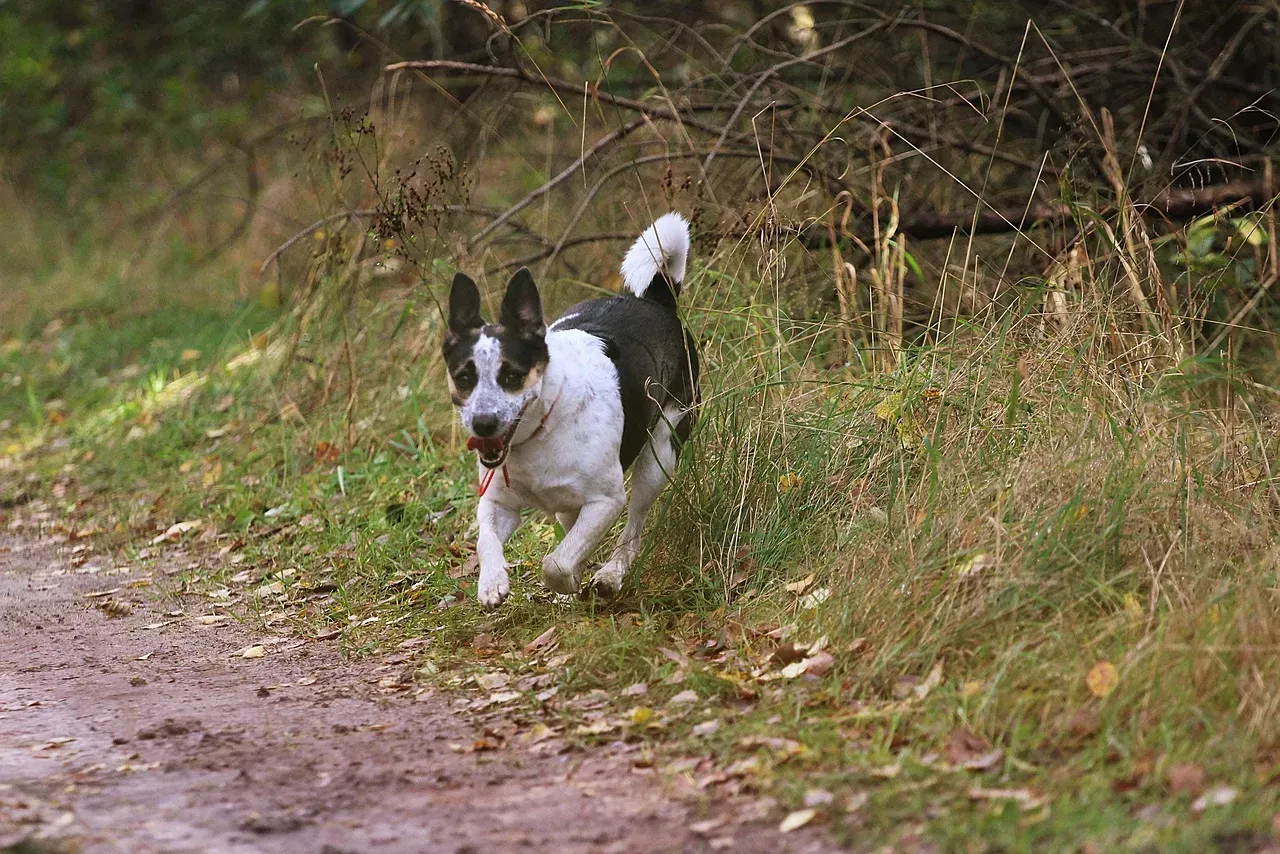
The clubs describe a bright, friendly, energetic dog that likes people and enjoys a job. Rat Terriers keep the terrier alertness and prey drive, and they also bond closely with their families. Compared with many terriers they are often described as more eager to please, which makes training easier, though they have a mind of their own.
 Save
Training and exercise
- Intelligent and quick. Rat Terriers learn fast and get bored with repeat drills. Short, varied sessions with rewards work best.
- Prey drive. A dog bred to hunt small animals will chase squirrels, rabbits and sometimes cats. A secure fence and a lead near wildlife matter.
- Energy. Expect real daily exercise, such as walks, fetch and games. The breed does well in dog sports such as agility, earthdog trials, lure coursing and rally.
- Digging and barking. Both come with the terrier job. Give it a place to dig and teach a quiet cue early.
With children and other pets
Rat Terriers usually do well with considerate children who play gently. Small, quick dogs can be injured by rough handling, so supervise young children. With other dogs they are generally sociable if introduced early. Small pets such as hamsters, rabbits and rats are a real concern, because the breed was bred to kill them.

Health
 Related breedBelgian Malinois1891 to 1901 · BelgiumVictorian Breed Boom
Most Rat Terriers live long, healthy lives, and the atlas data gives 14 to 18 years. This section lists what breeders screen for and what owners can watch for. Figures are given only where a named study supplies one. Information here is general. Talk to a vet about your own dog.
Life span. The atlas data gives 14 to 18 years. No published population study gives a median life span for the Rat Terrier.
The Rat Terrier Club of America's health statement, hosted by the AKC, lists the core tests for the breed as a cardiac evaluation, hip evaluation, patella evaluation and a primary lens luxation DNA test, with others as optional. The breed takes part in the AKC Canine Health Information Center programme.
| Condition | What it is | How common | What helps |
|---|---|---|---|
| Primary lens luxation (PLL) | An inherited loosening of the lens in the eye, caused by a variant in the ADAMTS17 gene, which can lead to pain and vision loss | Reported in the breed (OMIA; Gould et al. 2011). No published study gives a firm prevalence figure | DNA test of breeding dogs before mating; yearly eye checks; a vet should see any red, cloudy or painful eye straight away |
| Patellar luxation | The kneecap slips out of its groove, causing a skip in the step | Seen more often in small breeds; no published figure | Patella exam by a vet or an OFA evaluation before breeding; lean weight |
| Hip problems, including Legg-Calve-Perthes | Hip joint wear or a juvenile loss of blood supply to the femoral head in small dogs | Listed by the club as a screening item; no published figure | Hip evaluation of breeding dogs; vet check if a puppy limps or holds up a back leg |
| Heart disease | Valve or structural problems in the heart | Listed by the club as a screening item; no published figure | Cardiac exam by a vet or cardiologist for breeding dogs; listen for murmurs at vet visits |
| Skin and coat issues | Sun-sensitive, thin-coated pale skin and allergic itching | Seen in some dogs; no published figure | Shade and sun protection for pale skin, vet-guided allergy work |
| Dental disease | Tartar and tooth loss, as in many small breeds | Common in small dogs generally | Regular tooth brushing and vet dental checks |
Why PLL gets so much attention. The ADAMTS17 variant behind PLL has been found in many terrier breeds. A dog with two copies is at high risk, while a dog with one copy (a carrier) is at very low risk itself but can pass the variant on. This is why breeders use the DNA test to avoid mating two . A pup from tested parents can be cleared on paper.
Hairless dogs. The American Hairless Terrier carries a separate coat gene. A purebred Rat Terrier is not hairless, and total genetic hairlessness is a disqualification in the AKC standard.

Living with a Rat Terrier
 Related breedBelgian Shepherd1891 to 1901 · BelgiumVictorian Breed Boom
| Daily reality | Rating | Why |
|---|---|---|
| Exercise per day | High | Athletic, quick terrier; daily walks plus play or a sport |
| Training needs | Medium | Bright and willing, but terrier independence; needs consistency |
| Grooming | Low | Short smooth coat; weekly brushing is enough |
| Shedding | Medium | Sheds lightly year round, with heavier shedding at times |
| Barking | Varies | Alert dog; depends on training and the individual |
| Time alone | Fair | Bonds closely to its people; not suited to long hours alone |
| Children | Good | Usually friendly with gentle children; small size means supervision |
| Other dogs | Good | Generally sociable if introduced early |
| Cats and small pets | Poor | Bred to kill vermin; rodents and rabbits are at risk |
| Flat living | Fair | Small, but needs outdoor time and may bark at neighbours |
| Heat tolerance | Fair | Short coat and pale skin; limit hard exercise on hot days |
| Cold tolerance | Poor | Thin short coat with little insulation; a coat helps in cold weather |
| First-time owner fit | Good | Eager to learn; first-timers need patience with energy and prey drive |
A great fit if
- You want an active small dog that will join walks, play and dog sports.
- You enjoy training and can offer short, varied sessions daily.
- You have a secure garden or can keep the dog on lead near wildlife.
- You are home for much of the day or can arrange company.
Think twice if
- You keep rabbits, hamsters, pet rats or free-roaming small birds.
- You are away for long hours and the dog would be alone.
- You want a quiet, low-energy lap dog.
- You live in a cold climate and will not provide a coat for walks.
 Save
Before you get one
- Health tests. Ask the breeder for a cardiac evaluation, patella evaluation, hip evaluation and a primary lens luxation DNA result for both parents, and the original certificates.
- Size. Ask what size the parents are and what adult size to expect.
- Puppy or adult rescue. Breed rescues exist and often place adults whose energy and manners are already clear.
- First year. Plan puppy classes, secure fencing, patient recall training and a lean body weight.
Similar breeds to consider
- Teddy Roosevelt Terrier. The shorter-legged offshoot with a similar farm-dog temperament.
- Toy Fox Terrier. A smaller relative with a similar smooth coat and lively manner.
- Jack Russell Terrier. A hardier, more independent working terrier with a higher drive.
- Manchester Terrier. A parent line with a sleek coat and a classic ratter's alertness.

Rat Terrier fun facts
 Related breedBoston Terrier1870 to 1893 · United StatesVictorian Breed Boom
- The breed has two sizes, Miniature and Standard, that can be born in the same litter.
- The American Hairless Terrier began with one hairless puppy born in a Rat Terrier litter in the 1970s.
- The Roosevelt tale is a legend: reference works say Theodore Roosevelt neither owned the breed nor shaped it.
- In the Parker 2017 study the Basenji shares more DNA with the Rat Terrier (24.6 Mb) than any fox terrier does.
Frequently asked questions
Are Rat Terriers good family dogs?
Often, yes. They are affectionate, playful and sociable, but small and quick, so they suit families with gentle children and daily exercise time.
How big is a Rat Terrier?
Miniature dogs stand up to 13 in (about 33 cm) and Standard dogs stand over 13 up to 18 in (about 33 to 46 cm). Adults commonly weigh about 4.5 to 11 kg.
How long do Rat Terriers live?
The atlas data gives 14 to 18 years.
What health problems do Rat Terriers get?
Primary lens luxation, patellar luxation, hip problems and heart disease are the items the breed club lists for screening. DNA and vet tests exist for some of them.
Is a Rat Terrier the same as a Teddy Roosevelt Terrier?
No. They share ancestry, but the Teddy Roosevelt Terrier is a shorter-legged line that the UKC accepted as its own breed in 1999.
Do Rat Terriers shed or bark a lot?
They shed lightly and need little grooming. They are alert and will bark at noises, but training can limit it.
Read next
Closest DNABasenji24.6 Mb sharedFamilyAmerican TerrierThe whole family Adopt a dogDog Shelters in EuropeFind dog shelters in Europe, learn how shelters differ from country to country and why adopting a dog is a good option.
Sources (12)
- American Kennel Club, Rat Terrier breed standard and breed history pages.
- American Kennel Club, Rat Terrier Health Statement (Rat Terrier Club of America), 2025.
- Fogle B., The Encyclopedia of the Dog, 2009.
- Gould D. et al., "ADAMTS17 mutation associated with primary lens luxation is widespread among breeds", Veterinary Ophthalmology, 2011.
- Online Mendelian Inheritance in Animals (OMIA), lens luxation in the dog.
- Parker H.G. et al., "Genomic analyses reveal the influence of geographic origin, migration, and hybridization on modern dog breed development", Cell Reports, 2017.
- Rat Terrier Club of America, about the club and breed information.
- Teddy Roosevelt Terrier Club of America, history of the Teddy Roosevelt Terrier.
- United Kennel Club, Rat Terrier breed standard (revised after the RTCA standard adopted in 1999).
- United Kennel Club, American Hairless Terrier breed history.
- United Kennel Club, Teddy Roosevelt Terrier breed history.
- Dogs Atlas breed records and Parker 2017 shared-haplotype table (this site).